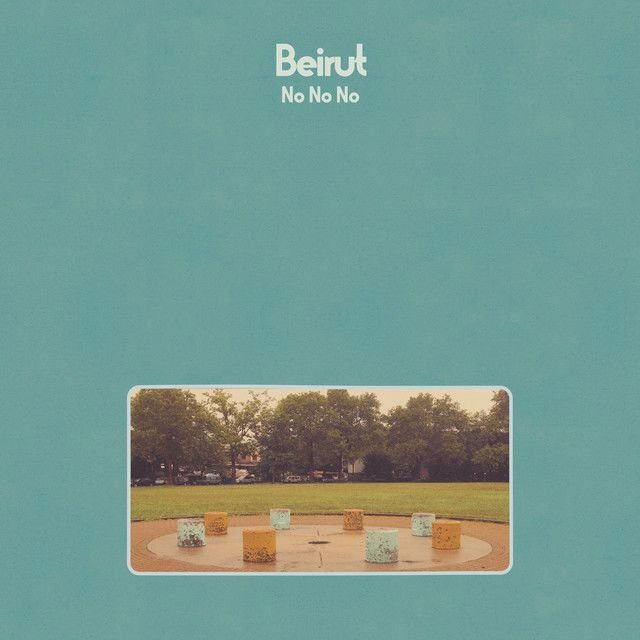
Gibraltar by Beirut
Beirut’s “Gibraltar” is a small song that opens a large emotional space. For listeners searching for the meaning of Gibraltar Beirut, the key is not a detailed plot. Instead, the song works like a half-remembered conversation: a few images, a repeated plea, and a feeling of trying to stand close to someone whose pain cannot be fully shared.
"Gibraltar" - Beirut
You'll find things tend to stand in line
It's but a link in time
Loading lyrics...
Unable to load lyrics
We're unable to display the lyrics at this time. Please try again later.
Released as a single on August 18, 2015, “Gibraltar” later opened Beirut’s fourth studio album No No No, which arrived on September 11, 2015 through 4AD. The album was written by Zach Condon and produced by Condon and Gabe Wax, according to the album’s documented credits and release history.[1]
A song about waiting, closeness, and uncertainty
At its core, “Gibraltar” sounds like a song about emotional patience. The speaker keeps trying to reassure, connect, and hold a fragile line together. Early lines suggest that order should return and that time may sort things out. But that calm promise is shaky. Even when the song says Everything should be fine
, it does not feel fully convinced.
That tension matters. The song moves between comfort and unease. A phrase like link in time
suggests one moment in a longer chain, as if this pain is part of something larger and temporary. Yet the repeated appeal to be understood makes the scene feel immediate and unresolved.
Interpretation: the song may be about trying to rescue intimacy after emotional damage. The speaker does not claim total understanding. They only ask for the chance to try.

Watch the official Gibraltar
music video
The hook turns empathy into a question
The most revealing lines arrive in the repeated refrain. The speaker asks Who laid a line?
and then moves toward recognition: you’re like my kind
. In plain terms, they seem to be asking who created the boundary, the script, or the division between two people.
Then comes the strongest emotional clue: your loss was mine
. Paraphrased, the speaker says they once sang as if another person’s grief belonged to them too. That is a striking image of empathy, but it may also hint at over-identification. They want closeness so badly that they absorb another person’s sorrow into their own identity.
Interpretation: this refrain can be read in two ways:
- as a sincere attempt to share pain and prove devotion
- as a sign that the speaker may be blurring the line between support and self-erasure
That ambiguity gives the song its ache.
The “mind’s eye” image makes the song feel dreamlike
One of the song’s most repeated ideas is mind’s eye
. That phrase usually points to memory, imagination, or inward vision. In “Gibraltar,” it suggests that the relationship is being processed internally rather than lived out in clear, present action.
The singer is not telling a full story with concrete details. They are circling a feeling inside their head. That makes the song hazy on purpose. It sounds like they are trying to picture someone, recover a bond, or understand what happened through memory instead of direct contact.
This inward setting also explains why the lyrics are so spare. On No No No, Condon often used short lines and repetition for emphasis. Critics noticed that the album’s compact lyrics rely on recurring phrases rather than dense storytelling.[1]
Why the line about “sitting on fire” matters
The song’s most vivid physical image is sitting on fire
. Paraphrased, it describes a state of stress that cannot be ignored. To sit on fire is to remain in discomfort while waiting for something to change.
That image turns the song’s stillness into pressure. The speaker is not calmly patient; they are enduring. The next thought, about waiting a long time, supports that reading. This is a song about delay, but not peaceful delay. It is about living inside emotional heat.
How the sound deepens the meaning
Part of the meaning of Gibraltar Beirut comes from the arrangement. No No No is often described as a leaner Beirut record than earlier releases, but it still carries the band’s familiar bittersweet mix of horns, keyboards, and folk-pop motion.[1]
On the album, Condon played vocals, piano, synthesizers, trumpet, organ, and several other instruments, joined by players on trombone, cello, violin, bass, percussion, and accordion.[1] That matters because Beirut’s music often says two things at once: the melodies feel open and warm, while the lyrics sound lonely or bruised.
A Paste review captured that contrast by calling the band’s horn-led sound “bittersweet” even when the melodies seem joyful.[1] That description fits “Gibraltar” well. The music gives lift, but the words stay uncertain. The result is not despair. It is resilience with a crack in it.
Artist context helps explain the song’s emotional blur
Context also sharpens the reading. During the making of No No No, Condon had gone through major personal strain, including divorce and a period of exhaustion, while the album itself was later described as carrying mixed feelings of loss and renewal.[1]
That background should not be used to flatten the song into biography. Still, it helps explain why “Gibraltar” feels torn between reassurance and hurt. The album as a whole was heard by critics as music balancing longing with hope, and this track embodies that balance from the start.
Final reading: a fragile promise, not a firm answer
So what is “Gibraltar” really saying? The simplest answer is that it captures the moment when someone tries to hold emotional connection together using memory, empathy, and repeated reassurance, even though certainty has already slipped away.
Interpretation: the title may hint at something solid or immovable, but the song itself is anything but stable. It lives in doubt, inward vision, and shared pain. That contrast may be the point.
For many listeners, that is the lasting power of the meaning of Gibraltar Beirut: it sounds comforting on the surface, yet underneath it is about how hard it is to truly stand beside another person’s sorrow.
Disclaimer: This interpretation combines documented context with close reading. Like many Beirut songs, “Gibraltar” remains open to multiple meanings.









