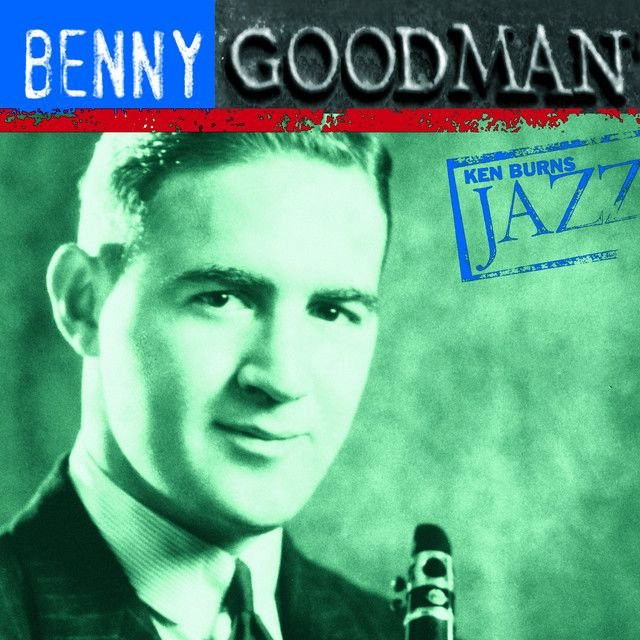
Why 'Sing, Sing, Sing' Still Feels Electric
The meaning of Sing, Sing, Sing Benny Goodman is not hidden in a complicated plot. It lives in motion, repetition, and the thrill of a band pushing a room to life. What sounds simple on paper becomes enormous in performance: a command to sing, swing, and join a shared pulse.
"Sing, Sing, Sing" - Benny Goodman
Now you're singin' with a swing
Sing sing sing, sing, everybody start to sing like dee dee dee, bah bah bah dah
Loading lyrics...
Unable to load lyrics
We're unable to display the lyrics at this time. Please try again later.
Though many listeners link it most closely to Benny Goodman, the song was written by Louis Prima and first recorded in 1936. Goodman’s best-known version came later, recorded in 1937 in Hollywood and arranged by Jimmy Mundy. That version became one of the defining recordings of the swing era and was later inducted into the Grammy Hall of Fame in 1982.
More Than a Hook, It Is a Call to Join In
At the lyric level, the song says very little in a literal sense. It repeats short commands like sing, sing, sing
and everybody start to sing
. Those phrases are not there to tell a story. They work more like crowd cues.
The core idea is simple: music should pull people out of themselves and into a group feeling. When the lyric says when the music goes around
, it suggests that rhythm spreads across the room. The next thought, everybody goes to town
, paints a picture of people cutting loose once the band catches fire.
Interpretation: the song is about surrendering to joy. It frames swing not as private reflection, but as a public event. They are not being asked to think deeply before joining; they are being asked to join first and feel the meaning through action.
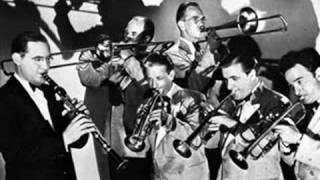
Watch the official Sing, Sing, Sing
music video
Why Benny Goodman Changed the Song’s Meaning
Prima’s original mattered, but Goodman’s recording transformed the song’s cultural weight. According to widely cited historical accounts, the 1937 Goodman version ran about 8 minutes and 43 seconds, unusually long for a period when records were often closer to three minutes per side. It even took both sides of a 12-inch 78 rpm disc.
That length matters to interpretation. A lyric this spare could have stayed a novelty. Instead, the band stretches it into a musical journey. Writer Ross Firestone famously said the Goodman recording bore only the slightest resemblance to the original score. That is a useful clue: the song’s meaning expanded from playful chant to big-band spectacle.
Goodman’s release also incorporated material from Christopher Columbus
, showing how swing often built meaning through arrangement as much as authorship. In jazz, a song can become “about” something larger when musicians remake its frame.
The Sound Explains the Message
If the words invite people in, the arrangement shows why they would say yes. Gene Krupa’s drumming is the engine. The beat is steady but explosive, giving the song a ritual quality, almost like a parade drum crossed with a dance-floor stampede.
The brass answers with force, while Goodman’s clarinet cuts through the middle with control and flair. Instead of sounding polished in a distant way, the band sounds like it is building momentum in real time. That matters because the song’s message is communal excitement, not perfection.
Instruments as Characters
Each section of the band plays a role:
- Drums: the physical heartbeat
- Brass: the shout of the crowd
- Clarinet: the leader’s voice
- Piano: a sudden pocket of surprise and style
In live versions, especially the famous 1938 Carnegie Hall performance, that drama grew even more. Helen Ward later described how the piece evolved onstage when Krupa kept drumming past the expected ending and Goodman followed the energy. That story fits the song’s meaning exactly: swing keeps going because nobody wants the feeling to stop.
A Song About Collective Release
The lyrics also carry a social message, even if lightly. Repeating listen to the trumpet swing
and directing attention to the trombones turns the bandstand into the center of the action. The song teaches listeners how to hear swing: notice the sections, feel the groove, and respond.
Interpretation: this makes the song a mini-manifesto for big-band jazz. It says that singing and swinging are not separate acts. Voice, rhythm, and ensemble all belong to the same experience.
That is why the phrase now you're singin' with a swing
matters so much. It suggests a transformation. A person does not just sing; they learn to sing in a new way, inside the rhythm of the band. The song celebrates that shift from ordinary expression to stylized, shared energy.
Is There Any Deeper Meaning?
There are at least two reasonable ways to read it.
Reading One: Pure Fun
The most direct reading is that it is a party song. It asks people to relax, join in, and let the music carry them. On this level, its meaning is straightforward and physical.
Reading Two: Swing as Freedom
A second reading sees the performance itself as the message. Goodman’s era helped bring jazz and big-band music into mainstream American culture. In that context, the song can sound like a declaration that rhythm creates freedom, spontaneity, and shared identity.
Neither reading cancels the other out. In fact, they strengthen each other. The fun is the philosophy.
Why It Still Lands Today
The meaning of Sing, Sing, Sing Benny Goodman still connects because the song does not depend on detailed lyrics. It depends on a feeling people still recognize: the moment a groove becomes bigger than any one person in the room.
That is why the track survives in films, concerts, and popular memory. They hear not just a jazz standard, but a performance about what music can do to a crowd. It gathers people, raises the pulse, and turns repetition into excitement.
In the end, “Sing, Sing, Sing” is about participation. It invites people to stop standing outside the music and step inside it.
Disclaimer: This interpretation blends documented historical context with critical reading of the lyrics and performance. Meanings can vary from listener to listener.








