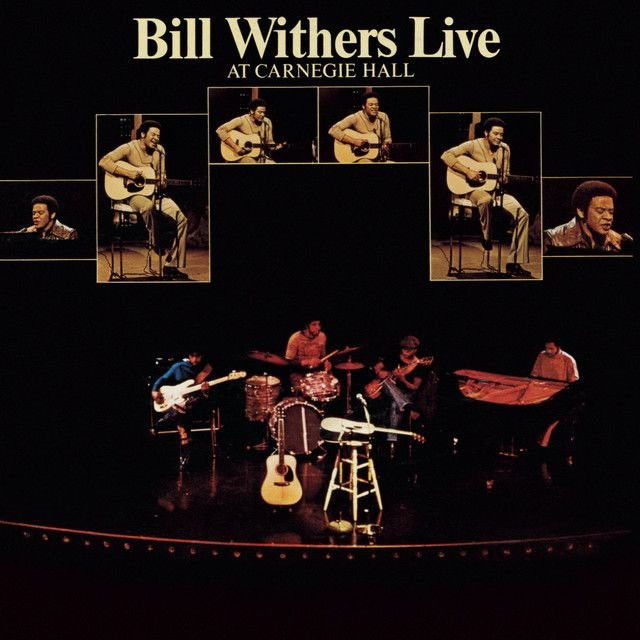
Why “Lean on Me” Still Means So Much
The meaning of Lean on Me Bill Withers is simple on the surface and deep in practice: people survive hard times by accepting help and giving it back. Bill Withers wrote the song as a plainspoken promise between ordinary people, and that honesty is why it still feels timeless.
"Lean on Me" - Bill Withers
We all have sorrow
But if we are wise
Loading lyrics...
Unable to load lyrics
We're unable to display the lyrics at this time. Please try again later.
Released in 1972 as the lead single from Still Bill, the song became a No. 1 hit on the Billboard Hot 100 and remains one of Withers’s signature recordings. It was written and produced by Withers himself, a key fact because the song sounds as personal and direct as its message. According to widely cited background on the song, he drew from memories of community in his West Virginia upbringing and built the track after the phrase came to him while playing piano. See the source list for factual references.
A Simple Message With Real Weight
At its core, the song says that suffering is normal, not shameful. Early lines admit that everyone faces pain and sorrow, then shift toward hope. That move matters. Instead of pretending life is easy, Withers starts by recognizing hardship and then offers a response: connection.
The key promise appears in the famous line Lean on me
. In context, it is not just comfort. It is an invitation to depend on someone without feeling weak. The song keeps returning to that idea so the listener hears support as something practical, not sentimental.
Just as important, Withers makes support mutual. He does not say one person is always the helper and another is always the one in need. He adds the idea of somebody to lean on
to remind listeners that strength changes hands. That balance is a big reason the song avoids sounding preachy.
Watch the official Lean on Me
music video
Pride, Vulnerability, and the Courage to Ask
One of the song’s strongest ideas is that pride can block healing. When Withers uses the phrase swallow your pride
, he is not attacking dignity. He is saying that people sometimes hide their needs so well that nobody can meet them.
That message gives the song emotional maturity. It understands that friendship is not only about offering help. It also requires honesty from the person who is hurting. In other words, community works only when people let themselves be seen.
Interpretation: This part of the lyric can also be read as a quiet challenge to American ideas of total self-reliance. The song suggests that independence has limits. Real resilience includes interdependence.
How the Story Speaks to Everyone
Even though the song feels personal, its language is broad enough to include almost anyone. Withers uses everyday words and familiar situations: a burden, a hand, a friend nearby. There is no complex plot. Instead, the song creates a shared human scene.
A short section captures that spirit:
when you need a hand
we all need somebody
Those brief lines widen the song’s reach. The first sounds like one person speaking directly to another. The second turns that private exchange into a universal truth. The result is both intimate and communal.
Why the Music Feels Like Support
The arrangement helps carry the meaning. Withers recorded the song for Still Bill with a groove built around piano, Wurlitzer electric piano, bass, drums, guitar, and subtle strings. The track does not rush. Its steady pulse feels dependable, almost like a hand on a shoulder.
Withers’s vocal is equally important. He does not oversing the message. He sounds conversational, warm, and grounded. That restraint makes the promise believable. If the performance were too dramatic, the song might feel less trustworthy.
The call-and-response feeling near the end, especially around call me
, gives the song another layer. It sounds like a community forming in real time. The repeated phrase is not just catchy; it turns the song into an open line of communication.
The Bill Withers Context Matters
The song’s power is easier to understand when placed in Withers’s life and career. He grew up in Slab Fork, West Virginia, and later spoke about remembering a stronger sense of community there. After moving to Los Angeles, that memory shaped the song’s central idea. He also produced Still Bill himself after Booker T. Jones was unavailable, which makes the record feel even more like Withers’s own voice from start to finish.
That authenticity helped the song travel. It hit No. 1 in 1972, was later inducted into the Grammy Hall of Fame, and kept returning in public life through covers, tributes, and group singalongs. Club Nouveau even took their version to No. 1 in 1987, proving the songwriting could survive a very different production style.
Why It Still Connects Today
The reason this song lasts is not mystery; it is usefulness. People return to it in moments of grief, crisis, celebration, and solidarity because it offers a language for mutual care without sounding abstract. It is direct enough for children to sing, but wise enough for adults to keep discovering.
Interpretation: The song’s deepest insight may be that help is not a favor. It is part of being human. By framing support as something everyone both gives and receives, Withers turns compassion into a shared responsibility.
The Lasting Takeaway
The meaning of Lean on Me Bill Withers comes down to this: vulnerability is not failure, and friendship is not one-sided. The song asks people to admit when life is heavy and trust that someone can help carry the load.
That is why the song still feels alive. It does not just describe kindness; it practices it in its lyrics, melody, and tone.
Disclaimer: This interpretation combines documented facts about the song with informed critical reading. Meaning can vary from listener to listener.








