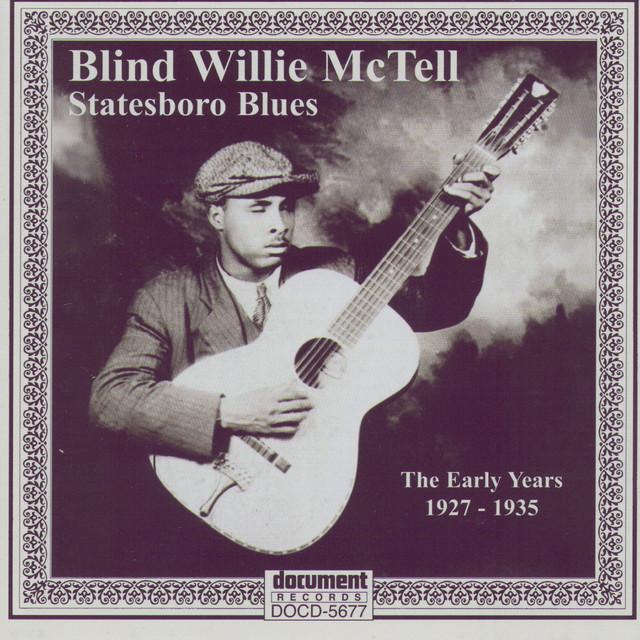
Statesboro Blues by Blind Willie McTell
Blind Willie McTell’s classic sounds loose and conversational, but its heartbreak, pride, and drifting spirit run deep.
"Statesboro Blues" - Blind Willie McTell
Provided by LyricFindYes now, wake up mama, turn your lamp down low.
Wake up mama, turn your lamp down low.
Have you got the nerve to drive poor papa Taj from your door?Loading...Loading lyrics...
Unable to load lyrics
We're unable to display the lyrics at this time. Please try again later.
Why This Blues Still Feels So Alive
The meaning of Statesboro Blues Blind Willie McTell starts with trouble that does not sit still. The song is not a neat story with a clean ending. Instead, it moves like a troubled mind, jumping between desire, pain, family memory, and wandering.
McTell wrote and recorded the song in 1928 in Atlanta, and it was released in 1929 as a Piedmont blues recording, a style known for agile guitar patterns and strong rhythmic movement. According to the Library of Congress recognition, the song later became important enough to be selected for the National Recording Registry, which helps show its lasting cultural weight.
At its core, the song presents a speaker who wakes up burdened by a feeling he calls the Statesboro blues
. That phrase sounds personal, but it also feels larger than one bad morning. It suggests a whole state of being: romantic pain, hard luck, family history, and emotional instability all tied together.

Watch the official Statesboro Blues
music video
A Voice Caught Between Pleading and Swagger
One of the most striking things in the song is the speaker’s attitude. He begs for love, but he also performs confidence. Early on, he tells a woman to turn your lamp down low
, which creates a late-night, intimate setting. Yet almost right away, that softness turns into anxiety when he wonders if she will send him away.
This shift matters. The song’s speaker is not only lonely. They seem deeply afraid of rejection. When he asks whether she has the nerve to put him out, he frames himself as both vulnerable and proud. That mix is a classic blues tension: the singer is wounded, but they refuse to sound small.
Interpretation: McTell may be using that tension to show how love and pride often clash. The speaker wants comfort, but they also need dignity. That is why the song feels emotional without becoming sentimental.
What “Statesboro” Might Mean
Statesboro, Georgia, is named directly, and McTell reportedly referred to Statesboro as his “real home.” That fact gives the title a grounded Southern setting, not just a random place name. But in the song, the town seems to mean more than geography.
When the narrator says he woke up with the blues and saw that his partner had them too, the feeling spreads beyond one person. It becomes shared, almost contagious. The town name starts to sound like shorthand for a whole atmosphere of struggle.
More than a map point
The title can be read in at least two ways:
- Literal reading: the song links its sadness to Statesboro, Georgia, as a real home and real setting.
- Interpretive reading: “Statesboro blues” works like a private label for inherited pain, bad luck, or a repeating emotional cycle.
That second reading gains force when the singer mentions family loss and describes himself as shaped by it. The song hints that sorrow did not begin with this romance. It was already there.
Family Wounds Beneath the Romance
The most revealing lines are not the flirtatious ones. They are the ones about being left reckless and wild after the deaths of mother and father. McTell does not explain this history in detail, but he does not need to. In a few words, he suggests a person formed by instability.
Then the song pivots again. The singer admits, in effect, that he is not handsome, yet still worthy of love. That humble self-description makes the bravado feel more human. He is not just boasting. They are trying to hold onto self-worth.
Mama died and left me reckless
Papa died and left me wild
Those brief lines help explain the rest of the song. The romantic neediness, the roaming energy, and the defensive swagger all sound like responses to old loss.
Movement, Desire, and the Urge to Escape
Another key theme is motion. The speaker talks about going to the country and invites the woman along. If she cannot go, he jokes that her sister might. On the surface, that line adds humor and flirtation. Underneath, it shows how quickly the singer shifts from devotion to escape.
This is why the song feels psychologically rich. One moment he loves a woman deeply. The next, he is already imagining departure. Then he praises her, saying she treated him royally, while claiming he treated her like a queen. That image presents an ideal relationship, but because the song is so unstable, it also sounds like a wish rather than a settled fact.
Interpretation: The movement in the lyrics may reflect a blues character who cannot stay emotionally still. Travel becomes both real action and a metaphor for restlessness.
How McTell’s Guitar Sharpens the Meaning
The song would not hit the same way without McTell’s playing. His 12-string approach and Piedmont blues feel give the recording a rolling, active pulse. Rather than sounding heavy or slow, it moves with quick detail. That matters because the guitar mirrors the narrator’s mind: alert, unsettled, and always in motion.
Writers often note McTell’s storytelling and dazzling guitar work, and this song shows both. The music does not merely back the words. It keeps the emotional contradictions alive. The groove is lively even when the speaker sounds troubled.
That contrast helps explain the song’s afterlife. Taj Mahal’s late-1960s adaptation brought it to blues-rock audiences, and the Allman Brothers Band later turned it into a slide-guitar landmark on At Fillmore East. Rolling Stone ranked that version among its greatest guitar songs, a legacy traced back to McTell’s original through later song history summaries.
Why the Song Endures
The meaning of Statesboro Blues Blind Willie McTell lasts because the song refuses to shrink the blues into one emotion. It is sad, playful, proud, intimate, and haunted at the same time. McTell gives listeners a speaker who aches for love, carries family damage, and keeps moving before life can pin him down.
That layered feeling is why the song has survived far beyond 1928. It offers more than a complaint. It offers a character.
Final takeaway
Blind Willie McTell’s song is best heard as a portrait of emotional unrest. Love problems drive the surface, but older wounds and a deep urge to roam give the song its real power.
Disclaimer: This interpretation separates documented facts from informed reading. Like many classic blues songs, “Statesboro Blues” leaves key details open, so different listeners may hear its meaning in different ways.








