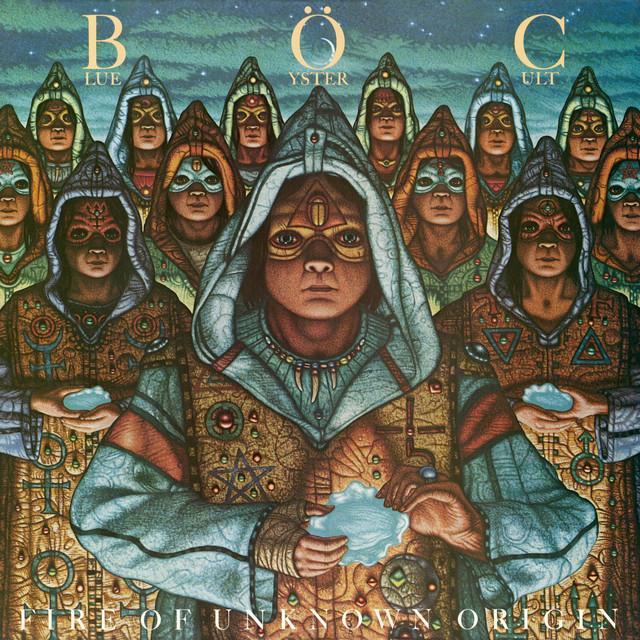
Burnin' for You by Blue Öyster Cult
Why this hit still feels unsettled
The meaning of Burnin' for You Blue Öyster Cult is bigger than its title suggests. On the surface, it sounds like a sleek rock love song. Underneath, it is about displacement, urgency, and a person who cannot find peace anywhere.
"Burnin' for You" - Blue Öyster Cult
Home in the city
Home isn't pretty
Loading lyrics...
Unable to load lyrics
We're unable to display the lyrics at this time. Please try again later.
Released on Fire of Unknown Origin in 1981, the song became one of the band’s biggest crossover successes. It reached No. 40 on the Billboard Hot 100 and No. 1 on Mainstream Rock, helped by early MTV exposure, according to Songfacts. Those facts matter because the track’s bright, radio-ready sound can hide how uneasy its lyrics really are.

Watch the official Burnin' for You
music video
A song about having no true home
The opening lines build the central problem fast. The singer keeps naming places and conditions, but none of them offer comfort. Short phrases like home in the city
and home on the highway
suggest movement without belonging.
This is not a portrait of someone choosing freedom with joy. It feels more like exile. Even when “home” appears, it is denied, reshaped, or pushed away. The repeated idea is simple: they are surrounded by places, but they do not feel claimed by any of them.
Interpretation: This makes the song less about romance alone and more about a person whose emotional center is missing. The later declaration that they are burning for you
can then sound like passion, but also like a desperate attempt to anchor themselves in someone or something.
The chorus turns restlessness into obsession
The chorus is where the song’s emotional temperature rises. Before the famous hook, the lyrics frame life as a cycle of exhaustion and surrender. The phrase burn out the day
suggests using up time rather than enjoying it.
Then the song swerves into resignation. The speaker says they cannot see a reason to keep fighting, and that line changes the meaning of the title. “Burning” is not just desire. It also hints at depletion, burnout, and self-consuming energy.
Burn out the day
Burn out the night
I can't see no reason to put up a fight
That short passage captures the song’s tension. They are active, but also tired. They are intense, but not exactly hopeful.
Time is the other villain
The second verse shifts from home to time, but the theme stays the same. Just as no place feels stable, time does not feel manageable. Phrases such as time is the essence
and time ain't on my side
make life feel urgent and slippery at once.
The writing here is clever because it piles up versions of the same word until it loses certainty. Time becomes a pressure, a season, a joke, and a mystery. Instead of giving direction, it adds confusion.
Interpretation: This verse suggests the speaker is not only homeless in space but also ungrounded in time. They do not know where they belong, and they do not feel in control of when anything meaningful can happen.
Who made the song, and why that matters
The music was written by Donald “Buck Dharma” Roeser, with lyrics by Richard Meltzer. According to American Songwriter, Meltzer originally had lyrics titled “Burn Out The Night,” and Roeser built the song around them in his garage studio.
That background helps explain the track’s strange balance. Meltzer’s words are poetic and free-associative, while Roeser’s melody is clean, catchy, and emotionally direct. Roeser said the lyric was one of Meltzer’s more sentimental ones, as quoted by Songfacts. That mix of mystery and sincerity is the key to the song.
How the sound carries the meaning
Part of what makes the song endure is its contrast between sound and subject. The guitars are crisp, the groove is steady, and the chorus lifts with an almost triumphant shine. But the words keep circling dislocation and weariness.
That contrast creates the real emotional effect. The production does not wallow in sadness. Instead, it turns uncertainty into momentum. They sound like they are driving forward even while admitting they do not know where “home” is.
Buck Dharma’s lead vocal matters too. He does not oversell the lines. His calm, controlled delivery makes the lyrics feel cooler on the surface and more troubled underneath. The result is a song that feels both accessible and haunted.
Two strong ways to read the song
There are at least two convincing readings:
- Romantic reading: The speaker is consumed by desire, and the title line is a declaration of devotion.
- Existential reading: The speaker is burned out by life, unable to settle, and using passion as a way to survive meaninglessness.
Both fit the text. The mention of giving the devil his due adds a darker shade, suggesting compromise, temptation, or simply the cost of staying alive and moving.
The lasting takeaway
The meaning of Burnin' for You Blue Öyster Cult lies in that double edge. It is a song about longing, but not simple comfort. It is about motion without home, time without control, and desire that feels as painful as it does thrilling.
That is why the track lasts. It gives listeners a huge chorus, but fills it with uncertainty.
Disclaimer: This interpretation is based on the lyrics, credited songwriting history, and recorded performance. As with many Blue Öyster Cult songs, meaning can stay open to multiple readings.








