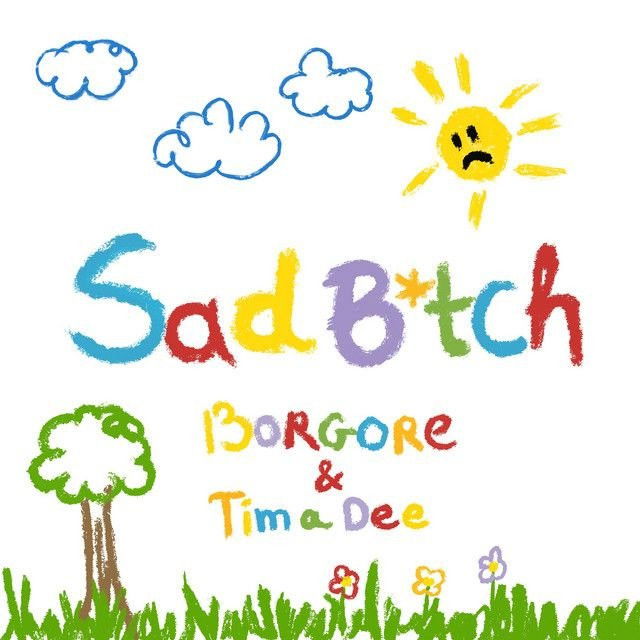
Why 'Sad B*tch' Hits Harder Than It Flexes
The meaning of Sad B*tch Borgore, Tima Dee comes down to a sharp contradiction: the song sounds loud, flashy, and confrontational, but its core emotion is emptiness. Under the insults, posturing, and party talk, the track describes someone who feels depleted and tries to cover that pain with attitude, money, substances, and online image.
"Sad B*tch" - Borgore, Tima Dee
Yeah-yeah-yeah-yeah
Sunny with a chance of clinical depression
Loading lyrics...
Unable to load lyrics
We're unable to display the lyrics at this time. Please try again later.
Borgore released “Sad B*tch” with Tima Dee in December 2020 as a standalone single on Buygore, according to Apple Music. The writing credits given here are Asaf Yosef Borger and Fatima Dahmouh, matching the artists’ names. That matters, because the song feels built around a clear persona: brash on the outside, burned out on the inside.
The Hook Tells the Truth Fast
The chorus is the song’s emotional center. Before any deeper reading, it states the problem plainly: sad bitch
and I'm a bummer
. Those lines are blunt, even funny at first, but that humor is part of the defense mechanism.
The song keeps returning to that self-label because everything else in the verses seems designed to avoid sitting with it. The speaker pushes people away, boasts, and stays active, yet keeps admitting the same thing: they are not okay.
A Persona Made of Armor
One of the song’s smartest moves is how it mixes confession with aggression. In one moment, the speaker wants no attention; in the next, they want to show off online. That swing suggests a person who is deeply self-conscious and unstable in how they want to be seen.
Interpretation: the song is less about one bad day than a cycle. They feel low, react with hostility, then use performance to hide the low feeling.

Watch the official Sad B*tch
music video
What the Verses Add to the Meaning
The opening image, paraphrased, turns a weather report into a mental health joke. That dark joke sets the tone: the song knows it is talking about depression-like feelings, but it refuses a soft or delicate style. Instead, it filters pain through sarcasm.
The first verse also links sadness to social friction. People are petty, men are distracted, and the speaker would rather disappear than deal with fake energy. Even the casual clothing detail suggests hiding in plain sight. They want distance, not connection.
Then the song shifts into coping behaviors. The clearest line is so I don't gotta feel
, which directly explains why substances appear in the song. The issue is not pleasure for its own sake. It is emotional escape.
Got a smile on my face
but the smile ain't real
This is the article’s clearest lyric clue. The song says the public face is false. That idea ties together the money flexing, the posting on Instagram, and the hard talk. None of it solves the numbness.
Sound Design as Emotional Misdirection
Borgore is best known as an Israeli EDM producer and founder of Buygore, with roots in dubstep, trap, and heavier styles, as noted in his Wikipedia biography. That background helps explain why the track’s production matters so much to its meaning.
Rather than scoring sadness with piano or slow ballad textures, the production uses a hard, club-ready frame. The beat pushes forward. The low end feels thick and physical. Tima Dee’s vocal delivery rides that production with swagger, which makes the admissions of emptiness hit harder.
This contrast is the point. The song is not trying to sound fragile. It is showing how depression or emotional burnout can wear flashy clothes and still be real. In that sense, the production acts like the smile in the chorus: polished on top, troubled underneath.
Why the Aggression Matters
Lines about confrontation and feeling dead inside are not random shock value. They expand the character. The speaker is not just sad; they are irritable, numb, defensive, and looking for stimulation.
When the lyric hints at being dead inside
, it exaggerates for effect, but the emotional idea is serious. They are describing emptiness so extreme that even conflict starts to feel like a way to prove they can still react.
The Los Angeles Detail and Social Image
One line rejects that LA life
. Even without over-reading it, that phrase points to a culture of surface, networking, image, and constant self-display. In the song, the speaker wants money, but not the fake social package that often comes with it.
Interpretation: this may be a swipe at performative cool. The song does not reject success. It rejects the pressure to act happy, desirable, and unbothered all the time.
That makes the social media mention important too. Showing off “on the gram” is presented less as joy than as proof of status. It is another mask. The track suggests that online confidence can be a costume for private collapse.
A Bigger Theme: Sadness in Party Language
What makes this song memorable is not subtle poetry. It is the collision of simple, hard phrases with messy feelings. Borgore and Tima Dee package emotional damage in party-rap and bass-music language, which gives the song a bitter edge.
For some listeners, that makes it relatable. Plenty of people know the habit of joking about feeling awful, staying busy to avoid thinking, or acting tougher than they feel. The song turns that pattern into a hook you can shout, but the shout does not erase the pain.
Final Take
The meaning of Sad B*tch Borgore, Tima Dee is about emotional masking. It portrays someone who is depressed, numb, and angry, then shows how they hide that state behind drugs, flexing, social media, and a combative persona.
Factually, the song is a 2020 Borgore and Tima Dee single written by Asaf Yosef Borger and Fatima Dahmouh. Interpretation: its real sting comes from how honestly it admits that the loudest person in the room may still be falling apart inside.
Disclaimer: This interpretation is based on the released lyrics, performance, and publicly available context. Like most songs, it can support more than one reading.








