
Why 'Seventy Times 7' Still Cuts Deep
The meaning of Seventy Times 7 Brand New starts with a contradiction. Its title points to forgiveness, but the song itself sounds furious, wounded, and nowhere near ready to forgive.
"Seventy Times 7" - Brand New
What we needed to know
Like how to deal with despair
Loading lyrics...
Unable to load lyrics
We're unable to display the lyrics at this time. Please try again later.
Released on Your Favorite Weapon in 2001, the track became one of Brand New’s defining early songs. It is widely tied to a real falling-out between Jesse Lacey and John Nolan, then of Taking Back Sunday, after a personal betrayal, as summarized by Songfacts. That backstory matters because the song does not feel vague or symbolic first. It feels specific, raw, and freshly lived.
A friendship breakup, not just a breakup song
At its core, this is a song about betrayal by someone once trusted like family. The opening frames that hurt in teenage and young-adult terms: school teaches facts, but not how to survive heartbreak, humiliation, or despair.
That setup makes the later anger feel earned. The narrator is not only upset that someone lied or crossed a line. They are devastated that it came from a “best friend,” which is why one of the song’s sharpest ideas lands in the phrase best friend
. The insult is emotional because the bond was once so close.
Interpretation: The song works because it treats friendship betrayal as its own kind of heartbreak. In some ways, it hurts more than romance, because it attacks loyalty, memory, and identity all at once.
Watch the official Seventy Times 7
music video
Why the title matters so much
The title likely references Matthew 18:21-22, where Peter asks how often someone should forgive, and Jesus answers not seven times, but seventy times seven. Songfacts notes that this biblical allusion is central to how many listeners understand the track.
That makes the song’s rage more striking. Instead of grace, the lyrics deliver revenge fantasies, sarcasm, and public accusation. The song knows what forgiveness is supposed to look like, and then shows how impossible it can feel in real life.
They say you need to prayif you want to go to heaven
Even in that brief moment, the song suggests a spiritual gap. The speaker knows the language of morality and healing, but has no script for what to say when life feels wrecked. That tension gives the song more depth than a simple diss track.
The story unfolds like one bad night
Much of the track plays like a memory spiral. First comes social discomfort, then suspicion, then full emotional collapse. Details about standing around awkwardly and replaying a scene in their head make the pain feel immediate.
From there, the song becomes a chain of reactions:
- They feel embarrassed and left out.
- They realize the trust is gone.
- They turn private pain into a song.
- They lash out with insults and violent imagery.
That self-aware turn is important. The line about writing a song to remember how bad it felt shows the narrator using art as both release and evidence. They are not calming down; they are preserving the wound.
The chorus turns private pain into public shame
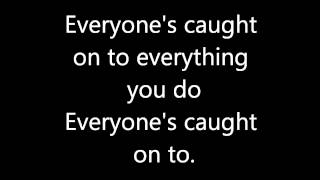
The repeated idea that Everyone's caught on
changes the song’s scale. This is no longer just a fight between two people. It becomes a scene, a reputation issue, and a shared social drama.
In early-2000s emo and pop-punk, that public-private blur mattered. Songs often sounded like diary entries, but they were also performed inside tight local scenes where everyone knew the gossip. Here, the chorus captures that exact pressure: betrayal feels even worse when it seems visible to everyone else.
Interpretation: The hook may suggest that the other person’s behavior is obvious and patterns of harm are now exposed. It could also reveal the narrator’s paranoia and humiliation. Both readings fit.
Anger as performance, anger as truth
The song is full of brutal lines, including I hope you choke and die
and the famous put-down more spine on jellyfish
. These are not calm statements. They are emotional explosions.
That matters when reading the song responsibly. The violent language is best understood as exaggerated rage in the tradition of confessional emo, not as a literal instruction. The point is to show how betrayal can make someone think in ugly extremes.
The most quoted line, subtle as a brick
, helps explain why the song remains memorable. It is vivid, simple, and conversational, as if pulled from a real phone call and left unpolished. Songfacts reports that a version of this line came from the actual last words Jesse Lacey said to Nolan, which gives the track its famous “answer song” connection to Taking Back Sunday.
How the music carries the message
The production on Your Favorite Weapon fits the emotional design. Fast drums, bright guitar attack, and a punchy pop-punk structure keep the song moving even when the lyrics sink into bitterness.
That contrast is key. The melody is catchy enough to shout along with, but the words are bitter enough to sting. Jesse Lacey’s vocal delivery also helps: he sounds less polished than wounded, pushing lines forward as if trying to outrun the hurt.
Interpretation: The upbeat tempo can be heard as denial in musical form. The band turns pain into momentum, making the song feel like a sprint through anger before reflection can catch up.
Why it still resonates
Part of the reason this song lasts is that it captures a feeling many people recognize but rarely admit: being hurt so deeply that forgiveness sounds noble in theory and impossible in practice.
It also survives because of its place in emo history. Fans still discuss it alongside Taking Back Sunday’s response songs, and the back-and-forth helped define an era of Long Island scene storytelling. But even without that context, the song stands on its own as a portrait of injured loyalty.
Final takeaway
The meaning of Seventy Times 7 Brand New is not just anger. It is the sound of someone discovering that a broken friendship can shatter their sense of trust, self-control, and faith in forgiveness.
Its title asks for grace. Its lyrics answer with pain. That gap is exactly why the song still hits.
Disclaimer: This interpretation combines documented background with informed reading of the lyrics and sound. Some details around the real-life incident have been disputed over time, so the song ultimately remains open to listener interpretation.







