Crossfire by Brandon Flowers
A love song standing in a war zone
The meaning of Crossfire Brandon Flowers starts with a simple idea: two people are trying to protect their bond while chaos closes in around them. The song frames romance as a place of refuge, but not a soft or easy one. It is love under pressure, love in danger, and love as the one thing worth holding onto when the outside world feels violent and unstable.
"Crossfire" - Brandon Flowers
And you're keepin' secrets on your pillow
Let me inside, no cause for alarm
Loading lyrics...
Unable to load lyrics
We're unable to display the lyrics at this time. Please try again later.
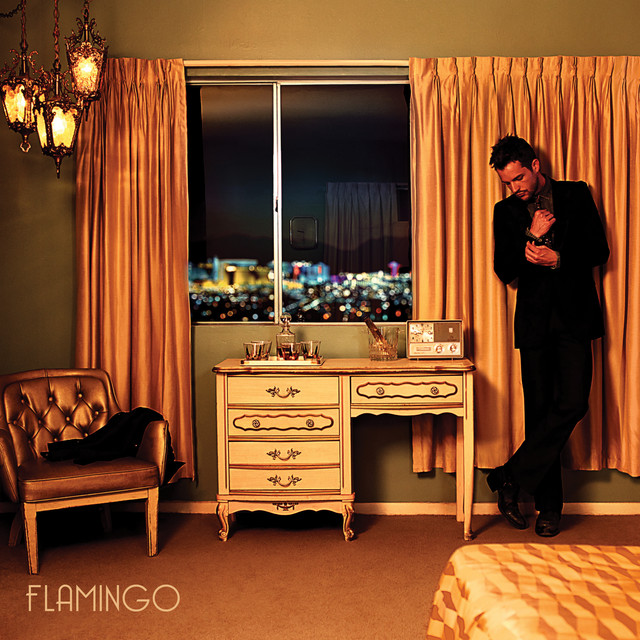
Released in 2010 as the lead single from Flowers' solo debut Flamingo, “Crossfire” was written by Flowers and produced by Brendan O'Brien. Factually, it marked his first major step away from The Killers, even if its scale still felt arena-sized. That matters because the song sounds personal, but it is presented with huge, dramatic stakes.

Watch the official Crossfire
music video
What the central image really means
The key line is the title phrase, caught up in the crossfire
. In plain terms, the singer sees the couple trapped between opposing forces they did not fully choose. The lyric expands that conflict with of heaven and hell
, suggesting a battle between hope and despair, faith and fear, or peace and temptation.
Interpretation: this does not have to mean literal religion alone. Flowers often writes with spiritual language, and here those words also act like emotional shorthand. “Heaven” can sound like intimacy, trust, and rescue. “Hell” can sound like pain, guilt, and the pressure of real life.
The chorus then turns to shelter. When the singer asks the other person to lay your body down
, the point is not just physical closeness. It is a request for trust, rest, and surrender after panic. The body becomes the place where fear shows up first, so calming the body is part of saving the relationship.
How the verses build the feeling of danger
The opening verse places the listener in a tense, private room. There is silence outside, secrets inside, and a promise not to cause harm. That setup creates uncertainty right away. The singer wants entry and closeness, but they also know the other person has reasons to be guarded.
Then the second verse widens the frame. The storm imagery grows stronger, and pain starts falling from the sky like weather. Flowers uses rain, clouds, and impact to make emotional hurt feel physical. Instead of saying the couple is stressed, the song makes stress sound like an attack.
Tell the devilgo backhardest part is overdreams will break the boundaries
That brief passage pushes the song from fear toward defiance. The speaker stops merely surviving and starts resisting. Even here, the message is still relational: they are not fighting for abstract glory, but for a shared future.
Romance, faith, and fear in the same frame
One reason the song still connects is that it blends different kinds of language without making them feel separate. It sounds like a love song, but it also sounds like a prayer and a pep talk. Flowers has long mixed the sacred and the everyday in his writing, and “Crossfire” is one of the clearest examples.
Interpretation: the narrator may be speaking to a partner, but they may also be speaking against their own fears. The line about the devil reads as dramatic, yet it works because the song has already turned anxiety into an enemy force. In that sense, the battle is both external and internal.
This dual meaning helps explain why the chorus is so broad and memorable. Many listeners can hear their own struggle in it, whether that means a difficult relationship, family stress, depression, faith, or the feeling of trying to stay kind in a harsh world.
Why the music sounds so huge
The production is a major clue to the song's meaning. Brendan O'Brien gives “Crossfire” a bright, muscular pop-rock sound: big drums, clean guitar lines, a strong backbeat, and a rising chorus built for release. The arrangement does not whisper fear; it turns fear into a public anthem.
That choice matters. If the song were stripped down, it might feel like private pleading. Instead, the soaring sound tells listeners that survival itself can feel triumphant. Reviews at the time noticed that scale. Billboard called it a promising direction for Flamingo, while some critics thought it stayed close to The Killers' grand style. Both ideas can be true: it is personal writing delivered with stadium ambition.
Flowers' vocal also helps sell the tension. He sounds earnest rather than cool, pushing hard into the higher notes. That lack of irony is important. “Crossfire” works because they sing like the danger is real and the comfort is urgently needed.
Solo context and the rescue fantasy around it
As Flowers' debut solo single, “Crossfire” had extra pressure on it. It introduced who they were outside the band, yet it did not reject the dramatic instincts fans already knew. The song reached the UK Top 10 and earned strong airplay, showing that its emotional directness connected with a broad audience.
The music video added another layer. Directed by Nash Edgerton and starring Charlize Theron, it turns Flowers into a repeated hostage while Theron rescues him in exaggerated action scenes. That visual flips the usual damsel story and underlines the song's core idea: love can look like rescue, but rescue can also come from unexpected strength.
The clearest takeaway
At its heart, the meaning of Crossfire Brandon Flowers is about finding shelter in another person when life feels split between hope and ruin. The song admits fear, but it refuses to end there. Its message is that intimacy can become a form of survival.
That is why the song still lands. It is dramatic, yes, but its emotion is easy to recognize: when the storm is loud, people reach for the one voice that says stay, trust, and make it through together.
Disclaimer: This interpretation is based on the lyrics, production, and public context around the song. As with any piece of music, listeners may hear meanings that differ from the ones discussed here.









