
I'm on Fire by Bruce Springsteen
Bruce Springsteen’s “I’m on Fire” is one of their quietest hits, but it may be one of their most unsettling. For anyone searching for the meaning of I'm on Fire Bruce Springsteen, the short answer is this: the song turns desire into a fever. It is about longing so intense that it feels physical, guilty, and hard to control.
"I'm on Fire" - Bruce Springsteen
Did he go and leave you all alone? Mhmm
I got a bad desire
Loading lyrics...
Unable to load lyrics
We're unable to display the lyrics at this time. Please try again later.
The track appeared on Born in the U.S.A. in 1984, though it was recorded earlier during 1982 sessions and reportedly began as a slower, Johnny Cash-style idea before finding its final form. It later became the fourth of seven U.S. Top 10 singles from that album, a sign that its hushed mood still connected in a decade of big rock production. Factual details about the song’s recording history, chart success, and video are widely summarized by Songfacts.
A Small Song With a Big Tension
At the center of the song is a narrator speaking directly to someone they want but cannot fully have. The language is intimate, but it is not warm. Instead, the words feel risky, even intrusive, as the singer asks personal questions and admits a bad desire
.
That phrase matters. Springsteen does not present this feeling as sweet or noble. They frame it as hunger mixed with shame, temptation, and urgency. The song’s title line, I'm on fire
, is less about romance than about being consumed.
Interpretation: The song is not celebrating lust. It is showing what lust feels like when it starts to take over a person’s mind.
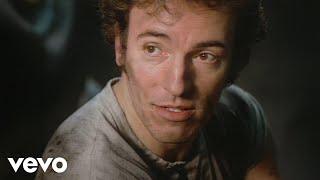
Watch the official I'm on Fire
music video
Why the Opening Feels So Uneasy
One reason the song still sparks debate is its first line, Hey little girl
. On the page, that phrase can sound troubling, and some listeners have raised darker readings because of it. That discomfort is real, and it helps explain why the song remains controversial.
At the same time, many mainstream readings understand the narrator as addressing an adult woman in a rough, colloquial, old-fashioned way. The next lines suggest jealousy and rivalry, especially when the narrator asks whether her man is present and whether he is good to you
. That shifts the song toward an adult triangle built on desire and frustration.
The official video pushed listeners further in that direction. Directed by John Sayles, it shows Springsteen as a mechanic drawn to a married woman, then choosing restraint rather than action. In the clip, he drops off her car, considers the moment, and walks away. That visual story helped shape the dominant reading: forbidden attraction, not fulfillment.
The Real Drama Happens Inside the Mind
What makes the song powerful is that almost nothing actually happens. There is no clear seduction, no affair, and no resolution. The real action is mental.
Springsteen uses violent body imagery to describe obsession. The narrator feels split open by wanting. They wake in distress, with sheets soaking wet
, and hear a freight train
in their head. These are not calm images. They make desire sound like pain, insomnia, and panic.
That is why the song feels darker than its simple chorus suggests. The narrator does not sound confident. They sound overwhelmed.
A Three-Part Emotional Arc
- They address the desired person directly.
- They compare themselves to a rival or partner.
- They confess that the need has become almost unbearable.
That structure keeps the song tight and tense. Each verse moves closer to the narrator’s inner crisis.
How the Music Carries the Meaning
The production is a big reason the song works. Instead of using the loud, stadium-sized energy often linked with Born in the U.S.A., Springsteen and the E Street Band leave a lot of space. The rhythm is slow, the arrangement is spare, and the vocal stays close and controlled.
Songfacts notes that the first take involved Springsteen with Roy Bittan and Max Weinberg while the rest of the band was away. Whether listeners know that fact or not, they can hear the minimalism. The song breathes in empty spaces. That emptiness becomes part of the meaning.
Interpretation: The music sounds like a person alone at night with thoughts they cannot shut off. The beat never explodes, which makes the pressure feel trapped inside.
Desire, Class, and Distance
The video also adds another useful layer: class difference. The mechanic and the woman come from different worlds, and that gap deepens the sense that this attraction is fantasy. He can imagine crossing the line, but he does not.
That choice matters. In many pop songs, desire drives action. Here, desire drives paralysis. The narrator can picture closeness, but stays outside the door. The result is a song about wanting more than getting.
Why the Song Still Lasts
Part of the reason “I’m on Fire” endures is its ambiguity. It is brief, memorable, and emotionally open enough to invite different reactions. Some hear pure lust. Others hear loneliness, repression, or a warning about obsession.
All of those readings grow from the same core truth: Springsteen made desire sound haunted. The song may be short, but it leaves behind a deep afterimage of midnight need, self-control, and emotional danger.
For readers looking for the meaning of I'm on Fire Bruce Springsteen, the best summary is this: it is a song about forbidden wanting that feels more like a wound than a romance.
Disclaimer: Song meanings are interpretive. This reading separates documented facts about the song’s release, recording, and video from critical interpretation of its lyrics and mood.







