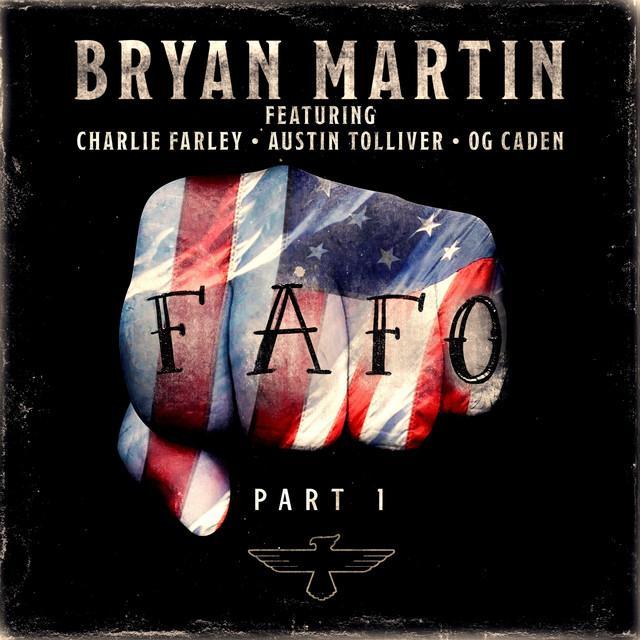
FAFO by Bryan Martin, Charlie Farley, OG Caden, Austin Tolliver
The meaning of FAFO Bryan Martin, Charlie Farley, OG Caden, Austin Tolliver starts with its blunt title and gets even clearer from there. This is a hard-edged country-rap warning song about pride, self-reliance, and defending personal boundaries. It presents a speaker who sees themself as rooted in Southern life, loyal to country, and ready to answer disrespect with force if pushed too far.
"FAFO" - Bryan Martin, Charlie Farley, OG Caden, Austin Tolliver
Fuck a welfare, no, I don't need 'em
Shotgun raised from the woods to the plate
Loading lyrics...
Unable to load lyrics
We're unable to display the lyrics at this time. Please try again later.
That does not make the song subtle. In fact, its whole appeal is that it refuses subtlety. The track turns attitude into identity: love of home, distrust of dependence, and a belief that talking big has consequences.
The Core Message Hiding in Plain Sight
At its center, the song is about drawing a line. The repeated hook, fuck around and find out
, works less like a joke than a rule. The narrator is telling outsiders, critics, or anyone who disrespects them that actions bring consequences.
The verses build that warning through a specific worldview. They connect patriotism, gun culture, work ethic, and Southern toughness into one package. When the song says I love my country
and I love my freedom
, it frames the speaker’s anger as something they believe is defensive, not random. They feel they are protecting a way of life.
Interpretation: The song is not only about fighting. It is also about identity performance. The threat matters, but so does the image of the person making it.
How the Verses Build a Southern Persona
Each artist adds details that make the narrator feel lived-in rather than generic. Hunting, fishing, trucks, loud pipes, and rural land all create a world where survival skills and independence matter. The line woods to the plate
is especially important because it ties food, labor, and self-sufficiency together. They are saying they know how to provide for themselves.
Another key phrase is blue-collar boy
. That phrase turns class identity into a badge of honor. In this song, being working-class is not presented as a hardship alone. It is presented as proof of toughness, pride, and moral seriousness.
The references to the South do similar work. Rather than using the region as mere scenery, the song treats it as a code. To be from there, in the song’s logic, is to know the rules: stand tall, do not beg, do not bluff, and do not test people lightly.
Patriotism, Defiance, and the Song’s Politics
The track links patriotism with resistance. It treats standing for the anthem, defending the Second Amendment, and rejecting handouts as connected values. Factually, the songwriters are listed as Austin Tolliver, Bryan Martin, Caden Brewer, Charlie Farley, and Jared Sciullo, which fits the collaborative, chest-out energy of the performance.
Interpretation: The song’s politics are less detailed than emotional. It is not offering policy argument. It is offering a posture: proud, anti-elitist, suspicious of weakness, and openly combative.
That is why the hook lands so hard. It turns political and cultural frustration into a simple personal threat. If someone mocks this worldview, the song says they may have to face the person behind it.
Why the Chorus Hits So Hard
The chorus works because it is easy to remember and impossible to misunderstand. It repeats key values, then ends with the warning. That structure matters. First comes the self-definition; then comes the consequence.
I love my country
I love my freedom
then comes the threat of payback.
In other words, the chorus says: this is who they are, this is what they protect, and this is what happens if someone crosses the line.
Sound, Delivery, and the Country-Rap Blend
Production is a huge part of the meaning. The beat leans on modern country-rap crossover habits: heavy low end, direct percussion, and vocal deliveries that alternate between sung hook and forceful rap verses. That blend lets the song feel both rural and confrontational.
Bryan Martin is known in outlaw-country circles for rough-edged storytelling, while Charlie Farley has long worked in the country-rap lane; their backgrounds help explain why the song sounds so natural in this hybrid style. Readers can see Martin’s official artist background at Bryan Martin and Farley’s long-running profile at Charlie Farley.
The vocals are not polished into softness. They are delivered with strain, bark, and swagger. That matters because the song depends on credibility. If it sounded too clean, the threat would feel fake. Instead, the roughness sells the message.
A Song About Boundaries More Than Violence
It is easy to hear only the aggression, and that is certainly part of the track. But the deeper structure is about boundaries. The repeated challenge is aimed at people who are running your mouth
or crossing a line. The speaker claims they are not hunting conflict for fun; they are answering disrespect.
Interpretation: Whether listeners buy that claim depends on their own values. Some will hear the song as a defense of personal responsibility. Others will hear it as macho escalation dressed up as principle. Both readings make sense because the song deliberately lives in that tension.
Why It Connects With Listeners
Songs like this work because they offer a simple emotional release. They let listeners imagine a world where bluffing ends, pride counts, and identity feels solid. The track gives them a clear enemy, a clear self-image, and a clear slogan.
That slogan is the whole point. “FAFO” is internet slang turned into a full cultural statement. In this version, it becomes a Southern, blue-collar anthem of warning. They are not asking to be understood gently. They are telling people exactly who they are and daring them to test it.
Final Take on the Meaning
The meaning of FAFO Bryan Martin, Charlie Farley, OG Caden, Austin Tolliver is a mix of regional pride, working-class identity, patriotism, and confrontation. It uses country-rap production and vivid rural details to turn a warning into a lifestyle statement.
Disclaimer: This interpretation is based on the released lyrics, performance, and public artist context. As with any song, listeners may hear different meanings depending on their own experience.








