Why 'I Feel for You' Hits So Hard
The meaning of I Feel for You Chaka Khan starts with a simple idea: intense attraction. But the song does not stay simple for long. It begins in the heat of physical desire, then slowly opens into something more vulnerable, where passion starts to sound a lot like love.
"I Feel for You" - Chaka Khan
Chaka Khan, Chaka Khan, Chaka Khan
Chaka Khan, let me rock you
Loading lyrics...
Unable to load lyrics
We're unable to display the lyrics at this time. Please try again later.
Written by Prince and first released by him in 1979, the song became a much bigger pop event when Chaka Khan turned it into a 1984 crossover smash. That version, produced by Arif Mardin, won major Grammys and helped relaunch Khan's solo mainstream profile. Those facts are widely documented by sources such as Songfacts and Wikipedia.
A Love Song That Admits Its Body First
At the lyric level, the song is striking because it does not pretend romance begins in a pure or poetic way. The speaker openly admits strong desire. Lines built around ideas like physical thing
and physically attracted
make that clear.
Still, the song does not sound cold. The emotional turn comes in the hook, where the repeated I feel for you
leads into I think I love you
. That word “think” matters. It suggests they are surprised by their own feelings, as if the body moved first and the heart is trying to catch up.
Interpretation: The song is about the moment when lust stops feeling casual. The singer still speaks in the language of touch and excitement, but the chorus reveals a deeper attachment forming underneath.

Watch the official I Feel for You
music video
How the Verses Build That Emotional Shift
The verses move in a clear pattern. First, the singer reacts to the other person's presence with a warm, immediate response. Then they admit satisfaction, comfort, and longing. By the time the chorus arrives, they are no longer only describing chemistry.
One of the song's smart choices is its honesty. Instead of hiding desire behind vague romance, it says the attraction is real and direct. That honesty gives the later confession more weight. When the song reaches love, it feels earned, not fake.
I feel for youI think I love you
That short refrain is the emotional center of the song. It sounds repetitive, but repetition is the point. They are trying to convince themselves as much as the other person.
Why Chaka Khan's Version Feels Bigger Than Prince's
Prince wrote the song and originally recorded it for his 1979 album Prince. His lyrics were already gender-neutral enough that Chaka Khan could sing them naturally. But her version changed the song's cultural impact through performance and production.
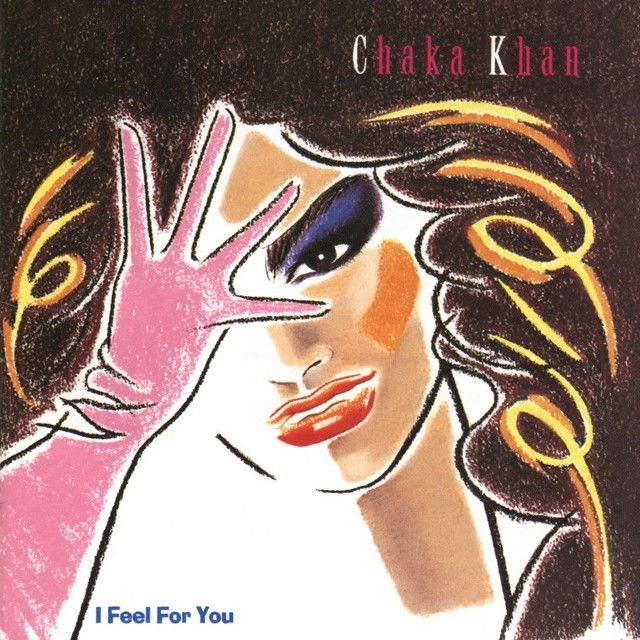
Khan's recording was released in October 1984 as the title track of her album I Feel for You. It was produced by Arif Mardin and featured Grandmaster Melle Mel and Stevie Wonder. It reached No. 3 on the Billboard Hot 100, No. 1 on the R&B chart, and became Khan's biggest solo hit.
Those details matter because the meaning is not only in the words. Khan's voice gives the song more force, joy, and dramatic warmth. Where the lyric could read as a private confession, her delivery turns it into a public celebration of desire.
The Sound Tells the Story Too
A big reason the song still feels alive is its layered sound. The track blends R&B and soul with 1980s synth-pop shine, funk rhythm, dance-floor energy, and an early hip-hop frame. That mix mirrors the lyric's message: physical excitement expanding into something larger.
The beat moves at a brisk pop tempo, and the arrangement keeps pushing forward. Synth bass and drum programming make the attraction feel urgent and modern. Stevie Wonder's harmonica adds a human, playful streak that softens the machine-like precision around it.
Then there is the famous intro. The repeated chant of Khan's name became one of the most memorable openings of the decade. According to Arif Mardin, the stuttering repeat happened by accident during studio work, and they decided to keep it. What started as a studio slip became a hook that made the song instantly recognizable.
The Rap Was More Than a Gimmick
Melle Mel's rap often gets remembered as a novelty, but it also changes how the song works. In 1984, rap was still new to many pop listeners. By placing a short rap at the intro and outro, the record framed desire as stylish, urban, and current without losing mainstream appeal.
Interpretation: The rap does not deepen the inner psychology of the song, but it does widen its world. It turns a one-on-one love confession into a larger cultural moment, where R&B, pop, and hip-hop meet in one track.
Why the Song Lasted
The meaning of I Feel for You Chaka Khan lasts because it captures a common emotional truth: people often recognize love after desire, not before it. The song does not judge that process. It simply follows it.
That is why the hook remains powerful. It is excited, uncertain, sensual, and sincere at the same time. Few pop songs say so plainly that attraction can be physical first and meaningful later.
Final Take
Chaka Khan's version of "I Feel for You" is about more than wanting someone. It is about the instant when wanting starts to feel personal, risky, and real. Through Prince's writing, Khan's vocal power, and a bold 1984 production style, the song turns desire into revelation.
Disclaimer: This interpretation is based on the released lyrics, performance, and documented production history. As with any song, listeners may hear meanings that differ from the one presented here.








