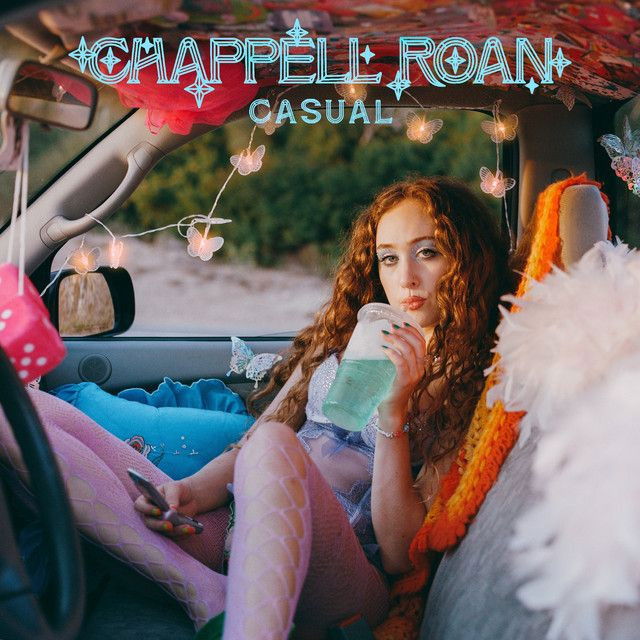
Casual by Chappell Roan
A bite-sized epic about mixed signals, Casual cuts to the bone of modern dating. The meaning of Casual Chappell Roan explores what happens when someone calls it casual while doing everything that feels like a relationship. Released in 2022 and later folded into her debut album, Roan’s slow-bloom ballad became a 2024 sleeper hit as her profile skyrocketed. Critics praised its stark honesty and melodic pull, and listeners latched onto its most pointed question: if this is casual, why does it hurt like love?
"Casual" - Chappell Roan
'Cause I'm still hanging around
I've heard so many rumors
Loading lyrics...
Unable to load lyrics
We're unable to display the lyrics at this time. Please try again later.
A bruised backstory, a late-bloom hit
Roan co-wrote the track with Dan Nigro and Morgan St. Jean and released it independently in October 2022. It later appeared on The Rise and Fall of a Midwest Princess. She has described the spark as a pandemic-era connection that felt intimate until the other person labeled it casual after the fact. That mismatch—intimacy without ownership—drives every line.
The song’s slow-build resonance tracked her ascent. In 2024, it became a sleeper hit on the Billboard Hot 100, part of a wave of Roan songs charting at once. The delayed success underscores how its story of a “situationship” found new ears as her voice became a pop constant.

Watch the official Casual
music video
The question at the heart of it
Roan frames the central conflict as a dare: can you call this casual when you act like we’re together? The chorus crystallizes that tension:
Knee deep in the passenger seat, and you’re eating me out Is it casual now?
The jolt isn’t for shock alone. It sets physical closeness against emotional distance, pressuring the partner to reconcile their behavior with their claims. The singer quotes their boundary—Baby, no attachment
—and then spends the song showing attachment everywhere.
Who’s talking, and who’s being talked to?
The narrator speaks in first person to an on-again, undefined partner. She’s candid about anger and self-doubt, while still chasing connection. When she cites Baby, no attachment
, she’s repeating the other person’s rule to expose its hollowness. Her tone swings from wounded to sarcastic to fed up, the way people sound when they’re trying not to care—and failing.
Bras, parents, and timelines that aren’t casual
Roan stacks everyday markers that quietly scream commitment. There’s the compressed timeline—Two weeks
—before your mom invites me
to a Long Beach house. There’s the domestic breadcrumb: a favorite bra
living in a dresser. And there’s social entanglement—talking down a sibling on the phone, meeting the parents at dinner.
Each detail undercuts the “it’s nothing” claim. Even the self-policing is telling: she tries to be the chill girl
, the cultural script that asks women to want less, ask less, and be breezy. The more she performs that part, the more the mask slips. These specifics make her case better than any accusation could.
How the sound carries the sting
Musically, Casual leans into downtempo pop and dream-pop textures, with synth sheen and soft-focus guitars. The mix gives Roan’s voice room to land every barb. Dan Nigro and Ryan Linvill’s production is unfussy: a pulsing drum bed, airy pads, and stacked vocals in the hook that feel both intimate and a little distant—fitting for a relationship that’s close and far at once. Critics have noted her “stately” delivery and the way multitracked harmonies lift the chorus, sharpening the contrast between tenderness and bite.
A three-act mini-drama
- Act I: Euphoria and denial. The physical chemistry is electric, and the label is “casual,” so they roll with it.
- Act II: Rationalizing. She logs evidence that contradicts the label: parents, drawers, routines. She keeps trying to be
the chill girl
, even as irritation grows. - Act III: Reckoning. The outro snaps into candor about frustration and self-respect. The line
I hate myself
isn’t self-loathing so much as a flash of regret for staying. The veil lifts; the situationship can’t survive that honesty.
What the chorus really means
The refrain’s question isn’t rhetorical fluff—it’s a demand. If intimacy, family access, and domestic overlap are in play, “casual” becomes a shield for one person’s comfort. The hook takes that shield away by forcing a yes-or-no answer.
Alternate angles worth considering
- Interpretation: It’s also a critique of the “cool girl” performance in dating culture. By quoting the rule—
Baby, no attachment
—and then listing attachments, Roan shows how the script fails real people. - Interpretation: Heard alongside the music video’s siren romance, the fling becomes a myth of irresistible danger—queer desire as both home and hazard. That framing explains the push-pull tone.
The takeaway
The meaning of Casual Chappell Roan is simple and stinging: when someone’s actions look like love but they insist on “casual,” they’re choosing control over care. The song hands listeners language—and evidence—to call that out.
Disclaimer: Song interpretations are subjective. This analysis reflects one informed reading of the lyrics, production, and public context.
Sources
- https://en.wikipedia.org/wiki/Casual_(song)
- https://www.rollingstone.com/music/music-features/chappell-roan-interview-1234616197/
- https://variety.com/2022/music/news/chappell-roan-casual-single-1235418093/
- https://pitchfork.com/reviews/albums/chappell-roan-the-rise-and-fall-of-a-midwest-princess/
- https://www.npr.org/2023/10/28/1209029031/chappell-roan-casual
- https://www.teenvogue.com/story/chappell-roan-casual-music-video
- https://www.billboard.com/charts/hot-100/









