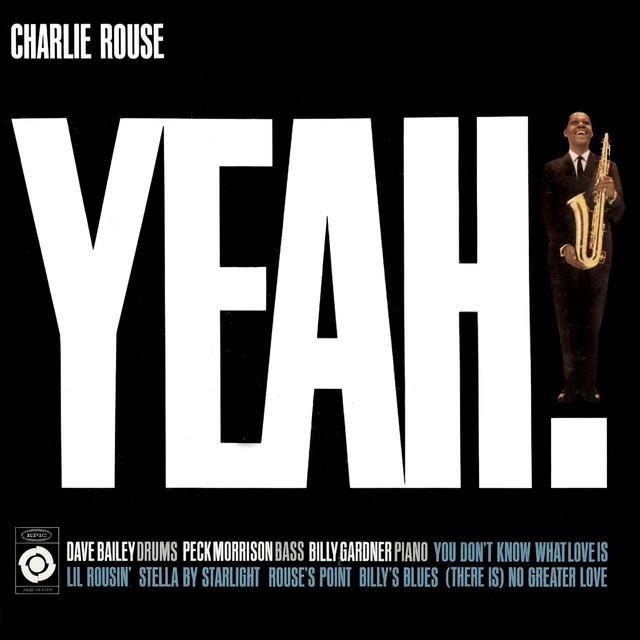
You Don't Know What Love Is by Charlie Rouse
A jazz standard built on hard lessons
The meaning of You Don't Know What Love Is Charlie Rouse starts with a blunt idea: real love is not proved by romance alone. In this song, love only becomes fully visible after loss, regret, and sleepless memory. The lyric does not celebrate pain for its own sake. Instead, it argues that heartbreak reveals how deep attachment really runs.
"You Don't Know What Love Is" - Charlie Rouse
'Til you've learned the meaning of the blues
Until you've loved a love you've had to lose,
Loading lyrics...
Unable to load lyrics
We're unable to display the lyrics at this time. Please try again later.
That idea comes from a song with a long history. Don Raye wrote the lyrics and Gene de Paul wrote the music in 1941 for the film Keep 'Em Flying, though it was removed before release and later used in Behind the Eight Ball, according to Wikipedia. By the time Charlie Rouse recorded it on Yeah! in 1961, it had already become a jazz standard, shaped by versions from Miles Davis, Dinah Washington, and others.
Watch the official You Don't Know What Love Is
music video
What the lyric is really saying
At its core, the song speaks to someone who thinks they understand love but has not yet suffered for it. The repeated title line, you don't know what love is
, sounds almost like a warning. It tells the listener that innocence and experience are not the same thing.
The verses build that point in steps. First, they connect love with sorrow through the meaning of the blues
. That phrase does two jobs at once: it refers to sadness in everyday life, and it nods to the emotional language of jazz and blues music.
Then the lyric gets more specific. It says people learn love when they have loved a love
they could not keep. In plain terms, love becomes real when it costs something. The pain is not just physical or dramatic. It is the slow ache of memory, regret, and emotional exposure.
How the images deepen the theme
The song uses simple body-based images to make heartbreak feel immediate. It mentions lips, tears, burning hearts, and dawn after a sleepless night. None of these images are flashy. That is why they work. They turn an abstract subject into something human and felt.
One of the strongest moments comes when the song describes fear of remembering:
a lost heart fears
the thought of reminiscing
This brief passage suggests that memory is almost as painful as the original breakup. The person is not only hurt by what happened; they are hurt by how easily the past returns. That is a major part of the song's emotional logic.
Another key image is sleepless eyes
. Paraphrased, the lyric says true love is understood after facing morning without rest. That detail matters because it shows heartbreak as ongoing. This is not one sad moment. It is a condition that lasts through the night and into the next day.
Why Charlie Rouse fits the song so well
Charlie Rouse is best known as a tenor saxophonist with a warm but grounded tone, especially from his years with Thelonious Monk. On Yeah!, he brings that directness to this standard. They do not need words in every moment because jazz interpretation often shifts meaning into phrasing, tone, tempo, and space.
Factual context: Rouse recorded the song as an instrumental performance on his 1961 album Yeah!, with a small-group jazz setting. In instrumental jazz, the melody carries the emotional burden that a singer might place on the text.
Interpretation: That matters here because the tune already holds a wounded kind of dignity. Rouse's tenor can lean into the melody without overacting it. Instead of making the song melodramatic, he lets it feel lived-in. The result is less like a speech about heartbreak and more like someone quietly carrying it.
How the sound carries the meaning
In many versions of this song, the harmony moves with a dark, late-night pull. The chords support the lyric's idea that love and pain are tangled together. Even without singing, listeners can hear tension and release in the melody.
Rouse's approach likely lands because of three musical traits:
- Tone: a full tenor sound suggests maturity rather than youthful fantasy.
- Phrasing: slight hesitations and bends can mirror uncertainty or emotional weight.
- Space: pauses let the melody breathe, which fits a song about reflection and loss.
This is one reason the song became such a durable standard after Miles Davis recorded it in 1954. Jazz players heard how much feeling was embedded in the composition itself. Charlie Rouse's version joins that tradition rather than trying to overpower it.
A song about love, or a song about suffering?
A useful reading is that the song is not anti-love. It is anti-simplification. It pushes back against easy talk about romance by saying love includes grief, fear, and consequence.
Interpretation: Some listeners may hear the lyric as almost severe, as if love only counts when it hurts. That is one possible reading. Another is more balanced: the song suggests pain is not the goal of love, but pain reveals love's depth when love is broken.
That distinction helps explain why the lyric still feels powerful. It does not say pleasure is fake. It says pleasure alone is incomplete.
Why this standard still resonates
The meaning of You Don't Know What Love Is Charlie Rouse remains strong because the song tells an uncomfortable truth in plain language. Many love songs focus on desire, joy, or devotion. This one focuses on what happens after idealism cracks.
For jazz audiences in the United States, that emotional honesty is part of the appeal. Standards survive when they leave room for both lyric meaning and musical personality. This song does exactly that. Rouse's reading keeps the hurt steady, restrained, and believable.
In the end, the song argues that love is measured not by how brightly it begins, but by how deeply it wounds when it is gone. That is why its sadness does not feel empty. It feels earned.
Disclaimer: This interpretation separates documented song history from critical reading. As with many jazz standards, meaning can shift across performances and listeners.







