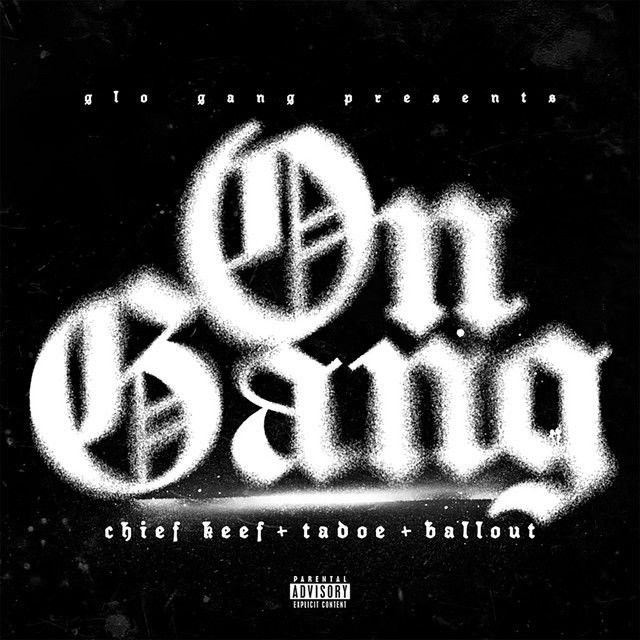
On Gang by Chief Keef, Tadoe, Ballout
The meaning of On Gang Chief Keef, Tadoe, Ballout starts with one idea: loyalty is not just a feeling here. It is a public identity, a threat, and a way of proving who belongs.
"On Gang" - Chief Keef, Tadoe, Ballout
Provided by LyricFindAyy, Young Malcolm
Woo
On gang (ayy, ayy)Loading...Loading lyrics...
Unable to load lyrics
We're unable to display the lyrics at this time. Please try again later.
Why This Hook Hits So Hard
Chief Keef has long been seen as one of the artists who pushed Chicago drill into the mainstream, especially through his early 2010s breakout and later independent work. Public biographies also place Tadoe and Ballout inside the Glo Gang orbit, which matters because this song sounds less like a solo statement and more like a crew roll call. Those facts are widely summarized in reference sources such as Chief Keef’s biography.
That context helps explain the hook. When they keep saying On gang
, they are not building a deep story line. They are building pressure. The phrase works like an oath, a tag, and a warning all at once.
Interpretation: the chorus turns loyalty into performance. They are not asking to be trusted. They are declaring that their words carry the weight of their people behind them.
Watch the official On Gang
music video
The Real Subject Is Group Identity
At surface level, the song is full of flexes: foreign cars, jewelry, drugs, and weapons. But the deeper point is how all those details support a group image. Even lines about a Corvette, an SRT, or expensive smoke are less about comfort than about rank.
In that sense, the meaning of On Gang Chief Keef, Tadoe, Ballout is about status inside a tight circle. They present wealth as visible proof that they made it, and they present danger as proof that the group should not be tested.
A short phrase like we five deep
says a lot. It suggests movement in formation, safety in numbers, and pride in being surrounded by allies. The song keeps returning to that idea: they are strongest when seen as a unit.
Flexing and Threats Share the Same Purpose
One reason the song feels so intense is that bragging and intimidation are blended together. A line about a luxury ride can sit right next to a threat. That is not sloppy writing. It shows how power is being defined.
Their world divides into two groups:
- those who have money, cars, and motion
- those who are broke, hiding, or pretending
So when they mock rivals for being unable to afford what they wear or smoke, the insult is about more than cash. It is about weakness. Short phrases such as the gross cost the most
and no face, no case
help frame a code where price, secrecy, and force all signal control.
Interpretation: the song treats consumption as evidence of survival. Nice things are not just luxuries. They are trophies.
A Brief Glimpse of Grief
In the middle of the flexing, one line stands out: the Tray Savage mention. Tray Savage was part of the wider Glo Gang world, and his death is part of the losses that have surrounded Chief Keef’s circle over the years, as noted in biographical coverage such as Wikipedia’s summary of Glo Gang members and deaths.
That reference changes the song for a moment. It adds memory and mourning to a track otherwise driven by aggression. They are still posturing, but they are also carrying the names of people who are gone.
This is where drill often becomes more complex than simple shock value. Even when the tone is cold, loyalty can include grief. The dead are not separate from the crew identity. They remain part of it.
How the Sound Carries the Message
The production matters as much as the lyrics. The beat is sparse, repetitive, and heavy, with space for ad-libs to hit like percussion. The repeated chants make the record feel ritual-like. Instead of moving through a big emotional arc, it locks into a mood and stays there.
That is a classic strength in Chief Keef’s catalog. Coverage of his career often notes how his style helped shape drill and later rap trends, especially through repetition, ad-libs, and hypnotic flows. This background is outlined in overviews like Chief Keef - Wikipedia.
The sound supports the meaning in three ways:
- The repetition makes loyalty feel absolute.
- The blunt drums make threats feel immediate.
- The loose vocal energy makes the track feel like a group session, not a polished speech.
Even a phrase like go, go no breaks
works partly because of delivery. It sounds like motion without pause, which fits a song obsessed with momentum and pressure.
What the Symbols Keep Repeating
Several images appear again and again:
Cars as moving status
Cars are freedom, wealth, and force. They also suggest motion through hostile space. When they rap about driving, sliding, or pulling up, movement becomes power.
Money as proof
Cash, blue faces, and jewelry are social signals. They are used to measure who is real and who is fronting.
Weapons as reputation
The weapon references are not there to tell a literal plot. They build a climate of risk. The song wants listeners to feel that reputation is enforced, not debated.
Titles and royalty
When Keef calls for a grander name and frames himself like a ruler, he is elevating street status into myth. That swagger turns a local identity into something larger-than-life.
Final Take on the Song’s Meaning
The meaning of On Gang Chief Keef, Tadoe, Ballout is not hidden. It is a raw, direct song about allegiance, hierarchy, and the way a crew turns shared language into power. The flexes, threats, and chants all feed that core message.
Interpretation: beneath the hard surface, the song also shows how drill can turn survival into ritual. They repeat the gang pledge so often because identity has to be said out loud to feel solid.
This article offers an interpretation based on the lyrics, artist context, and the song’s sound. Different listeners may hear its meaning differently.









