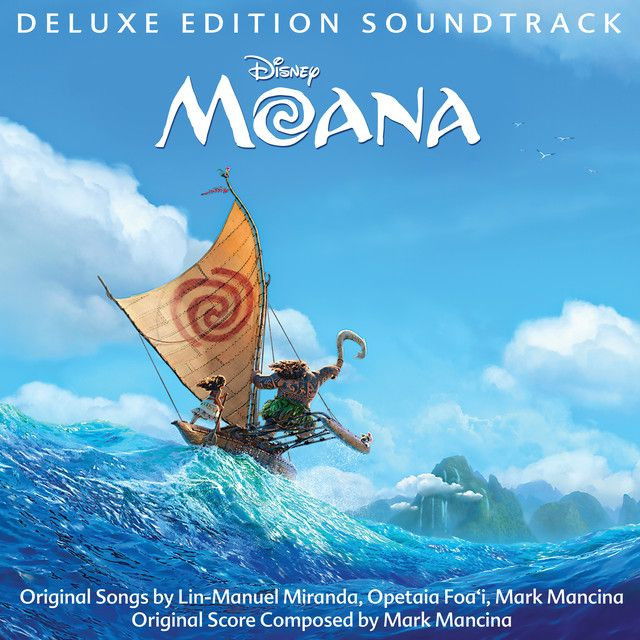
Where You Are Is Moana’s First Big Choice
The meaning of Where You Are Christopher Jackson, Rachel House, Nicole Scherzinger, Auli'i Cravalho, Louise Bush starts with a simple idea: home can feel both loving and limiting. In Disney’s Moana, this ensemble song introduces Motunui as a place of safety, order, and shared purpose. At the same time, it quietly shows why Moana feels pulled toward something larger.
"Where You Are" - Christopher Jackson, Rachel House, Nicole Scherzinger, Auli'i Cravalho, Louise Bush
Moana, it's time you knew
The village of Motunui is
Loading lyrics...
Unable to load lyrics
We're unable to display the lyrics at this time. Please try again later.
Written by Opetaia Tavita Foa'i, Lin-Manuel Miranda, and Mark Mancina for the 2016 film Moana, the song works as character setup and worldview in one scene. According to the film’s official soundtrack credits, it is a group number built around family voices, village responses, and Moana’s inner uncertainty. That structure matters to its meaning.
A Welcome Song With a Warning Inside
On the surface, the song celebrates island life. The adults teach Moana that Motunui already has everything the people need: food, work, tradition, and belonging. The repeated message is that happiness is where you are
, not somewhere beyond the reef.
But the song does more than praise community. It also teaches obedience. Her father frames staying put as wisdom, while leaving becomes both dangerous and unnecessary. When the villagers sing that no one leaves
, the line sounds reassuring, yet it also reveals the emotional boundary around Moana’s life.
Interpretation: this is why the song feels warm and tense at the same time. It is not a villain song. It is a love song to home that accidentally becomes a cage.

Watch the official Where You Are
music video
The Push and Pull Between Duty and Desire
The clearest conflict in the song is between inherited duty and personal calling. Chief Tui sees Moana’s future as settled. The village needs leadership, and he believes she will learn to find joy in service, routine, and continuity.
Moana, however, hears a different truth in herself. Even before the story’s bigger adventure begins, she is drawn to movement, water, and discovery. When she sings about liking the water because it misbehaves
, that playful phrase reveals a deep connection. She is not attracted to chaos for its own sake. She is attracted to freedom, curiosity, and the unknown.
That is what makes the song dramatically strong. Nobody is lying to her. Her parents and community genuinely believe they are protecting her. Moana’s longing is genuine too. The song lets both sides sound reasonable, which makes the conflict feel human instead of simple.
Family Voices Shape the Song’s Meaning
Each singer adds a different layer. Christopher Jackson’s Chief Tui represents order, leadership, and fear of risk. Rachel House’s Gramma Tala carries the song’s most important note of openness. Nicole Scherzinger, as Sina, softens the conflict by standing between firmness and understanding. Auli'i Cravalho gives Moana a voice full of restlessness and wonder.
Tala’s guidance is especially important. She does not openly reject the village, but she makes space for inner truth. Her advice about the voice inside
reframes the song. Until that moment, the number sounds like a lesson in fitting in. After her verse, it becomes a lesson in listening carefully.
This is why Tala changes the emotional balance. She suggests that identity is not only inherited from family. It is also discovered inwardly.
The Coconut Lesson Means More Than It Seems
One of the song’s smartest devices is the coconut section. It sounds playful and almost comic, but it has a real symbolic job. The coconut becomes proof that the island is complete, practical, and self-sustaining. Every part has a use; nothing is wasted.
That image supports the older generation’s worldview. If the island provides everything, then leaving looks foolish. Survival and tradition line up neatly. The community’s logic is strong because it is built on lived experience.
Interpretation: the coconut also symbolizes a closed system. It is efficient and beautiful, but it does not answer Moana’s emotional hunger. Material sufficiency is not the same as personal purpose.
How the Music Carries Safety and Restlessness
Mark Mancina’s production and the song’s ensemble design help express its ideas. The arrangement moves with bright percussion, layered vocals, and a communal pulse that mirrors village life. Listeners hear teamwork before they even think about it.
At the same time, the number keeps shifting between group singing and Moana’s more individual lines. That contrast matters. The chorus feels grounded and collective, while Moana’s moments feel lighter and more searching. In Disney’s official film page, the story is framed around her call to the ocean, and this song musically plants that tension early.
The result is subtle but effective:
- group vocals suggest belonging
- steady rhythm suggests stability
- Moana’s phrasing suggests curiosity
- Tala’s verse opens emotional space
So even before the plot turns outward, the sound tells listeners that Moana does not fully fit inside the life planned for her.
Why the Chorus Matters So Much
The chorus is the heart of the song because it turns location into philosophy. Saying happiness is where you are
is not only advice about gratitude. It is a full belief system. Stay rooted. Accept your place. Trust the community’s path.
That idea is powerful because it is partly true. Many people do find identity through home, family, and responsibility. The song respects that truth. It does not mock tradition.
But in Moana, the chorus is also something the heroine must test. The story asks whether home is a final destination or a starting point. By the end of the film, Moana does not reject her people. She becomes strong enough to serve them by going beyond what they feared.
The Lasting Meaning of “Where You Are”
In the end, “Where You Are” is about the first major choice in Moana’s life: remain defined by expectation or follow the deeper self that has not yet found its shape. The song honors home while showing that love can sometimes confuse safety with destiny.
That is why it remains one of the most important songs in Moana. It gives the movie its central tension before the voyage even starts. Home is real. Duty is real. But so is the inner pull toward a wider horizon.
Interpretation note: song meaning can vary by listener, especially in a film musical where story, voice performance, and visual context all shape the experience.








