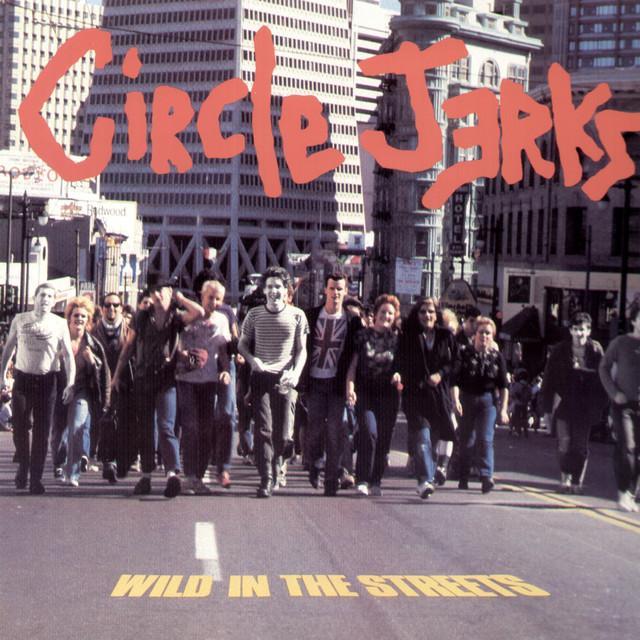
Wild in the Streets by Circle Jerks
Why This Cover Still Feels Dangerous
The meaning of Wild in the Streets Circle Jerks starts with a useful fact: this is not an original Circle Jerks song. It was written by Garland Jeffreys, and Circle Jerks turned it into the opening track of their 1982 album Wild in the Streets, their second studio release, issued by Faulty Products, a sub-label of I.R.S. Records. That album was recorded in late 1981 at A&M in Hollywood and produced by David Anderle and Gary Hirstius.
"Wild in the Streets" - Circle Jerks
Wild in the streets
Wild in the streets
Loading lyrics...
Unable to load lyrics
We're unable to display the lyrics at this time. Please try again later.
Even so, their version has become the one many punk fans know best. That matters because the band do not just perform the song; they reframe it. What may have once sounded like streetwise rock now feels like a hardcore warning siren.
Watch the official Wild in the Streets
music video
The Core Idea: Youth as a Social Panic
At heart, the song is about young people moving outside adult control. The repeated hook, wild in the streets
, is simple but loaded. It suggests freedom, danger, noise, and public disorder all at once.
Interpretation: The song is not only cheering on rebellion. It also shows how rebellion looks from the outside: messy, chemical, tribal, and hard to manage. The streets become a stage where adults see a threat and teenagers see an escape.
The verses support that idea with snapshots of summer heat, intoxication, cars, gangs, and careless motion. When the singer mentions things like heat of the summer
and needing something to cure my buzz
, the world feels sweaty, overstimulated, and barely held together. This is not a calm coming-of-age song. It is youth culture presented as a pressure cooker.
A Chorus Built for Motion, Not Reflection
One reason the song sticks is that the chorus does almost all its work through repetition. The words do not explain much. They rush.
Wild in the streets
running, running
That tiny refrain turns the song into action. The young people in it are not sitting at home thinking about identity. They are moving. The phrase running, running
can sound exciting, but it can also suggest fleeing consequences, boredom, or authority.
Interpretation: That double meaning is central to the song. Running can be liberation, panic, or both.
The Details Paint a Rough Youth Scene
The most revealing lines are the concrete ones. A '64 Valiant
, some pills, some beers, a gang called the Wolves, and a challenge to join or get hurt: these are not grand symbols. They are street-level details.
Together, they create a portrait of teenage life that feels half myth and half local news story. Cars stand for freedom. Substances stand for self-medication and recklessness. Gangs stand for belonging, but also for danger.
The line about newspaper writers
is especially sharp. It brings in the media, suggesting that adults, police, and the press all watch youth culture from outside and often flatten it into a problem to solve. The song seems to understand that some of the chaos is real, but it also hints that public panic helps create the legend.
“Mrs. America” and the Failure of Adults
The most pointed moment may be the address to Mrs. America
. The song asks whether she cares what her “favorite son” has done, then answers with a blunt no.
That is one of the clearest clues to the song’s meaning. It shifts the focus from teenage behavior to adult neglect. Instead of treating youth unrest as random bad behavior, the lyric points toward a culture that looks away until things turn ugly.
Interpretation: “Mrs. America” works as both a literal parent figure and a national symbol. In that reading, the song says the country itself has failed to understand its own kids.
How Circle Jerks Change the Message
Circle Jerks were one of the key American hardcore bands of the early 1980s, with Keith Morris on vocals, Greg Hetson on guitar, Roger Rogerson on bass, and Lucky Lehrer on drums. Their version of this song appears on an album packed into just 25 minutes and 37 seconds, which tells readers a lot about their style: short, fast, forceful songs.
That style changes the meaning. In Garland Jeffreys’ hands, the song had a different musical frame. In Circle Jerks’ hands, the guitars slash, the drums push hard, and Morris sounds less like a storyteller than a street prophet barking headlines. The production is still clear enough to keep the hook catchy, but the tempo makes every image feel more unstable.
So the cover does two things at once:
- It keeps the song’s rebellious shine.
- It adds hardcore urgency and menace.
That is why the track fits so well on an album that also includes songs like “Question Authority” and “Political Stu.” On this record, wild in the streets
is not just youth culture. It is part of a larger distrust of authority, media, and middle-class comfort.
Why the Song Endures
The song lasts because it captures a cycle that never quite ends in the United States. Every generation has a version of this story: adults fear the kids, the kids test the limits, and the culture argues over whether it is a moral collapse or a normal burst of energy.
What makes Circle Jerks’ version memorable is that it refuses to clean up that conflict. It sounds fun, ugly, catchy, and threatening all at once. That tension is the point.
For anyone asking about the meaning of Wild in the Streets Circle Jerks, the best answer is this: it is a punk snapshot of youth rebellion as both freedom and public crisis. It thrills to the rush of breaking loose, but it also shows the emptiness, violence, and adult indifference around that rush.
Final Take
The song does not offer a neat lesson. It throws listeners into heat, speed, chemicals, gangs, and neglect, then leaves them to sit with the noise.
That is why it still hits. Interpretation: They make rebellion sound alive, but never fully safe or noble. This article reflects one informed reading of the song, and lyric meaning can remain open to other valid interpretations.








