
Why ‘Heather’ by Conan Gray Hurts So Much
They don’t need the whole diary to feel the sting. “Heather” compresses jealousy, longing, and self-doubt into a few vivid images. The power of the song lies in how ordinary details—third of December
, me in your sweater
—carry a lifetime of comparison.
"Heather" - Conan Gray
Me in your sweater, you said it looked better
On me, than it did you, only if you knew
Loading lyrics...
Unable to load lyrics
We're unable to display the lyrics at this time. Please try again later.
The ache at the center: what “Heather” really says
The meaning of Heather Conan Gray comes down to unrequited love and self-comparison. The narrator wants someone who is clearly drawn to Heather, not to them. They watch that attention shift and feel smaller every second. This isn’t just rejection; it’s the specific pain of being replaced by someone who seems effortlessly perfect.
Interpretation: Heather isn’t only a person. She is also an ideal—beauty, kindness, social ease. When the narrator whispers wish I were Heather
, they aren’t just asking to win the crush; they’re asking to become the kind of person who gets chosen in the first place.
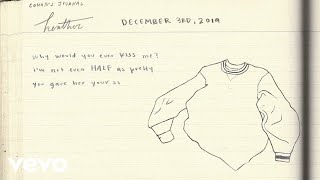
Watch the official Heather
music video
Who’s speaking in this winter snapshot
“Heather” is written in intimate first person, like a late-night voicemail. The scene opens on a memory—third of December
—and a shared moment signaled by a borrowed sweater. That small prop is a stand-in for closeness and status. When the sweater moves back toward Heather, the narrator’s hope moves with it.
They admire their crush even as they see where his eyes go as she walks by
. The line says it plainly: attention is a finite resource, and the narrator doesn’t have it.
How the story unfolds: tiny humiliations
Here are the key beats, each one tightening the knot:
- A compliment about the sweater creates brief intimacy.
- The crush looks past the narrator toward Heather—
brighter than a blue sky
—and the mood breaks. - Public touch—hand-holding, an arm around a shoulder—confirms the narrator’s fear.
- The narrator fights mixed feelings: admiration (
she’s such an angel
) and a flash of ugly envy, which they immediately regret.
Each moment happens in daylight, around other people. That visibility deepens the shame. The narrator is not just unloved; they are unseen while someone else is adored.
What the chorus confesses
The hook distills the self-doubt into one raw question and a bruised comparison:
Why would you ever kiss me? I’m not even half as pretty
Interpretation: The chorus isn’t really a question for the crush; it’s the narrator arguing with their own reflection. It shows how envy turns outward rejection into inward criticism. The refrain returns because those thoughts do.
Symbols that sting: sweater, December, and angels
- Sweater: More than fabric, it’s proof of closeness. When the crush gives it to Heather, the narrator loses that proof. The phrase
me in your sweater
shifts from comfort to reminder. - December: A season of cold and holidays, it underscores isolation. The date fixes the memory in time, like a snapshot they can’t unsee.
- Angel vs. envy: Calling Heather
such an angel
frames her as flawless, which intensifies the narrator’s jealousy. The song captures that messy contradiction—liking someone you also resent. - Blue sky:
Brighter than a blue sky
paints Heather as radiant and inevitable. How can anyone compete with the weather?
How the sound makes the pain intimate
The production is sparse: soft acoustic guitar, gentle dynamics, and close-mic vocals that feel whispered in confidence. Subtle harmonies and restrained percussion step in only to lift the hook. That minimalism leaves space for breath, hesitations, and the catching voice on key words. Producer Dan Nigro’s clean, unfussy approach keeps the focus on the lyric and melody, which matches the diaristic tone.
Interpretation: The restraint suggests the narrator is holding themselves together. There’s no explosive bridge, no cathartic key change—just a steady ache that fits the everyday cruelty of comparison.
Alternate readings: personal, queer, and universal
- Queer reading: Many fans hear a boy who likes a boy who likes a girl. That triangle sharpens the sense of impossibility and explains the wish to be Heather—a wish to be the kind of person the crush would love.
- Universal reading: “Heather” also works without labels. Heather becomes any rival, any standard you feel you can’t reach. The song speaks to anyone who has felt invisible next to someone else’s glow.
Both readings can coexist. The emotional truth—envy, longing, and the hope of being chosen—remains the same.
Why it resonated beyond the song
“Heather” spread quickly because its story is simple, specific, and easy to map onto personal moments. Short phrases like while I die
and wish I were Heather
land as captions for real feelings. The melody’s hush invited listeners to share confessions, and the sweater/December imagery gave them a scene to reenact.
Takeaway: what the meaning offers listeners today
The meaning of Heather Conan Gray is not about winning the crush. It’s about surviving the moment you feel unlovable and learning that comparison always loses. The narrator doesn’t get closure; they get honesty. That honesty is why the song lingers.
Disclaimer: Song meanings are interpretive. This reading blends artist context with critical analysis and may differ from individual experiences.