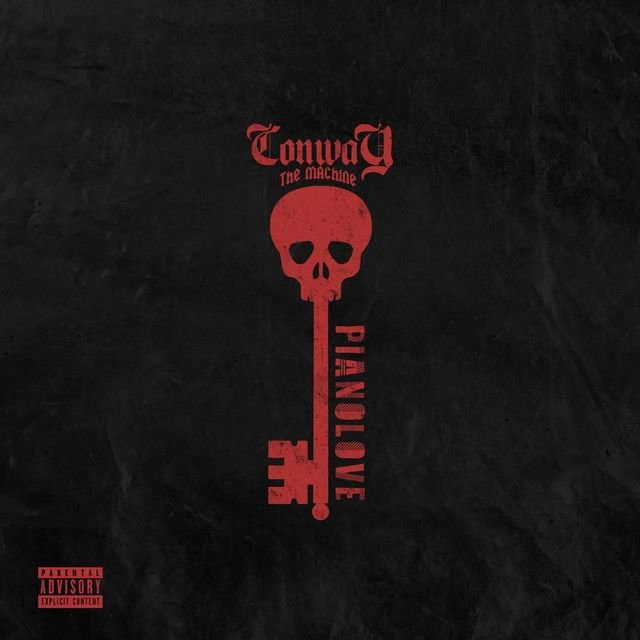
Piano Love by Conway the Machine
Conway the Machine turns luxury rap into something colder and heavier on “Piano Love,” where every reward still carries the memory of danger.
"Piano Love" - Conway the Machine
Provided by LyricFindYeah, uh
Bought my bitch the Chanel jacket with the big Chanel bag
Sneak the hammer in the club, the realest bitch I ever had (ah)Loading...Loading lyrics...
Unable to load lyrics
We're unable to display the lyrics at this time. Please try again later.
Why the meaning hits so hard
The meaning of Piano Love Conway the Machine comes from a tense mix of victory and threat. On the surface, they rap about designer gifts, jewelry, sports-box status, and drug money. Under that surface, the song keeps reminding listeners that none of that comfort is separate from violence, loyalty, and survival.
That split is what gives the track its power. Conway presents success, but they do not frame it as peace. Instead, wealth looks like proof that they escaped one level of hardship while still carrying its rules. The result is a song about status that never feels relaxed.
Factually, “Piano Love” was released as the lead single from God Don’t Make Mistakes, Conway’s Shady Records debut, and it was produced by The Alchemist. Pitchfork described the song as part of an ominous, luxurious style where Conway and The Alchemist create something “bleak and beautiful.”
Watch the official Piano Love
music video
Grit dressed in luxury
One of the song’s clearest ideas is that street experience and high-end style are not opposites in Conway’s writing. They place Chanel, jewelry, and arena-level seating right next to plugs, trap spots, and armed retaliation. That contrast is the whole design.
When Conway mentions Chanel jacket
and then quickly shifts to the hammer in the club
, they are not changing topics. They are showing that glamour and danger live side by side. The image of success is always protected by force.
Interpretation: The song suggests that luxury is not healing. It is armor, evidence, and sometimes bait. Conway sounds proud of what they earned, but they also sound unable—or unwilling—to separate that success from the world that made it necessary.
The hook as a cycle, not a celebration
The repeated chorus matters because it locks the song into a loop. Each time the hook returns, listeners hear the same pattern: gift, weapon, supplier, cash, local power, and armed support. That repetition makes the lifestyle feel less like a one-time triumph and more like a system.
A phrase like whatever I ask
sounds like power at first. But in context, it also points to dependence. The same is true of richest nigga in my city
. It is a boast, but it is also defensive, as if rank must be restated to stay real.
So the chorus does not simply celebrate success. It reinforces the idea that Conway’s rise still runs on the same code: access, reputation, and readiness for violence.
Street detail gives the song its realism
The verses are packed with concrete details, and those details make the track feel lived-in. They mention ramen, wrist pain from whipping, windows covered with newspapers, and water being off while the stove still works. Those are not abstract crime-rap ideas. They are tactile memories.
That matters because the song’s bragging becomes more believable when tied to deprivation. A line like hood nigga still eat the ramen noodles
keeps the song grounded. Even after wealth, Conway signals that the old mentality remains.
Another key phrase is stove workin'
. The point is bigger than drug cooking itself. The image says survival does not wait for comfort. If basic living conditions fail, the operation continues anyway.
Interpretation: This is why the song feels harsher than a standard victory lap. Conway is not saying they forgot scarcity. They are saying scarcity trained them so deeply that even success sounds like emergency mode.
What the piano and drums add to the meaning
The Alchemist’s beat is essential to the song’s message. Reviews noted its spindly piano keys, dampened drums, and creaking groove. That production gives the track a haunted elegance rather than a glossy shine.
The piano does not soften the song. It makes it eerier. Instead of sounding triumphant, the beat feels like a dim room where expensive objects sit next to hidden weapons. The drums stay restrained, which gives Conway more space to land each threat and flex with weight.
Pitchfork argued that Conway and The Alchemist work in symbiosis here, with Conway’s phrasing opening up the producer’s dark pockets and the beat sharpening the words. That is a useful way to hear “Piano Love.” The production is not just background; it translates the lyrics into atmosphere.
Buffalo pride and local power
The song is also deeply rooted in place. Conway references Buffalo status symbols and local names, making clear that their success is not generic rap wealth. It is hometown ascendancy.
That local focus matters because the song keeps returning to respect. In this world, status is measured by what someone survived, what they built, and who stands with them. Even the most threatening bars point back to reputation and territory.
The most chilling part of the song is how casually that violence is presented. Conway describes a place where public danger has become normal. That is not framed as shocking inside the song; it is framed as the cost of the environment.
A deeper reading of “Piano Love”
A simple reading says the song is about money, muscle, and dominance. That reading is true, but incomplete.
Interpretation: A deeper reading is that “Piano Love” is about the inability to fully leave survival behind. Conway has more wealth, more visibility, and more industry recognition, yet their language keeps circling back to the trap, the shooters, and the code of retaliation. Success expands the scenery, but it does not rewrite the instincts.
That is what makes the meaning of Piano Love Conway the Machine so compelling. It is not just luxury rap. It is luxury rap haunted by memory.
Final takeaway
“Piano Love” works because Conway and The Alchemist make contradiction sound natural. The song is stylish but grim, proud but tense, rich but still hungry. They present a world where beauty never cancels danger; it only changes how danger looks.
That mix is why the track lingers. It sounds like a win, but it feels like vigilance.
Disclaimer: This article offers interpretation based on the lyrics, performance, and available release context. Song meanings can vary by listener and are not limited to one reading.








