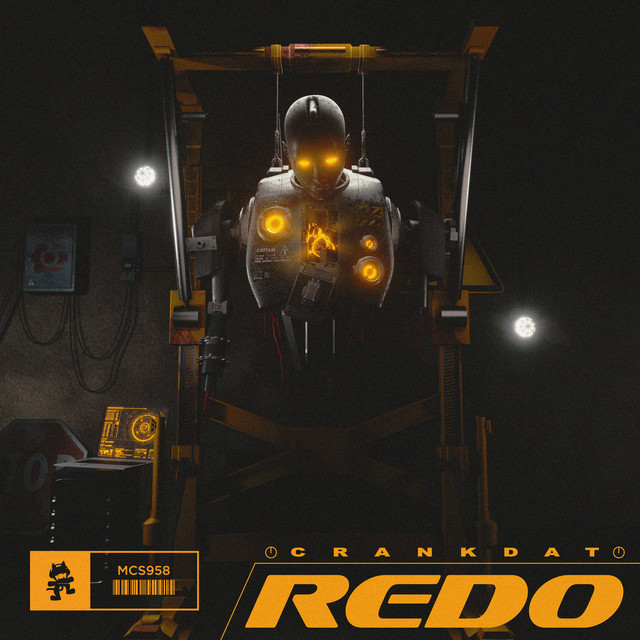
Why 'Redo' by Crankdat Feels So Bittersweet
The meaning of Redo Crankdat comes down to a simple but strong feeling: loving someone is not always the hard part; running out of time is. In this song, they present a speaker who feels certain about the relationship, yet still aches when that person is gone.
"Redo" - Crankdat
But I wish we could pause and press rewind
When I'm not with you
Loading lyrics...
Unable to load lyrics
We're unable to display the lyrics at this time. Please try again later.
Crankdat is best known for hard-hitting EDM, dubstep, trap, and melodic bass, and he released “Redo” as a 2020 single during a very busy stretch of his career. Factually, Crankdat is the stage name of Christian Smith, an American producer from Ohio, and “Redo” was released on Monstercat in 2020, a period when his catalog showed both aggressive and melodic sides (Wikipedia). That context matters because “Redo” leans into the melodic, emotional side of his sound.
A Love Song About Time, Not Doubt
On the surface, the lyrics are very direct. The speaker says I know that you're mine
, which gives the song a feeling of security. This is not a story about jealousy, betrayal, or confusion. They seem confident that the bond is real.
But that certainty does not erase longing. The central wish is to pause and press rewind
. In plain terms, the speaker wants to stop time, revisit a moment, and stretch out closeness that disappeared too fast. That makes the song less about losing love and more about not getting enough of it.

Watch the official Redo
music video
When Distance Creates the Real Conflict
The main emotional turn arrives when the song admits when I'm not with you
. That line explains everything. The problem is absence.
The speaker does not question the relationship itself; they struggle with separation. Then the hook lands on hopin' for a redo
, which sounds less like regret over a mistake and more like a wish for another chance at the same feeling. They want more time, more presence, more shared space.
What the story seems to be
A simple timeline can help:
- They feel sure about the relationship.
- Time with that person feels too short.
- Separation makes the feeling stronger.
- They wish they could relive those moments again.
That structure is one reason the song works so well. It takes a common feeling—missing someone after they leave—and turns it into a clean, memorable emotional loop.
The Hook Turns Longing Into a Loop
One of the smartest parts of “Redo” is how repetitive it is. The song circles around the same ideas instead of moving through lots of details. That mirrors the emotional experience it describes.
When people miss someone, they often replay moments in their head. They think about what just happened, what ended too fast, and how they wish they could go back. The repeated phrases make the listener feel that loop in real time.
I know that you're mine
But I wish we could pause and press rewind
That short passage captures the whole emotional design. First comes certainty, then comes desire. They have the person emotionally, but not fully in the moment they want.
Small Words, Big Emotional Stakes
The lyrics use very simple language, and that simplicity is part of the song’s power. There is no heavy metaphor system and no complicated plot. Instead, the song uses everyday words like run out of time
and “rewind” to make the feeling immediate.
Interpretation: “Redo” treats romance almost like a media player. If life had a pause button, the speaker would use it. If memory had a rewind button, they would press it. That technology-based language makes the emotion feel modern and relatable, especially for listeners used to replaying songs, videos, and moments on screens.
It also gives the song a soft sadness without making it tragic. This is not devastation. It is yearning.
How Crankdat’s Sound Changes the Meaning
Production matters a lot to the meaning of Redo Crankdat. Press coverage at the time even described the single as “uplifting,” which fits the listening experience (DJ Times). Even without a dense lyrical story, the music can carry emotion in a big way.
Crankdat built his name through explosive remixes and bass-heavy originals, but his catalog also includes melodic material. In “Redo,” that melodic instinct helps turn a private feeling into something larger. The vocal idea is tender, but the surrounding production likely lifts it into a bright, soaring space rather than a stripped-down ballad.
Interpretation: That contrast is key. If the lyrics were sung over only piano, they might feel lonely. In an EDM setting, they feel hopeful. The speaker is still aching, but the music says the feeling is worth celebrating, not hiding.
A Few Plausible Readings
There is a clear main meaning, but the song allows for more than one angle.
Romantic reading
Most listeners will hear it as a love song about missing a partner. The repeated reassurance and the desire to relive time together support that reading.
Timing reading
Interpretation: The song can also be heard as a comment on modern life. People may love each other deeply and still feel defeated by schedules, travel, work, or distance. In that sense, the enemy is not another person. It is time itself.
Why the Song Connects So Easily
“Redo” is catchy because it does not overcomplicate its message. Nearly anyone has felt that small drop after a good moment ends. They leave, the room changes, and suddenly they want one more hour, one more conversation, one more chance to stay in that feeling.
That is why the song lands. It puts a universal emotion into a few plain phrases and lets Crankdat’s polished electronic production make it feel huge.
The Last Word on “Redo”
In the end, the meaning of Redo Crankdat is about emotional replay: being sure of love, but still wishing time would slow down. The song’s repeated lines, modern “rewind” imagery, and uplifting sound all point to the same idea—sometimes the happiest relationships still come with a painful sense of not enough time.
That interpretation fits the lyrics and the track’s melodic energy, but like any song, meaning can shift from listener to listener. This reading is an informed interpretation, not a statement of official artist intent.








