Why ‘Who’ll Stop the Rain’ Still Hits Hard
The meaning of Who'll Stop The Rain Creedence Clearwater Revival starts with a simple image and grows into something much bigger. In just 2:29, Creedence Clearwater Revival turn bad weather into a symbol for public confusion, broken promises, and the feeling that history keeps repeating itself.
"Who'll Stop The Rain" - Creedence Clearwater Revival
Clouds of mystery pourin' confusion on the ground
Good men through the ages tryin' to find the sun
Loading lyrics...
Unable to load lyrics
We're unable to display the lyrics at this time. Please try again later.
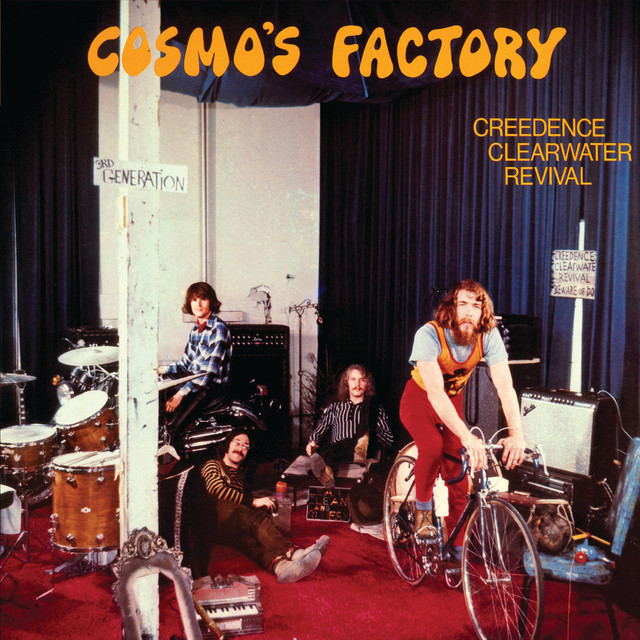
Factually, the song was written and produced by John Fogerty, appeared on Cosmo’s Factory, and was released in January 1970 as the B-side to Travelin' Band
. It went to No. 2 on the Billboard Hot 100 and later became one of the band’s signature tracks.
A Small Song With a Huge Shadow
On the surface, the song describes rain that never seems to end. But the writing quickly makes clear that this is not only about weather. The opening image, rain been comin' down
, frames the problem as ongoing and familiar. This is not a sudden storm. It is a condition people have been living under for a long time.
That is why the chorus matters so much. When the singer asks Who'll stop the rain
, it sounds less like a practical question and more like a moral one. Who can stop confusion, fear, and disappointment once they become part of everyday life?
Interpretation: The song’s power comes from how open that question is. It invites political, personal, and cultural readings all at once.

Watch the official Who'll Stop The Rain
music video
History, Power, and Failed Answers
The first two verses move through big systems, not private romance. The lyric mentions good men through the ages
, suggesting that generations have tried to fix human problems and still fallen short. The song does not mock those efforts. Instead, it sounds tired and saddened by how little progress sticks.
The second verse gets more pointed. References to government planning and reform programs hint at public policy, ideology, and grand promises. In one of the song’s sharpest images, those promises are described as golden chains
. That phrase suggests something attractive on the outside but restrictive underneath.
This political angle is not just fan theory. Fogerty said, in a quote widely cited by sources including Songfacts, that he was talking about Washington when he wrote it. That does not lock the song into a single meaning, but it does support the idea that the “rain” includes public life gone wrong.
The Woodstock Thread in the Story
Another key part of the song’s story is Woodstock. According to Wikipedia and Songfacts, Fogerty later connected the song to what he saw at the 1969 festival: huge crowds, mud, cold, and nonstop rain.
That context helps explain the final verse, where music and community do not fully solve the problem. People gather, cheer, and try to stay warm, but the storm continues. Even shared joy cannot erase the larger unease.
“Heard the singers playin’ how we cheered for more crowd had rushed together tryin’ to keep warm”
This is the article’s only longer lyric quote, and it shows the song’s emotional turn. Music brings people together, but it does not magically fix the world outside the song.
How the Sound Supports the Meaning
Part of why this track lasts is its understatement. CCR do not treat the song like a dramatic protest anthem. The arrangement is steady, plainspoken, and folk-rooted, which fits the band’s roots-rock style. That calm musical surface makes the message feel more human and believable.
Fogerty’s voice is especially important. He does not oversing the question at the center of the track. Instead, he sounds worn down but still searching. That balance keeps the song from becoming preachy.
The rhythm also matters. It moves forward without rushing, almost like a person walking through bad weather because there is no other choice. The music accepts persistence even as the lyrics question it.
Why the Song Feels Timeless
The reason listeners keep returning to it is that the song never names one villain, one war, or one event directly. That gives it range. It can fit the Vietnam era, distrust in government, Woodstock disillusionment, or any moment when people feel trapped under forces they cannot control.
That broad reach helps explain its long life in American culture. The song ranked No. 188 on Rolling Stone’s 2004 list of the 500 greatest songs, and it has appeared in films and live covers for decades. Bruce Springsteen, among others, has kept it in circulation through performance.
The Best Way to Read Its Central Question
So what is the best reading of the meaning of Who'll Stop The Rain Creedence Clearwater Revival? The strongest answer is that the song holds several truths together. It is political without being only political. It is personal without becoming private. It remembers a real muddy weekend while also asking why public life keeps failing ordinary people.
Interpretation: The “rain” is any force that keeps falling on people—war, propaganda, false hope, mass disappointment, or the exhaustion of watching leaders promise sunshine and deliver storms.
That layered writing is why the song still lands. It sounds modest, but it thinks big.
Disclaimer: This interpretation separates documented facts from informed reading. Like many classic songs, “Who’ll Stop the Rain” supports more than one meaning, and listeners may hear different emphases in its imagery and context.








