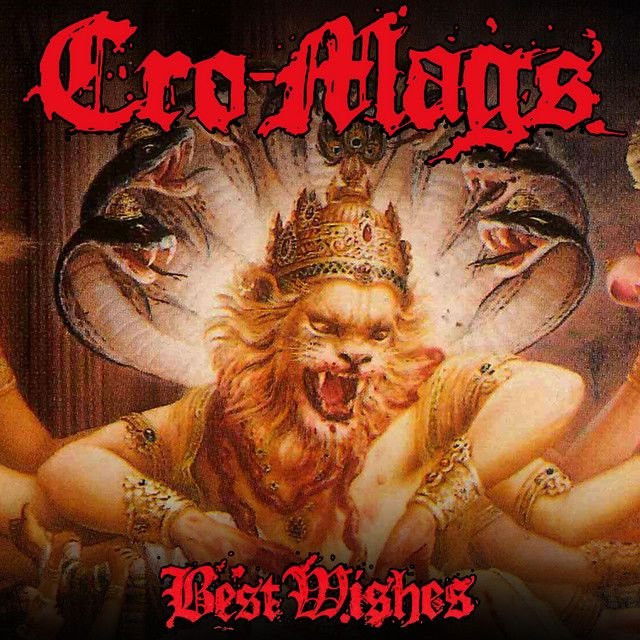
Age of Quarrel by Cro-Mags
The meaning of Age of Quarrel Cro-Mags starts with a blunt idea: they present the modern world as morally sick, spiritually empty, and headed toward self-destruction. Rather than telling one personal story, the song scans society at large. It attacks war, greed, environmental ruin, addiction, street violence, and public apathy, then turns that anger into a demand for change.
"Age of Quarrel" - Cro-Mags
The war against the weak goes on continuously
Can't you smell the bodies burning
Loading lyrics...
Unable to load lyrics
We're unable to display the lyrics at this time. Please try again later.
Cro-Mags released The Age of Quarrel in September 1986 as their debut album, recorded at Eastside Studios in New York and produced by Chris Williamson. The record became a key text of New York hardcore, with later praise from critics and musicians who saw it as foundational to the scene. Those facts matter because the song’s warning voice is not isolated; it comes from a band working at the center of a fast, aggressive, politically charged movement.[1][2]
A World Described as Rotten
At the song’s core, they describe a society ruled by hypocrisy and appetite. Early lines connect political violence with profit, not principle. When the lyric mentions iron age of hypocrisy
, it frames the era as hard, cold, and fake at once.
That idea expands through images of warfare and cruelty. The song suggests that the powerful harm the weak while pretending their actions are necessary. Its outrage is not abstract. It points to suffering bodies, deliberate torture, and violence carried out for gain.
Interpretation: They are not only condemning specific acts. They are arguing that the whole moral system is bent toward exploitation.

Watch the official Age of Quarrel
music video
From Global Horror to Street-Level Ruin
One reason the song hits hard is its structure. It moves from huge public crimes to what they see outside an ordinary window. That shift tells listeners that collapse is both global and local.
The middle of the lyric attacks environmental damage in direct terms. The song describes poisoned air, land, and sea, then blames human interference with nature for creating a kind of man-made hell. The phrase nature's plan
suggests that the band sees modern life as out of balance, not just inconvenient.
Then the focus narrows. The narrator looks outward and sees addiction, gangs, assault, and poverty. By placing those conditions side by side, the song presents urban suffering as another symptom of the same age of quarrel. It is not random chaos. It is social decay made visible.
The Title’s Bigger Meaning
The album title The Age of Quarrel is widely linked to the Hindu concept of Kali Yuga, often translated as an age of quarrel, deception, or illusion.[1] That context deepens the meaning of Age of Quarrel Cro-Mags because the song feels bigger than a news report. It sounds like a diagnosis of an entire era.
That spiritual backdrop fits Cro-Mags well. The band often mixed street-level realism with moral or spiritual searching. Even when the lyrics are furious, they are not celebrating destruction. They are warning that society has fallen away from truth.
Not Just Rage, but a Moral Alarm
The final section makes this clear. After describing grief and social decline, the song stops sounding like pure complaint and starts sounding like a call to duty. The line change our course
is crucial because it turns observation into responsibility.
Here is the song’s one compact turning point:
Now's the time
change our course
stand and fight
for a brighter day
Those phrases show that the song’s anger serves a purpose. They want resistance, not surrender.
How the Sound Carries the Message
Musically, the song’s meaning depends on force. The Age of Quarrel is generally classified as hardcore punk, with strong metal elements already emerging on the album.[1] That blend matters. Hardcore gives the song speed, urgency, and confrontation, while metal adds weight and menace.
The guitars are built to hit fast and hard, and the rhythm section keeps everything tense and forward-moving. Vocals are delivered like warnings shouted into a crowd. There is little softness in the arrangement, which suits lyrics about a world that feels permanently under attack.
Writers and critics have often pointed to the album’s importance in shaping East Coast hardcore.[1][2] That legacy helps explain why the song still feels potent: its sound is not polished protest music. It is pressure, alarm, and action.
A Song of Witness and Resistance
Another key to the meaning of Age of Quarrel Cro-Mags is the speaker’s position. They are not detached observers. They sound like witnesses who have seen too much and feel compelled to answer it.
Interpretation: The lyric’s repeated questions are important because they challenge listener passivity. When the song asks what is happening and whether it is time to stop, it pushes the audience into the moral frame. Silence becomes part of the problem.
That is why the closing vision matters so much. The song does not imagine easy hope. It imagines earned hope, won through struggle, awareness, and solidarity.
Why It Still Lands
The song remains powerful because its targets still feel current: endless conflict, poisoned environments, social fragmentation, and the normalization of suffering. Even without naming specific leaders or events, it captures a recurring fear of modern life: that people learn to live inside crisis and stop reacting.
Cro-Mags refuse that numbness. They answer it with speed, volume, and a demand for conscience.
In that sense, the song is both a time capsule of 1980s New York hardcore and a broader warning about what happens when greed replaces humanity. Interpretation: Its real message is that decay is real, but so is the duty to resist it.
Disclaimer: This article offers an interpretation of the song based on its lyrics, historical context, and the band’s era. Meaning can vary from listener to listener.







