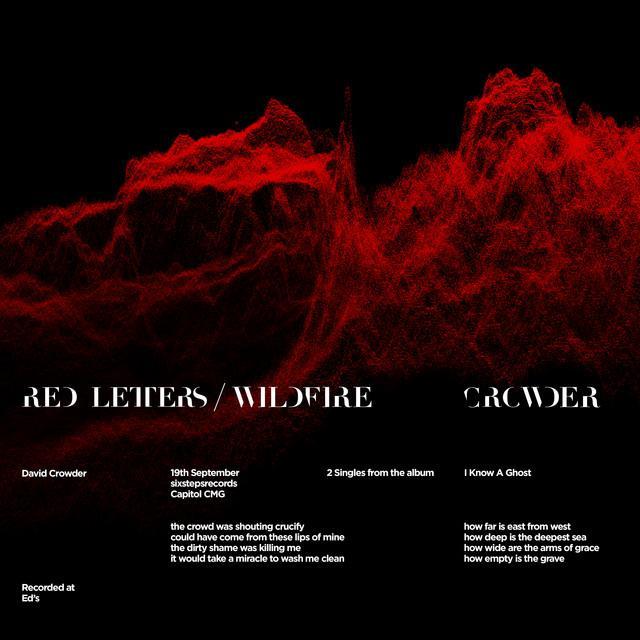
How “Red Letters” Turns Guilt Into Freedom
The meaning of Red Letters Crowder starts with a simple image and opens into a full testimony. In many Bibles, the words of Jesus are printed in red. Crowder takes that visual detail and turns it into a song about judgment, mercy, and release.
"Red Letters" - Crowder
Guilty in the first degree
Son of God hanging on a hill
Loading lyrics...
Unable to load lyrics
We're unable to display the lyrics at this time. Please try again later.
Released in 2018 as a single from I Know a Ghost, “Red Letters” became one of Crowder’s bigger songs, reaching No. 9 on Billboard’s Hot Christian Songs chart and later earning an RIAA Gold certification for the United States. It was written by David Crowder and Ed Cash, who also produced it. Those facts matter because the song feels carefully built to join message and sound in one clear arc.
A courtroom, a cross, and a changed life
At its core, the song presents salvation as a personal rescue story. The speaker begins in a place of guilt, using legal language like death row
and guilty in the first degree
. They are not describing a literal prison case. Instead, the song uses a courtroom image to dramatize spiritual guilt.
That setup matters because it makes the chorus hit harder. The turning point comes when the speaker says they read the red letters
. In plain terms, they encounter the words of Jesus and understand them as life-changing truth. The result is not mild comfort. It is a complete reversal: fear becomes freedom, shame becomes grace, and spiritual death becomes life.
Interpretation: Crowder is not only singing about reading scripture. He is singing about being read by it—about hearing Christ’s words so directly that the listener sees their own guilt and their own rescue at the same time.

Watch the official Red Letters
music video
Why the prison imagery is so important
One of the song’s strongest moves is how it links inner shame to physical images. The speaker says the burden of sin is crushing, then describes the effect of grace with prison walls started falling
. That phrase makes freedom feel concrete.
This is where the song becomes easy to connect with, even for people who do not use church language every day. Many listeners know what it feels like to live under regret, habits, or self-accusation. Crowder translates theology into images of chains, walls, and release.
Then I read the red letters
And the ground began to shake
The prison walls started falling
And I became a free man that day
That short section acts like the song’s thesis. It says freedom is not earned. It arrives as an act of grace that breaks in from outside the self.
The cross sits at the center
The song’s most direct Christian claim is that Jesus takes the place the speaker deserved. The lyrics move from guilt to substitution: Christ is pictured suffering where the guilty person should have stood. That is why the song keeps returning to destiny, shame, and release.
Crowder has explained that the idea came from the tradition of “red letter” Bibles and from seeing a larger story of rescue running through scripture. In his comments about the song, he described that “meta-narrative” as God’s rescue woven through the Bible. That background helps explain why “Red Letters” sounds both personal and big-picture. It is one person’s testimony, but it also points to a larger gospel story.
How the sound carries the message
Musically, “Red Letters” is built like a breakthrough. According to published song data, it runs about 3:48, is in B major, and moves at a brisk 148 BPM. That tempo gives the track urgency. It does not sit in sorrow for long.
The production blends modern Christian pop with worship and some of Crowder’s rootsy instincts. The beat feels driving, the chorus opens wide, and the vocal delivery sells conviction more than complexity. Instead of sounding quiet and reflective, the song pushes forward like a testimony that cannot stay private.
That choice fits the lyric arc. The verses carry tension and weight. Then the chorus expands with motion and lift, matching the idea of walls dropping and life returning. When the song mentions a dead heart coming alive, the production supports that with a fuller, brighter sound.
Artist context makes the title richer
Crowder has often mixed old church language with modern textures, and “Red Letters” is a strong example. The title might sound niche at first, but it is actually a smart hook. It takes a familiar Christian publishing detail and gives it emotional power.
There is also a historical layer behind it. Crowder has pointed to Louis Klopsch, the publisher associated with early Red Letter Bible editions, as part of the inspiration. That history matters because the song is not randomly using a color image. It is drawing on a long tradition of highlighting the words of Jesus as central.
The title also works because red suggests both ink and blood. Interpretation: that overlap gives the song extra depth. The words of Jesus are not just teachings on a page; they are tied to sacrifice, covenant, and redemption.
Why the song connected with listeners
Part of the meaning of Red Letters Crowder lies in how directly it speaks. It does not hide behind abstract poetry. It gives listeners a before-and-after story. Before: guilt, shame, spiritual death. After: grace, awakening, freedom.
That clarity likely helped its reception. The song earned Dove Award nominations and became a top 10 Christian hit. It works in church settings, but it also works on radio because its central feeling is universal: the hope that a person’s worst condition is not their final identity.
Final takeaway
“Red Letters” is about what happens when the words of Jesus move from page to person. Crowder turns theology into a rescue scene, using courtrooms, prison walls, shaking ground, and waking hearts to show a life changed by grace.
For many listeners, that is the whole appeal: the song says freedom is possible, and it sings that message like it has already happened.
Disclaimer: This interpretation is based on the lyrics, documented background, and public artist comments. Song meaning can remain personal, and listeners may hear different shades of emphasis within the same message.








