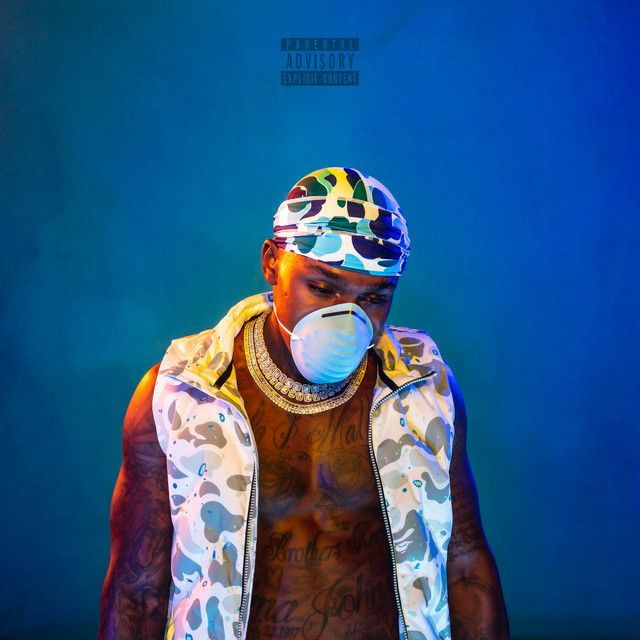
Why "JUMP" Hits So Hard
The meaning of JUMP DaBaby, YoungBoy Never Broke Again comes down to motion, menace, and momentum. The song is not subtle. It is built to feel loud, restless, and always one second away from chaos.
"JUMP" - DaBaby ft. YoungBoy Never Broke Again
Okay, let's go, nigga
(Rocco did it again)
Loading lyrics...
Unable to load lyrics
We're unable to display the lyrics at this time. Please try again later.
Released on DaBaby's Blame It on Baby in April 2020, with YoungBoy Never Broke Again as the featured guest, “JUMP” became one of the album’s standout tracks and reached the top 20 of the Billboard Hot 100. Factually, it is a trap record produced by Rocco Did It Again! and DJ K.I.D., with a heavy bassline and bright, squeaky synth details that make the beat feel both playful and dangerous.
What gives the song its charge is that contrast. They rap about money, status, sex, and street power, but the production makes those themes feel almost cartoonishly spring-loaded. That tension is the whole point.
A Hook About Reaction, Not Just Hype
At the center of the song is the repeated idea make it jump
. In plain terms, they are saying they can make people move fast, whether that means the club, the street, or the rap game. The phrase works as a flex, but it also signals control. They present themselves as the force that changes the temperature in any room.
The most famous image in the hook compares that reaction to crack in the '80s
. Paraphrased, they are claiming explosive impact and instant attention. That line is meant to sound shocking, and it does. It tells listeners this is a song about effect: what happens when they show up, speak up, or threaten action.
Interpretation: The hook is not just bragging about popularity. It frames both rappers as catalysts. They do not describe themselves as passive stars enjoying success. They describe themselves as people who trigger movement, fear, and excitement.
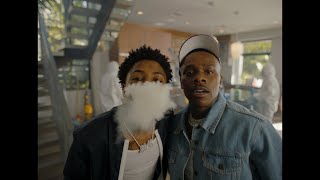
Watch the official JUMP
music video
Success and Violence Sit Side by Side
One major theme is how wealth and danger are presented as part of the same identity. In one breath they mention family money and success, and in the next they switch to weapons and retaliation. The line about royalty money going straight to my baby
is a good example. It shows pride in providing for a child, but the song never slows down long enough to become tender.
That matters because “JUMP” treats success as something that must be defended. Jewelry, chart power, and expensive living are not framed as comfort. They are framed as proof that they won and are ready to protect that win at all times.
This is also where DaBaby and YoungBoy overlap well as artists. Both built public images around aggression, toughness, and survival. On this track, they amplify each other instead of softening those edges.
How the Verses Build the Song's World
The verses move fast, but their ideas are consistent:
- They establish physical confidence and celebrity.
- They warn rivals not to test them.
- They connect money to family and legacy.
- They return to threats, making paranoia feel normal.
The repeated references to being armed and ready turn the song into a world where pressure never drops. Even casual moments feel guarded. When one rapper says he is clutchin'
, the point is not only possession of a weapon. It is mental readiness.
That is why the song feels less like a story with a beginning and end and more like a permanent state of alert. They are not describing one conflict. They are describing a lifestyle built on expecting conflict.
Big rocks on my wrist
Big Glock on my hip
Those two short images, placed together, sum up the record's worldview: luxury and danger are worn side by side.
The Beat Explains the Meaning
Production is crucial to understanding “JUMP.” Reports on the song's composition describe a bouncy trap beat driven by bass, hi-hats, whistles, and electronic textures. That sound matters because it keeps the track from feeling heavy in only one way.
If the lyrics were placed over a darker, slower beat, the song might feel grim. Instead, the instrumental is springy and hyperactive. It almost dares the listener to move. That is why some critics heard it as exhausting but effective, while others called it one of the album's most fun moments.
Interpretation: The beat turns threat into spectacle. It does not erase the violence in the lyrics, but it packages that violence inside a high-energy performance. The result is a song that feels exciting first and troubling second.
Artist Context Sharpens the Song
“JUMP” appeared on Blame It on Baby, an album released during a period when DaBaby's public image was under close scrutiny. Some reviewers saw the project as defiant rather than apologetic. In that context, this track sounds like a refusal to back down. Instead of softening his image, they lean deeper into force, bravado, and reaction.
YoungBoy's feature helps that message. His delivery is rough, urgent, and instinctive, which fits the beat perfectly. Rather than offering contrast, he doubles the song's sense of unstable energy.
The music video added another layer by using pandemic-era cleaning and distancing imagery while the artists still dance and perform wildly. That visual choice turned the song's title into something almost literal: even in lockdown, they are still making the room “jump.”
Final Take on "JUMP"
The meaning of JUMP DaBaby, YoungBoy Never Broke Again is not hidden. It is about making an impact so strong that people react instantly. They link fame, wealth, fear, and performance into one package, then let the beat make it feel thrilling.
Interpretation: At its core, “JUMP” is a power fantasy. It sells the idea that control comes from energy, reputation, and the ability to make others move on command.
That said, song meaning is always part fact and part interpretation. Different listeners may hear “JUMP” as a pure adrenaline record, a portrait of rap bravado, or a darker look at how success and paranoia can become inseparable.








