Why 'Lose Yourself to Dance' Feels So Free
The meaning of Lose Yourself to Dance Daft Punk, Pharrell Williams starts with a simple idea: sometimes the healthiest thing a person can do is stop thinking and move. Daft Punk built the song as more than a party track. They turned it into a warm, physical invitation to leave stress behind and join a shared rhythm.
"Lose Yourself to Dance" - Daft Punk ft. Pharrell Williams
I know your life is speeding and it isn't stopping
You take my shirt and just go ahead and wipe up all the
Loading lyrics...
Unable to load lyrics
We're unable to display the lyrics at this time. Please try again later.
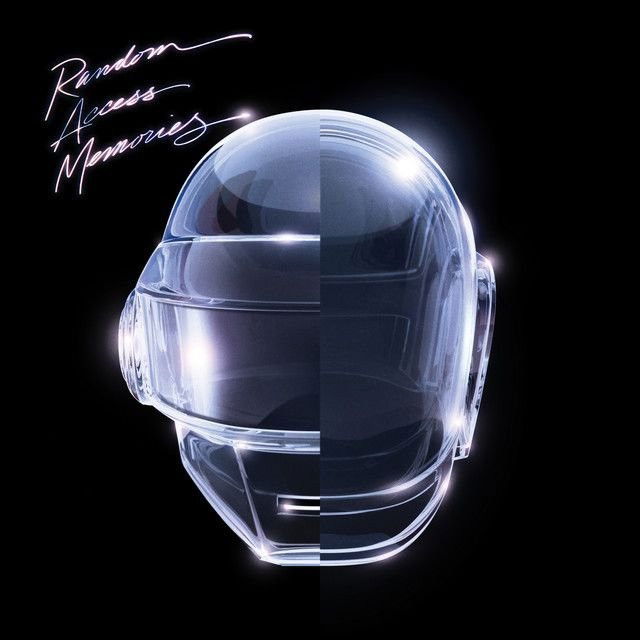
Released on Random Access Memories in 2013 and sent to radio as the album's second single, the track paired Daft Punk with Pharrell Williams and Nile Rodgers during one of the duo's biggest pop moments. Factually, it was written by Thomas Bangalter, Guy-Manuel de Homem-Christo, Pharrell Williams, and Nile Rodgers, and produced by Daft Punk. It also featured live players including Rodgers on guitar, Nathan East on bass, and John "J.R." Robinson on drums.[Wikipedia]
A Dance Song About Relief, Not Just Fun
On the surface, the song sounds minimal. The words are spare, the hook repeats, and the message seems obvious: lose yourself to dance
. But that simplicity is the point. The song speaks to someone whose life is moving too fast, someone who rarely gets a break.
The opening lines describe pressure and speed. They suggest a person stuck in constant motion, with no pause long enough to breathe. When the lyric mentions your life is speeding
, it frames dancing as the opposite of modern overload.
Interpretation: They are not just talking about a club. They are presenting the dance floor as a place of reset, where a person can stop performing control and simply feel present.
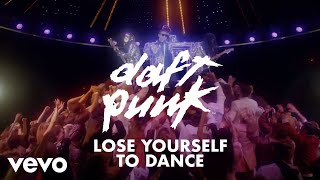
Watch the official Lose Yourself to Dance
music video
Who They Are Talking To
The voice in the song is direct and personal. It sounds like one person addressing another, gently pushing them toward release. There is also a flirtatious edge, especially in the sweaty, close-contact imagery.
That sensual side matters, but it does not fully define the track. When the singer mentions sweat, sweat, sweat
, the point is not only attraction. It also highlights effort, heat, and the physical truth of dancing. This is not abstract freedom. It is freedom felt in the body.
The Scene in Three Quick Beats
- They notice someone who is overworked and overstimulated.
- They invite that person into a physical, rhythmic space.
- The crowd joins in until individuality starts to blur into shared motion.
That last step is important. The song keeps returning to everybody dancing on the floor
, which expands the message from one-on-one invitation to collective release.
Why the Repetition Matters
Many listeners hear the repeated chorus as hypnotic, and that is exactly why it works. A more detailed lyric might have distracted from the feeling Daft Punk wanted. Repetition turns the hook into a command, a mantra, and almost a breathing exercise.
Lose yourself to dance
Lose yourself to dance
This is the song's emotional center. The phrase strips away explanation and leaves only action. Interpretation: The repetition mimics what dancing does to the mind. Thought loops disappear, and a person narrows into beat, body, and now.
Daft Punk themselves described the track in primal terms. Thomas Bangalter said they wanted to redefine dance music as something "lighter" and "more primal," while also evoking unity on the dance floor.[Wikipedia] That comment helps explain why the lyrics are so lean. They are reaching for instinct, not argument.
How the Sound Carries the Meaning
A big part of the meaning of Lose Yourself to Dance Daft Punk, Pharrell Williams comes from the production. Even though Daft Punk are electronic icons, this track leans on human performance. The groove feels hand-played, tight, and alive.
At around 100 BPM in B-flat minor, the song moves with confidence rather than frenzy.[Wikipedia] Nile Rodgers' guitar chops give it bounce. The bass sits deep in the pocket. The drums hit hard, with the kind of clap-and-cymbal lift critics often pointed out.[Wikipedia]
Pharrell's vocal is cool and persuasive instead of explosive. He does not sound like he is begging for attention. He sounds like he already knows the groove will win. His calm delivery makes the invitation feel natural.
Meanwhile, Daft Punk's vocoder textures add their signature machine-human contrast. The result is classic Random Access Memories: future-facing music made from old-school touch.
A Song About Human Connection
The track also fits the larger artistic idea behind Random Access Memories. That album famously looked backward to move forward, using live musicians and studio craft to reconnect dance music with human feel.[Wikipedia] In that context, this song is almost a mission statement.
Interpretation: They are saying that dance music is not just about digital perfection or club spectacle. It is about people becoming connected through rhythm. The song's title points to surrender, but the surrender is positive. A person loses ego and gains contact.
That helps explain why the track has lasted beyond its chart run. It reached dance and pop audiences in multiple countries and later earned major certifications, including Platinum in the United States.[Wikipedia] Yet its real staying power comes from how clearly it captures a need many listeners recognize: the need to get out of their heads.
The Best Way to Hear It
The smartest reading is also the simplest. This is a song about giving in to movement when life feels too fast. It uses flirtation, repetition, sweat, and groove to turn dancing into a kind of relief.
In other words, the song is not shallow because it says one thing over and over. It is powerful because that one thing is enough.
Disclaimer: This interpretation blends documented facts with critical reading. As with any song, listeners may hear different meanings based on their own experiences.







