Why 'Technologic' Still Feels Too Real
Daft Punk's "Technologic" is one of those songs that can sound simple at first and unsettling a minute later. It is built from a long chain of short commands, delivered in a pitched-up robotic voice over a hard electronic groove. That design is the key to the meaning of Technologic Daft Punk: they turn everyday tech actions into a portrait of a culture that moves fast, consumes fast, and rarely pauses.
"Technologic" - Daft Punk
Trash it, change it, melt - upgrade it,
Charge it, point it, zoom it, press it,
Loading lyrics...
Unable to load lyrics
We're unable to display the lyrics at this time. Please try again later.
A Song About Commands, Not Conversation
Released in 2005 as the second single from Human After All, "Technologic" sits right in the middle of Daft Punk's fascination with machines, identity, and repetition. Factually, it was written by Thomas Bangalter and Guy-Manuel de Homem-Christo and produced by Daft Punk; it appeared on the duo's third studio album, released in 2005.
The lyric is basically a command list. Words like buy it, use it
and fix it
do not tell a personal story. Instead, they sound like instructions from a device, a sales pitch, or a software menu. That matters because the song removes emotion from language and replaces it with functions.
Interpretation: The point is not just that technology exists. The point is that it trains people to think in tasks, upgrades, and transactions.
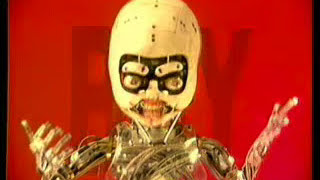
Watch the official Technologic
music video
The Core Idea Behind the Lyrics
Most songs use lyrics to reveal feelings. "Technologic" does the opposite. It reduces life to actions: save, load, print, send, rename. Even small phrases like drag and drop it
and zip - unzip it
feel familiar because they come from ordinary computer behavior.
That familiarity is what gives the song its bite. Daft Punk take boring digital habits and stack them until they feel hypnotic. At first the list sounds clever and catchy. Then it begins to feel oppressive, like a system that never stops asking for input.
Touch it, bring it, pay it, watch it,Turn it, leave it, start - format it.
In context, that short sequence captures the song's broader message. Human attention, entertainment, money, and memory all get folded into the same cycle. They touch, watch, pay, and reset.
How the Hook Sharpens the Meaning
The repeated title, Technologic
, works like a brand slogan and a machine chant at the same time. It does not explain anything. It labels everything.
That is a smart move. By repeating a single word after dozens of commands, Daft Punk suggest that all these actions belong to one system. Shopping, editing, clicking, copying, and upgrading become parts of the same digital loop.
Interpretation: The hook sounds triumphant on the surface, but it can also feel empty. It celebrates progress while hinting that progress has turned into routine.
Sound Design as Meaning
A big part of the meaning of Technologic Daft Punk comes from the production. The beat is stiff, repetitive, and sharp-edged. The vocal is electronically transposed, which makes the speaker sound less like a person and more like a machine giving orders.
That choice fits Human After All, an album built around the tension between human bodies and robotic systems. Where earlier Daft Punk tracks often felt warm, glossy, or playful, "Technologic" is colder and more stripped down. Its groove is still danceable, but the dance feels mechanical.
The production also mirrors the lyric structure. Short bursts of words hit like inputs. The rhythm feels like clicking, scanning, or processing. Instead of singing about modern life, the song behaves like modern life.
The Album Context Matters
On Human After All, Daft Punk leaned into rougher textures and repeated phrases. Songs like "Robot Rock" and the title track also focus on reduced language and machine identity. "Technologic" may be the purest version of that idea.
Placed in that album world, the song feels less like a novelty and more like a thesis. Daft Punk were exploring what happens when human life starts to sound programmed. The title Human After All suggests that beneath the robot masks, something human remains. "Technologic" tests that claim by pushing language almost all the way into machine code.
Video, Reception, and Cultural Echo
The music video, directed by Daft Punk, pushes the same idea visually with a small robot figure, flashing text, and the duo on a pyramid stage. Guy-Manuel de Homem-Christo once said they thought it would be funny to place the duo in a bigger pyramid after using a little robot in the video. Even that brief comment shows how knowingly artificial the presentation was.
The song also lasted because its concept traveled well. Parts of its vocal were reused in Busta Rhymes' "Touch It," and Daft Punk later folded both songs into their Alive 2007 performances. That crossover helped prove how memorable the command rhythm was.
It also appeared in ads and pop culture throughout the 2000s. That is fitting: a song about tech systems became part of the media system itself.
Two Strong Readings of the Song
There are at least two convincing ways to hear "Technologic":
- Satire of digital life. The commands pile up until technology feels exhausting, commercial, and controlling.
- Celebration of modern rhythm. The song finds musical pleasure in ordinary digital actions and turns them into a futuristic groove.
Both readings can be true at once. Daft Punk often lived in that space between admiration and critique.
Final Take on "Technologic"
The lasting power of "Technologic" comes from how little it says and how much it suggests. Daft Punk take everyday computer verbs and reveal a whole worldview inside them. The meaning of Technologic Daft Punk is not hidden in a complex story. It is right there in the endless commands: modern life can feel efficient, exciting, and strangely inhuman all at once.
Disclaimer: This interpretation blends documented context with critical reading. Like most art, the song can support more than one meaning.







