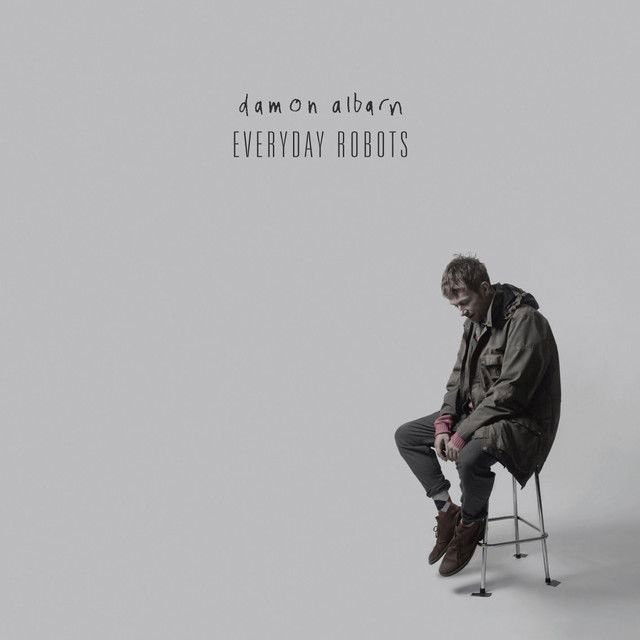
Lonely Press Play by Damon Albarn
The meaning of Lonely Press Play Damon Albarn centers on a simple but powerful idea: music can become a coping tool when emotions are too tangled to solve directly. The song is quiet, strange, and intimate. Rather than telling a full story, it circles around loneliness, uncertainty, and the wish that sound itself might bring comfort.
"Lonely Press Play" - Damon Albarn
Accepting that you live with uncertainty
If you're lonely press play
Loading lyrics...
Unable to load lyrics
We're unable to display the lyrics at this time. Please try again later.
Damon Albarn released the song on his solo debut Everyday Robots, a record often described as reflective and inward-looking. That context matters, because this track fits the album’s habit of turning small private moments into bigger emotional questions.
A Chorus That Works Like a Survival Button
At the center of the song is the repeated line when you're lonely press play
. In plain terms, the speaker suggests that music is not just entertainment. It is a response to isolation.
That phrase feels almost like advice, but it also sounds like confession. By the end, the song shifts from addressing someone else to admitting when I'm lonely I press play
. That move is important. It turns a general statement into something personal and vulnerable.
Interpretation: the song suggests that playlists, records, or even one familiar song can act like emotional first aid. They cannot fully fix pain, but they can hold a person together for a while.

Watch the official Lonely Press Play
music video
Uncertainty Is the Song’s Real Subject
One of the first striking words is arrhythmia
. Literally, it refers to an irregular heartbeat. In the song, it seems to symbolize emotional imbalance. The heart is not steady, and neither is the mind.
The next idea, live with uncertainty
, deepens that feeling. This is not a song about solving a crisis neatly. It is about learning to endure not knowing. That makes the refrain even more meaningful: pressing play becomes a way to survive unresolved feelings.
This emotional instability connects to another key line, you're not resolved in your heart
. The phrase suggests inner conflict, grief, or a relationship that never reached closure. The song never explains exactly what happened, which gives it a dreamlike openness.
A Relationship Hiding in Fragments
Even though the lyrics are abstract, they hint at another person who still affects the speaker. The line about waiting for someone to improve implies emotional dependence, distance, or disappointment.
There is also a sense that memory keeps interrupting the present. Images arrive suddenly, then disappear. Instead of a clean narrative, the song offers shards of feeling, like someone replaying scenes in their head without fully understanding them.
Three emotional beats in the lyric
- The song opens in physical and emotional instability.
- It turns to music as a ritual during loneliness.
- It returns to unresolved attachment, showing that comfort does not equal closure.
That structure helps explain why the track feels both soothing and sad. Music gives relief, but not resolution.
The Blue Imagery and Mirror Moment
The phrase swimming in blue
adds one of the song’s clearest emotional colors. Blue usually signals sadness, distance, or cold reflection. Here it feels immersive, as if the speaker is surrounded by melancholy rather than just passing through it.
The image of someone moving into a mirror is even more mysterious. Interpretation: it could suggest disappearance into memory, self-reflection after a turning point, or the sense that a person has become unreachable. Because the song mentions the new year, that image may also point to a moment when people expect renewal but instead feel haunted by what remains unresolved.
This is one reason the song resonates. It captures a familiar experience: public moments of transition can make private loneliness feel sharper.
How Damon Albarn’s Sound Deepens the Meaning
The production matters as much as the words. Albarn wrote the song with Richard Russell, whose work often favors subtle textures over obvious drama. According to the album credits documented by NME, Everyday Robots was built from intimate arrangements that support Albarn’s reflective writing.
On this track, the music feels patient and weightless. The tempo does not rush toward a climax. Instead, it hangs in space, which mirrors the emotional suspension in the lyric.
The vocal delivery is also crucial. Albarn does not sing these lines like a grand confession. He sounds restrained, almost as if they are thinking aloud. That softness makes the repeated hook feel believable. It sounds less like a slogan and more like a private habit.
Why the arrangement feels comforting
- The gentle pace suggests stillness rather than panic.
- The sparse textures leave room for reflection.
- The repeated refrain creates a loop, like replaying a trusted song.
Together, those choices make the listener experience the same emotional function the lyric describes. The song becomes a small shelter while it talks about needing shelter.
Two Strong Ways to Read the Song
Interpretation 1: Music as self-medication. The most direct reading is that the song is about using music to manage loneliness, grief, or anxiety. In that view, pressing play is a practical act of self-care.
Interpretation 2: Music as a stand-in for human closeness. Another reading is sadder. The speaker may turn to songs because the person they need is absent, unreachable, or emotionally unavailable. In that case, music does not replace love, but it fills the silence love left behind.
Both readings can be true at once. That overlap is part of what gives the song its emotional depth.
Why the Song Still Connects
The meaning of Lonely Press Play Damon Albarn lasts because it expresses something simple and modern: when people cannot fix their feelings, they often reach for sound. Not for answers, but for company.
The song never promises healing. It only offers a ritual. Press play, sit with the uncertainty, and keep going. That modest promise is exactly what makes the track feel honest.
Disclaimer: This interpretation is based on the lyrics, recording context, and publicly available credits. As with many Damon Albarn songs, ambiguity is part of the design, so listeners may reasonably hear different meanings.








