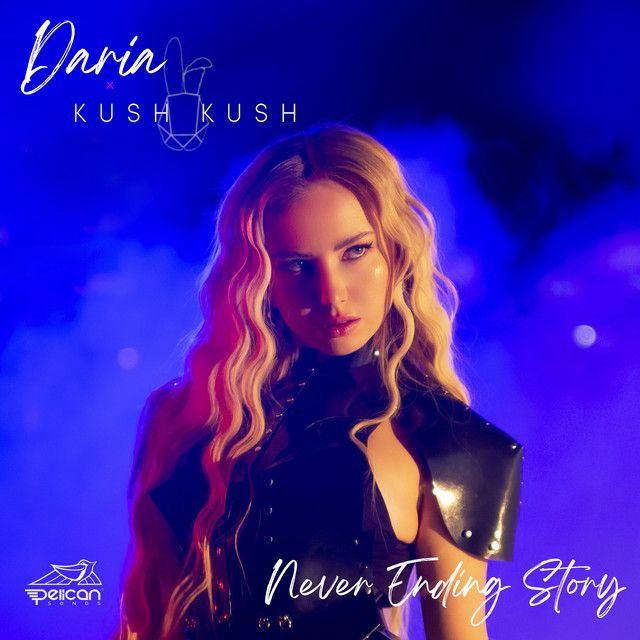
Never Ending Story by Daria, Kush Kush
They press play and a familiar feeling returns: the push-pull between letting go and holding on. If you’re searching for the meaning of Never Ending Story Daria, Kush Kush, the song frames heartbreak as a fairytale loop—comforting, dangerous, and hard to stop.
"Never Ending Story" - Daria, Kush Kush
Whatever, keeps you awake in the night
It's better, losing yourself by my side
Loading lyrics...
Unable to load lyrics
We're unable to display the lyrics at this time. Please try again later.
What This Dance-Fairytale Really Says
The song centers on a narrator who longs for honesty and closeness, then braces for separation. They ask for intimacy with tell me the secrets you hide
, yet soon sense distance and the threat of loss.
Interpretation: It’s about the cycle of apology, hope, and relapse—the way memory keeps love alive even after it breaks. The hook admits the mind keeps replaying the best parts like a film that never ends.
Just like a never ending story It’s playing in my mind

Watch the official Never Ending Story
music video
Who’s Speaking, and What They Need
The narrator is first person, addressing a partner who has hurt them. They feel danger ahead—storm is coming my way
—but try to stay brave. They decide it’s time to turn the burning page
, suggesting closure.
At the same time, they soften the blow. When they echo fairytale language—once upon a time
—they make the past feel magical and safe. That storytelling reflex is both shield and trap.
A Looping Plot in Three Beats
- Yearning for honesty: intimacy is requested and secrets are invited out of the dark.
- Impact and resolve: a painful break is felt, and strength is summoned to move forward.
- Refrain to fantasy: despite resolve, the chorus returns to the storybook frame. They pretend the love won’t end, if only inside their head.
This loop is the point. Each verse tries to change the outcome; the chorus resets the world back to memory.
Why the Chorus Matters More Than the Verses
The chorus doesn’t just repeat—it reframes the heartbreak as narrative. Calling the love a story invites editing, nostalgia, and selective memory. Interpretation: They’re not asking for a real reunion as much as a mental ceasefire. If they can keep the story sweet in their mind, they can live with the loss.
Symbols That Do the Heavy Lifting
- Storm: Signals anxiety and a fight-or-flight jolt—trouble is near.
- Burning page: Combines destruction and renewal—painful, but cleansing.
- Demons: Personal baggage and patterns;
leaving my demons behind
means trying to outgrow old habits. - Fairytale cues:
once upon a time
and the title motif turn memory into myth. In a myth, endings can be rewritten.
Together, these symbols show a classic post-breakup tug: reality says move on; the imagination says keep the dream.
How the Sound Mirrors the Message
A steady four-on-the-floor kick gives the track its heartbeat, like the relentless turn of a page. Bright synths and a glossy topline lift the melancholy, letting the chorus bloom rather than brood. When the hook arrives, stacked vocals feel like a crowd singing along, which amplifies the “we’ve all been here” vibe.
Production choices—tight drums, airy pads, and a rising pre-chorus—create tension and release that echo the lyrics’ push-pull. The drop doesn’t rage; it glows, hinting at resilience. You can dance to this and still feel the ache.
Two Plausible Readings
- Interpretation 1: Denial with grace. The narrator knows the relationship is ending, so they choose to remember a kinder version. “Pretend” becomes self-care.
- Interpretation 2: Resilience in motion. The chorus is a pledge to keep love alive by growing through pain—turning pages, not tearing the book. The fairytale frame is a reminder that hope is a plot device they can still use.
Both readings fit the text and the club-forward sound. One leans nostalgic; the other, forward-facing.
Credits, Context, and Craft
The songwriting team includes Daria Diana Marcinkowska, Duncan Townsend, Gigi Lopez, Kevin Zaremba, Kevin Zuber, Maciej Puchalski, Matthias Kurpiers, and Mikolaj Maciej Trybulec. That many pens explain the blend of catchy hooks and universal phrasing—simple enough to sing at 2 a.m., layered enough to sit with the next morning.
Genre-wise, it sits in modern dance-pop with electronic production touches: clean low end, crisp hats, and warm synth leads. The polished mix makes the emotional conflict feel cinematic—big feelings, tidy edges.
The Takeaway
If you’re after the meaning of Never Ending Story Daria, Kush Kush, it’s the emotional math of moving on: accept the break, keep the glow. The narrator may not win back the relationship, but they take command of the narrative—and sometimes that’s the ending that lets a person sleep.
Disclaimer: Song interpretations are subjective. This reading draws on the recorded lyrics, arrangement, and common pop tropes; your own experience may reveal different layers.








