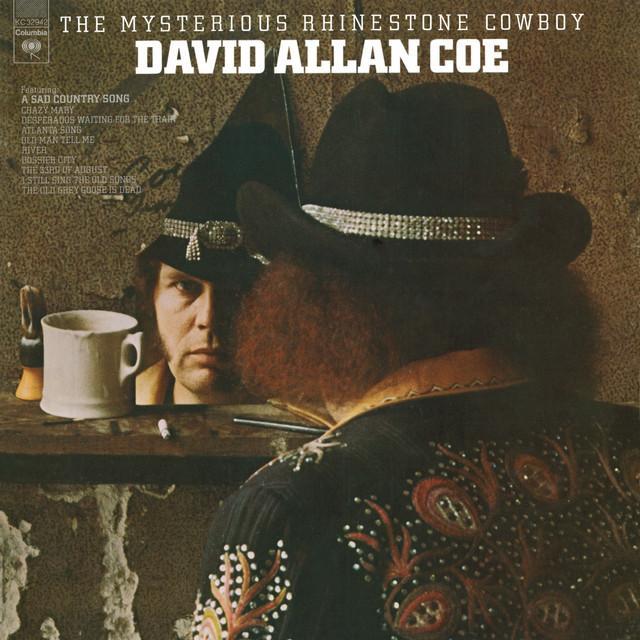
Please Come to Boston by David Allan Coe
A restless love song with a simple ache
The meaning of Please Come to Boston David Allan Coe centers on a conflict that feels timeless: one person keeps moving, while the person they love wants a real home, not another promise. In David Allan Coe’s version, that tension lands with a country plainness that makes the song feel even more worn-in and human.
"Please Come to Boston" - David Allan Coe
I'm staying here with some friends
And they've got lots of room
Loading lyrics...
Unable to load lyrics
We're unable to display the lyrics at this time. Please try again later.
Factually, the song was written and first recorded by Dave Loggins in 1974, released on Apprentice. It became a major hit, reaching No. 5 on the Billboard Hot 100 and No. 1 on the Adult Contemporary chart. David Allan Coe later covered it, helping carry the song into outlaw-country circles.

Watch the official Please Come to Boston
music video
The core story behind the verses
The plot is easy to follow. The singer asks a woman to join him in three different cities. Each place sounds like a fresh start, a dream, or a reinvention. But every invitation gets the same answer: she does not want the road. She wants him to stop roaming and come back.
That is why short phrases like Please come to Boston
and come home to me
matter so much. They are not just travel details. They represent two different ways to live. One side chases possibility. The other side chooses roots, loyalty, and steadiness.
Why Boston, Denver, and L.A. matter
Three cities, three versions of escape
Each city carries its own fantasy. Boston suggests art and springtime optimism. Denver offers mountain distance and privacy. Los Angeles points to glamour, success, and the dream of living near the ocean. The narrator keeps changing locations, but not changing himself.
That is the key emotional pattern of the song. He thinks a new setting will solve his loneliness. Yet every verse shows that geography is not the real problem. He is still the same drifter, still hoping someone else will make his wandering life feel complete.
What the chorus reveals about the relationship
The chorus is where the song becomes more than a travel diary. When she calls him rambling boy
, she names his deepest flaw and his deepest identity at once. He is not just moving around. He is emotionally ungrounded.
Her reply also undercuts his romantic sales pitch. He offers scenery, adventure, and future plans. She offers truth. In effect, she is saying that none of those places fit him as well as she does. The line number one fan
sounds sweet, but it also carries a limit: admiration alone is not enough for a lasting relationship.
The emotional turn in the final verse
The song grows sadder as it goes. At first, the narrator sounds hopeful, almost persuasive. By the final section, they admit the road keeps turning and that many dreams have slipped away. This is where the song’s meaning opens up.
this drifter's world
goes 'round and 'round
somebody I can sing to
That brief moment reveals what he really wants. Not just romance. Not just a traveling partner. He wants witness, companionship, and someone who gives his life shape. Interpretation: the song suggests that freedom without connection starts to feel empty.
How David Allan Coe changes the feel
Dave Loggins wrote the song from a soft-rock and folk-rock place, and his original recording is smooth, reflective, and polished. Coe’s version leans more toward country feeling, which changes how listeners hear the narrator. With Coe, the character sounds less like a dreamy traveler and more like a man who has lived too long with his own habits.
That matters because Coe’s voice often carried rough edges, regret, and defiance. In a song about settling down, those qualities sharpen the theme. The listener can hear a man who may know the right answer but still cannot quite choose it.
Sound, structure, and why the song lingers
The production supports the lyric’s push and pull. The melody is gentle and memorable, which makes the repeated refusals sting more. The arrangement does not rush. It leaves room for the listener to sit inside each invitation and each rejection.
In most versions, including Coe’s country reading, the instrumentation stays warm and open. Acoustic textures, steady rhythm, and an unforced vocal line mirror the song’s emotional honesty. There is no dramatic twist in the music because there is no dramatic change in the man. That repetition is the point.
Artist intent and the song’s deeper irony
Dave Loggins explained, as quoted by Songfacts, that the story was “almost true,” except the woman waiting at home was invented. That detail deepens the song in a big way.
If the woman is partly imagined, then she may represent more than one person. Interpretation: she can stand for home itself, or for the life the narrator suspects he should want. In that reading, the song becomes a conversation between wanderlust and conscience.
Why the song still connects
Many listeners hear this as a romance song, and it is. But it also speaks to artists, workers, and dreamers who keep chasing the next city, next job, or next version of themselves. The song understands the thrill of motion while also showing its cost.
That is why the meaning of Please Come to Boston David Allan Coe still resonates in the United States. It captures a national myth—freedom, movement, reinvention—and quietly asks what happens when those ideals pull a person away from love.
The takeaway that stays with listeners
At its heart, this is a song about a person who keeps offering destinations when what the relationship needs is presence. The cities are vivid, but the real journey is inward.
David Allan Coe’s version highlights the loneliness inside that pattern. It reminds listeners that sometimes the hardest trip is not to Boston, Denver, or L.A. It is the trip back home.
Disclaimer: This interpretation separates documented facts from informed reading. Song meaning can remain open, and different listeners may hear the song differently.








