
Revenge by David Allan Coe
A Prison Ballad That Undercuts Its Own Title
The meaning of Revenge David Allan Coe comes down to a sharp twist: this is not really a song about triumph. It is a song about what happens after a person builds their whole life around one violent act and then discovers that nothing feels fixed.
"Revenge" - David Allan Coe
The gates of hell just opened after twenty years the warden says I'm free
Revenge was all I wanted when I killed the man that took your life that day
Loading lyrics...
Unable to load lyrics
We're unable to display the lyrics at this time. Please try again later.
David Allan Coe was a major figure in outlaw country, a scene built on hard stories, antihero narrators, and rough-edged honesty. His own biography included time in correctional institutions before music, a fact widely noted in profiles such as his Wikipedia biography. That background matters here, because the prison details in the song feel lived-in, even if listeners should not assume the story is autobiographical.
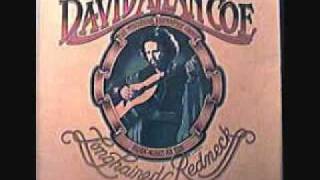
Watch the official Revenge
music video
The Core Story: Freedom Without Relief
The narrator speaks directly to Judy, a dead woman he once loved. He says the prison gates have opened and that he is finally free after about twenty years. Early on, he admits revenge was all I wanted
. That line gives the plot its engine: he killed the man he believed caused Judy’s death.
But Coe does not leave the song there. Almost immediately, the narrator admits the emotional cost was too high. He got the revenge, yet he also lost decades, his money, and any simple idea of love. The title promises payback; the lyrics deliver spiritual exhaustion.
This is the heart of the song’s power. Revenge is shown as an action with a clear target but no clean ending.
Judy Is More Than A Lost Lover
Love, shame, and public judgment
One of the song’s most striking moves is the way it complicates Judy. The narrator repeats that others said you weren't no lady
. Witnesses and a jury judged her as flirtatious and shameless, and the song makes clear that the town had already put her on trial in a moral sense.
That matters because the narrator’s revenge may have been driven not only by grief, but also by pride, jealousy, and an old-fashioned idea of honor. Interpretation: they may have believed they were defending Judy, but the song suggests they were also trapped by the same harsh codes that condemned her.
The result is a sad contradiction. He destroyed his life for a woman he later admits he may not have fully understood.
The Song’s Timeline, Beat by Beat
The narrative unfolds with unusual clarity:
- The narrator is released from prison after twenty years.
- They remember killing the man tied to Judy’s death.
- They reveal the revenge did not bring peace.
- They revisit the public gossip around Judy.
- They arrive at her grave and feel almost nothing they expected.
The final turn is devastating because it is so quiet. At the grave, the narrator admits I've forgotten all the things
they meant to say. That confession shows total emotional collapse. The big speech never comes. Time has drained the story of its old fire.
I'm glad that you can't see me now
I do not look my best
This brief moment captures the whole song. The narrator imagines Judy seeing what revenge has made of them: older, poorer, diminished, and spiritually worn out.
What the Repeated Judgment Really Does
The repeated lines about Judy’s reputation are not just backstory. They serve two deeper functions.
First, they show how memory keeps circling the same wound. The narrator cannot move forward, so they keep replaying what other people said.
Second, they cast doubt on the revenge itself. If Judy was socially blamed for what happened, then the killing may have been based on a simple hero-villain story that never fully held up. Interpretation: the narrator may now understand that life was messier than rage allowed.
That is why the graveyard scene feels so empty. Even the face of Judy is fading. He says he cannot fully picture her anymore. Revenge outlasted love, and then even love began to disappear.
How the Sound Supports the Meaning
As a country narrative song, “Revenge” works through plain language, steady pacing, and a voice that carries weariness instead of drama. Coe was known for a throaty baritone and for blending traditional country storytelling with outlaw grit. In a song like this, that style matters more than fancy production.
The likely effect is stark and direct: a slow tempo, simple accompaniment, and room for the lyric to land. Rather than building toward release, the music supports the feeling of trudging back through old damage. This is not the sound of victory. It is the sound of someone living with consequences.
That choice fits Coe’s broader career. Critics and fans often valued him for hard-country storytelling and character songs, a reputation reflected in overviews from AllMusic and other reference sources.
Why the Song Still Hits
The meaning of Revenge David Allan Coe lasts because it flips a familiar fantasy. Many songs, films, and crime stories treat revenge like closure. Coe’s song says the opposite.
The narrator gets what they wanted and still ends up hollow. Even worse, the passage of time erases the purity of the original feeling. By the end, they are left with flowers, a grave, and the sinking sense that the whole sacrifice may have been useless.
That is what makes the song tragic instead of tough. It begins with a crime of passion and ends with a man who has outlived his purpose.
Final Take: A Ballad of Moral Exhaustion
In the end, “Revenge” is about grief turning into obsession, and obsession turning into emptiness. Judy remains partly unknowable, the dead man remains mostly offstage, and the narrator remains stranded between love and self-disgust.
For listeners searching for the meaning of Revenge David Allan Coe, the clearest answer is this: the song argues that revenge can feel righteous in the moment, but over time it may reveal itself as one more loss.
Disclaimer: This interpretation is based on the lyrics, performance style, and available artist context. As with many story songs, some meanings remain open to listener interpretation.








