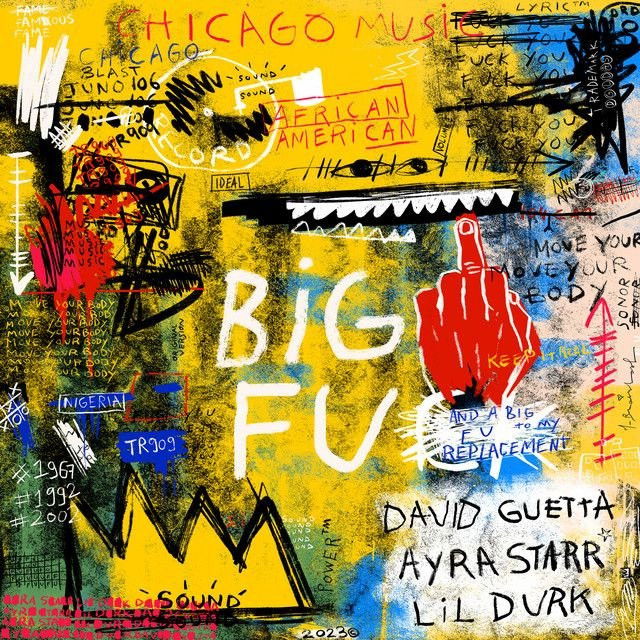
How 'Big FU' Turns Heartbreak Into a Dancefloor Roar
They know the feeling: the split seems temporary—until it isn’t. Big FU flips that sting into a club chant, where bravado doubles as protection. This guide breaks down the meaning of Big FU David Guetta, Ayra Starr, Lil Durk and why the hook feels so loud—and so fragile.
"Big FU" - David Guetta, Ayra Starr, Lil Durk
Yeah, yeah
Two more times, can I come see you?
Loading lyrics...
Unable to load lyrics
We're unable to display the lyrics at this time. Please try again later.
Plain-English Meaning: Anger As Armor
At heart, the song is about the shock of being replaced and the ego scramble that follows. The narrator tries to reclaim power with a public taunt—Send a big 'F*** you'
—but every flex also reveals what hurts. They see the ex moving on and answer with volume, not closure.
Interpretation: the chorus isn’t simply rage. It’s a mask, the easiest way to sound strong when you have no say left.
Who’s Speaking, and What Changed Overnight?
The speaker reaches out and realizes the door is shut. In a single scene, they learn the breakup is final: my key doesn't fit
and the ex is blockin' my calls
. Those two images snap the situation from hope to reality. The lock is literal, but it also stands for access—romantic, physical, and emotional.
Then comes the dagger: the ex is now someone else's favorite
. The phrase compresses jealousy, replacement, and lost status. From that point, the narrator talks big to avoid talking about loss.
What Happens, Beat by Beat
- Realization: the narrator checks in, sees photos, and finds they’re cut off.
- Ego injury: the ex’s new partner triggers a “prove I’m fine” spiral.
- Coping by spectacle: nightlife, big spending, and posts do the talking.
- Emotional whiplash: the chant returns, as if loudness could settle it.
Each loop lands back on the same refrain, underlining how stuck they feel.
The Hook’s Double Edge
The title phrase and chant act like a billboard of indifference. But when the narrator adds In my own mind
, the spell cracks. They admit that their toughness exists mostly in their head. Interpretation: the hook is a self-pep talk, not a victory lap.
Escape Plans, Parties, and Posturing
The verse leans into messy coping. They ask the ex to join the fun and pitch a fantasy trip—Fiji, VIP nights, unlimited thrills. The line I love to party
sounds like liberation, yet the details—drinking despite not drinking, smoking despite not smoking—read as self-erasure to keep the high going. Interpretation: the party is a shield. If the room is loud enough, no one hears the ache.
Other telling bits—praising the ex’s mom, name-dropping destinations—carry a softer plea: “Remember what we had.” It’s bargaining disguised as celebration.
How the Sound Sells the Feeling
Production-wise, this is peak Guetta: a bright, punchy kick anchors a mid-tempo house groove; synth stabs and airy pads leave space for a chant-ready hook. Ayra Starr’s melodies trace Afropop cadences, offering warmth and lift against the icy message. Lil Durk’s verse brings rap textures—conversational cadences and emotional whiplash—that tilt the song from glossy to human.
The mix is engineered for crowd call-and-response. Each time the hook drops, the instrumental simplifies, spotlighting the vocal like a stadium taunt. Interpretation: the arrangement turns private spite into a public ritual, so listeners can dance their own grudges out.
Collaboration Context That Colors the Lyrics
Guetta’s catalog often fuses pop catharsis with EDM spectacle; he’s built arenas around simple, sticky hooks. Ayra Starr’s global rise has centered on confident, emotionally clear hooks, while Lil Durk is known for mixing toughness with vulnerability. Put together, the trio balances steel and softness: a glossy frame for a very human bruise. The writers’ room—Anthony Clemons Jr., Pierre David Guetta, Durk Derrick Banks, Johnny Goldstein, and Theron Makiel Thomas—leans into universal images (keys, calls, parties) that travel across genres and countries.
Symbols and Motifs That Do the Heavy Lifting
- The lock:
my key doesn't fit
makes closure physical. - The phone:
blockin' my calls
shows modern, silent rejection. - The pedestal:
someone else's favorite
marks a lost crown. - The mask:
I love to party
is joy as camouflage.
Each symbol is simple, which is why it lands. They mirror daily breakup rituals—checking socials, texting, hitting a party—then scale them up to stadium size.
Alternate Lenses You Might Hear
Interpretation 1: Pure petty anthem. The song invites listeners to reclaim power by laughing at the replacement and celebrating freedom.
Interpretation 2: Self-drag in disguise. The louder the line, the clearer the hurt. The final effect is less triumph and more “fake it till it fades.” Both can be true, depending on the night you’ve had.
The One-Sentence Takeaway
Big FU sounds fearless, but its teeth are clenched. The narrator tries to out-dance a breakup and ends up revealing why the hook has to be so loud in the first place.
Disclaimer: This interpretation reflects lyrical analysis and public context; the artists have not issued an official line-by-line explanation.








