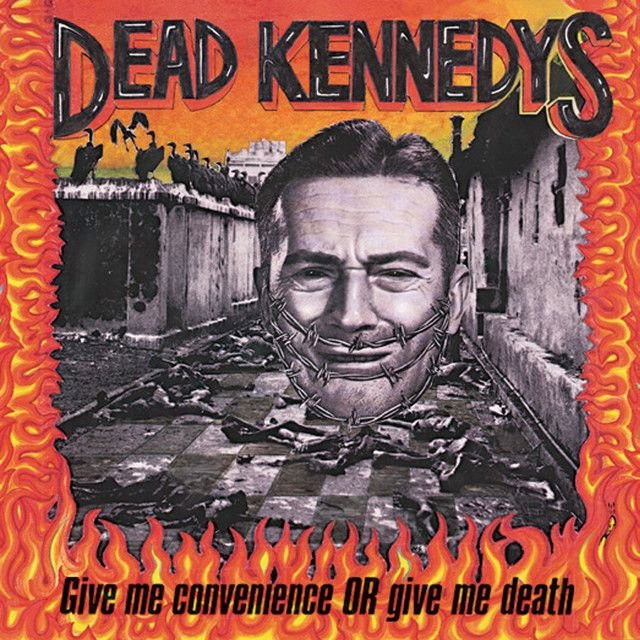
California Uber Alles by Dead Kennedys
The satirical core of the song
The meaning of California Uber Alles Dead Kennedys starts with a trick: the song sounds like a campaign speech, but it is really a nightmare. Dead Kennedys imagine California governor Jerry Brown as the voice of a polished, spiritual, media-friendly dictatorship. The joke is sharp because the target is not a hard-right strongman in uniform. It is a leader wrapped in wellness, optimism, and cool.
"California Uber Alles" - Dead Kennedys
My aura smiles and never frowns
Soon I will be president
Loading lyrics...
Unable to load lyrics
We're unable to display the lyrics at this time. Please try again later.
Factually, the song was Dead Kennedys’ debut single, released in June 1979, and later re-recorded for Fresh Fruit for Rotting Vegetables (Wikipedia). It was written as satire by Jello Biafra and John Greenway, with Biafra composing the music. That context matters because the band were not endorsing the speaker. They were staging a political parody.

Watch the official California Uber Alles
music video
Why Jerry Brown became the villain
A liberal target, not an obvious one
One reason the song still feels provocative is that Brown was not the easiest target. As reported in the song’s documented history, some listeners wondered why Biafra mocked a liberal California governor instead of a conservative figure like Ronald Reagan (Wikipedia).
That choice reveals the song’s point. Dead Kennedys are warning that authoritarianism can arrive wearing a friendly face. The opening self-introduction, I am Governor Jerry Brown
, sets up a fake first-person voice. From there, the character grows from politician to cult leader to tyrant.
Interpretation: the band are not saying Brown was literally a fascist. They are exaggerating his public image to expose how charisma, trendiness, and moral certainty can become tools of control.
How the lyrics turn California into a dystopia
The verses keep escalating. At first, the imagined leader promises national power. Then the song moves into forced lifestyle politics. Lines about children meditating at school and citizens jogging for conformity turn health and mindfulness into state commands. The phrase Zen fascists will control you
captures that contradiction in just a few words.
This is why the song remains more than a period joke. It sees danger in politics that claim to improve people for their own good. Even the command to wear a smile becomes sinister. In the band’s satire, happiness is not freedom; it is obedience.
The chorus, California Über Alles
, is central to that point. The title echoes the phrase “Deutschland über alles,” a loaded historical reference tied to German nationalism and later associations with Nazism (Wikipedia). Dead Kennedys use that echo to turn state pride into a fascist slogan.
The darkest images and what they mean
From soft control to open terror
By the final section, the song drops any playful mask. It jumps to now it is nineteen eighty-four
, borrowing Orwell’s language of surveillance and political fear. The future California becomes a police state with fashion-coded enforcers, raids at the door, and camps.
The most disturbing images suggest extermination and dehumanization. They are meant to shock. They also make the song’s warning plain: a culture that looks harmless, healthy, and stylish can still carry the logic of repression.
Come quietly to the camp
You'd look nice as a drawstring lamp
That brief passage turns the satire into horror. It links the fantasy regime to genocide imagery. Interpretation: this is the moment where the song argues that authoritarian politics do not stay symbolic forever. They end in bodies, terror, and cruelty.
How the sound carries the message
Musically, “California Über Alles” is one of the earliest clear examples of the Dead Kennedys formula: punk speed, surf-rock bite, and militaristic tension. Contemporary summaries of the recording note its military-style drums, ominous bass opening, and sneering vocal delivery (Wikipedia).
That combination matters. Surf guitar gives the track a California feel, almost like a twisted beach movie. The marching drums suggest state force and discipline. Jello Biafra’s voice sounds theatrical rather than natural, which helps listeners hear the song as performance and satire, not confession.
Interpretation: the music says the same thing as the lyrics. Sunny surfaces and authoritarian energy are fused together. California is presented as both glamorous and menacing.
Why the song still lands
The song has lasted because its target is bigger than one governor. It is about the seduction of political style. It is about how branding, wellness culture, and public virtue can hide a hunger for control. It is also about punk’s refusal to trust any ideology too much, even one that sounds progressive.
That broader reach helps explain the song’s afterlife. Dead Kennedys later reshaped the idea into We’ve Got a Bigger Problem Now
, aimed at Ronald Reagan, showing the concept could apply across parties and eras (Wikipedia).
Final takeaway on the song’s meaning
The meaning of California Uber Alles Dead Kennedys is not that California itself is evil, and not that Jerry Brown was literally the monster in the lyric. The song is a satirical warning about soft-edged authoritarianism: control sold as enlightenment, repression sold as health, and violence hidden behind a smile.
That is why the song still feels sharp. It tells listeners to watch leaders who seem too pure, too trendy, or too certain they know what is best for everyone.
Disclaimer: This interpretation separates documented facts about the song’s release and background from critical reading of its imagery and themes. As with most satire, reasonable listeners may emphasize different meanings.








