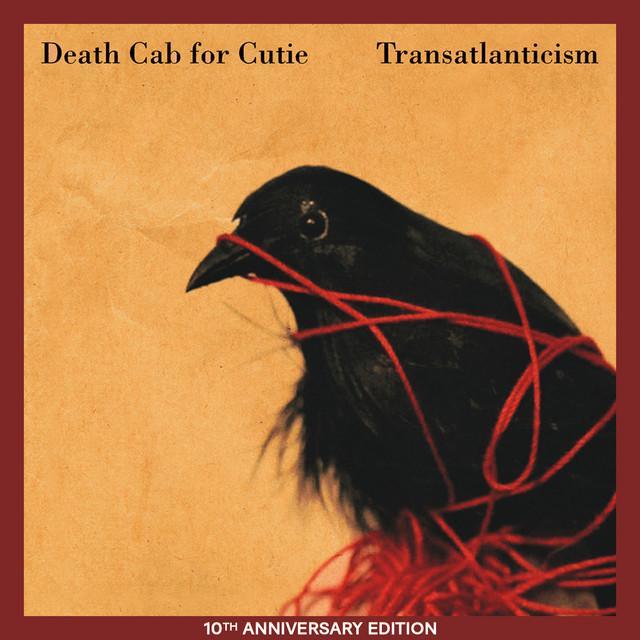
Transatlanticism by Death Cab for Cutie
The meaning of Transatlanticism Death Cab for Cutie starts with a simple but painful idea: loving someone who feels impossibly far away. On the 2003 album Transatlanticism, the title track stands as the emotional center, turning geography into heartbreak. Rather than describe a breakup in direct terms, the song imagines distance as an ocean that suddenly opens between two people.
"Transatlanticism" - Death Cab for Cutie
The clouds above opened up and let it out
I was standing on the surface of a perforated sphere
Loading lyrics...
Unable to load lyrics
We're unable to display the lyrics at this time. Please try again later.
According to album background collected by Wikipedia, Ben Gibbard was interested in geographic barriers as metaphors for emotional ones. He also said the song grew from seeing goodbyes at Heathrow Airport and imagining what it would mean if people could simply move across the spaces keeping them apart. That context matters, because the song feels less like a diary entry and more like a carefully built symbol.
An Ocean Becomes the Problem
The opening verse creates a strange, almost mythic scene. The speaker says the Atlantic was born and describes the world filling with water, making islands where they should not be. In plain terms, the song takes a private feeling and scales it up to world size.
That is why brief phrases like the Atlantic was born today
and making islands
matter so much. They suggest a new separation, as if a relationship has not just suffered a setback but has been reshaped by a force of nature. The distance feels sudden, unfair, and much bigger than one person can manage.

Watch the official Transatlanticism
music video
Why the Metaphor Hits So Hard
The ocean image works because it does two things at once:
- It represents literal long-distance travel.
- It represents emotional inaccessibility.
- It makes the speaker seem small against the problem.
When the narrator compares the water to a barrier, the point is not just miles. It is helplessness. They are not merely far away from the other person; they feel cut off from the ordinary path back.
The Verses Move From Wonder to Defeat
In the second verse, the song sharpens that feeling. Other people adapt and took to their boats
, but the speaker cannot. They see the new body of water not as adventure, but as a moat. That one image changes the whole mood.
A moat protects a castle by keeping people out. So the song stops being about travel and becomes about exclusion. The loved one is still there, but now access feels blocked. Even the speaker’s old way of reaching them, hinted at in the line about footsteps to the door, has been silenced.
A Short Narrative of Loss
The emotional timeline is clear:
- A divide appears.
- The world accepts it.
- The speaker does not.
- Old routes to intimacy no longer work.
- Need turns into a direct plea.
That structure is part of why the song lands so strongly. It starts with poetic imagery, then narrows into pure longing.
The Chorus Says the Most With the Least
The repeated line I need you so much closer
is the heart of the song. It is plain, almost childlike language, and that simplicity is exactly the point. Chris Walla once described Gibbard’s writing here as a brief expression of needing love, as noted in the album’s documented commentary on Wikipedia.
Interpretation: the repetition sounds like someone pushing past explanation. By the time the chorus arrives, the speaker is done describing scenery and just states the need. That makes the song feel honest instead of ornamental.
The later cry of come on
adds urgency. It can sound like a request for the other person to move closer, but it can also sound like a plea to fate itself. Either way, the song stops asking politely.
I need you so much closer
So come on, come on
That tiny two-part movement captures the whole song: desire first, then desperation.
How the Sound Carries the Meaning
The title track runs nearly eight minutes on the album and was produced by Chris Walla during sessions in Seattle and San Francisco between late 2002 and mid-2003, according to Wikipedia. Its sound is crucial to its meaning.
The arrangement builds slowly rather than rushing toward payoff. That long rise mirrors the emotional drag of separation. Research on the album notes airplane-like humming and ambient textures around the song; those choices make the listener feel suspended in transit, as if they are stuck between departure and arrival.
Interpretation: the music suggests that distance is not only measured in miles, but in time, waiting, and unanswered motion. The band’s spacious production leaves room for the plea to echo. Instead of filling every second, they let emptiness become part of the message.
Why This Song Became So Defining
Transatlanticism was released on October 7, 2003, and later became one of Death Cab for Cutie’s most acclaimed records, earning a Metacritic score of 85 and eventually reaching platinum certification in the United States, as summarized by Wikipedia. The title track helped define that legacy because it turned indie-rock sadness into something vast and cinematic.
It also arrived at the right moment in the band’s story. After internal strain, lineup changes, and Gibbard’s busy creative period around Give Up, the group made a record often described as more expansive and more unified. That larger vision is all over this song.
A Final Reading of Its Meaning
So what is the meaning of Transatlanticism Death Cab for Cutie? At its core, it is about the pain of separation and the fantasy that love should be able to outrun geography. The song knows that real life does not always allow that. Flights, oceans, time, fear, and emotional walls can all keep people apart.
Interpretation: the genius of the track is that it never says whether the barrier can be crossed. It only tells the truth of wanting it crossed. That is why the song still feels powerful: many listeners know what it means to stand on one side of a divide and wish closeness could be willed into existence.
Disclaimer: This interpretation blends documented context with critical reading, and song meaning can remain open to individual listeners.








