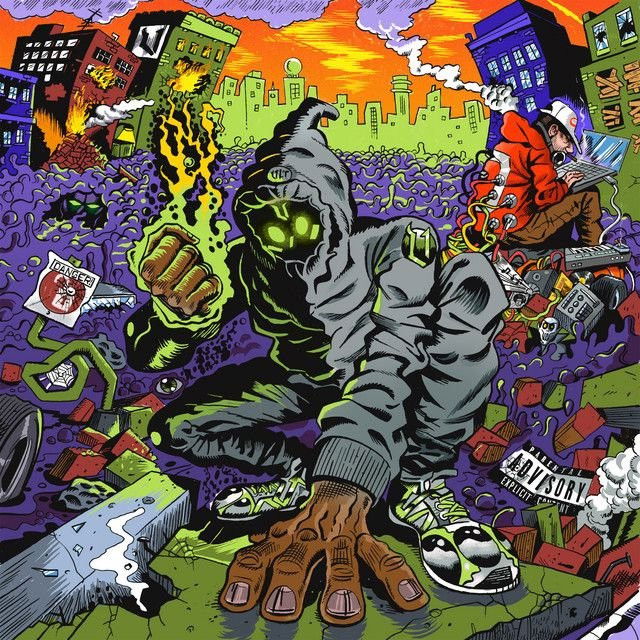
Why Take_it_Back_v2 Feels Like a Warning
The meaning of Take_it_Back_v2 Denzel Curry, Kenny Beats comes through fast: this is a song about power, pressure, and refusing to be pushed backward. On the surface, it sounds like a brutal rap performance piece. Under that, it also carries anxiety about survival, status, and social backlash.
"Take_it_Back_v2" - Denzel Curry, Kenny Beats
Like Frederick Douglass, it's time to pick my brain apart
Lookin' at the menu, motherfucker, I'm the main with art
Loading lyrics...
Unable to load lyrics
We're unable to display the lyrics at this time. Please try again later.
Denzel Curry often blends technical aggression with bigger themes, and this track is a sharp example of that style. Paired with Kenny Beats, whose work with Curry is well documented through their Unlocked collaboration, they create music that is tense, direct, and built for impact. In this song, they turn that chemistry into a warning shot.
The Core Message Hiding Inside the Threats
At its center, the song is about defending hard-won progress. Curry presents himself as someone who earned his spot and will fight to keep it. Early on, he places himself in a larger Black intellectual tradition by invoking Frederick Douglass, then quickly shifts into boast-heavy battle rap.
That move matters. It says they are not just hearing random threats; they are hearing a rapper frame his mind as a weapon. When he calls himself the main with art
, he is claiming both dominance and craft. He is not just powerful, in his view—he is central.
The hook deepens the point. The repeated line about people wanting to take it back
suggests more than rap rivalry. Interpretation: it points to a fear of reversal, as if gains in culture, respect, or civil rights can be challenged at any time.
Watch the official Take_it_Back_v2
music video
Why the Chorus Hits So Hard
The refrain turns the song from swagger into social threat. The image after dark the riot starts
creates a mood where anger spills into public space. Darkness here is not peaceful; it is the hour when hidden tensions show themselves.
Then Curry contrasts ambition with economic fear. The line about raising the charts so he does not have to push a shopping cart is blunt and human. Beneath the aggression, they hear a familiar motive: the need to escape poverty and never return to it.
That is why the hook works. It mixes personal hunger, civic unrest, and historical memory in a few bars. The result is a chorus that sounds catchy but carries real unease.
History, Pop Culture, and Violence in One Frame
One of the most striking things about the song is how quickly Curry jumps between references. He moves from Frederick Douglass to Sun Tzu, from Kali Ma to Harry Potter, from street violence to civil rights. That constant switching gives the song a restless, overloaded feeling.
These references are not random name-drops. They create a world where knowledge, myth, religion, and entertainment all become part of conflict. When he mentions Kali Ma and taking a heart, he borrows a pop-culture image of ritual violence to make his threats feel theatrical and shocking.
The civil-rights comparison is even more important. By pairing the hook with Rosa Parks, Curry suggests that some people resent progress itself. Interpretation: the song may be using rap conflict as a metaphor for a broader backlash against Black advancement.
The Voice They Hear on the Track
Curry raps in a first-person voice, but the emotional effect is bigger than one person. He sounds like someone speaking for a whole environment shaped by distrust, danger, and ambition. Short phrases like all facts
and raise the bar
show how he mixes self-belief with challenge.
There is also a paranoid edge. He talks as if danger follows movement, even success. In that sense, the song is not only about attacking rivals. It is about living in a state where respect must be defended constantly.
After dark the riot starts
still tryin' to raise the charts
now it's time to take your heart
Those lines capture the song’s emotional pattern: tension, ambition, then retaliation.
How Kenny Beats Makes the Meaning Land
Kenny Beats’ production helps turn the lyrics into a physical experience. Their collaborations are known for hard drums, uncluttered arrangements, and a mix that leaves room for Curry’s voice to sound urgent and sharp. This track follows that logic.
The beat feels skeletal but heavy. That sparseness matters because it puts attention on rhythm, breath, and attack. Instead of softening the violence in the writing, the production frames it like a spotlight.
Interpretation: the sound mirrors the song’s theme of stripped-down survival. There is very little comfort in the instrumental. Every element feels chosen to keep listeners alert.
A Song About Rap, and More Than Rap
On one level, this is a classic rap statement: they hear elite technique, threats, punchlines, and status claims. Curry is proving he can outrap, outlast, and out-intimidate opponents.
On another level, the title phrase and hook hint at broader cultural stakes. To “take it back” can mean reclaiming dominance, undoing progress, or resisting change. That ambiguity gives the track extra weight.
So the meaning of Take_it_Back_v2 Denzel Curry, Kenny Beats is not just that Curry is dangerous on the mic. It is that success, history, and identity all feel contested. The song turns that tension into sound.
Final Take on the Song’s Meaning
What makes the track memorable is how it fuses raw energy with sharper ideas about backlash and survival. They hear a rapper fighting for position, but they also hear someone refusing erasure.
That combination is why the song still lands. It is thrilling, hostile, and smart at the same time.
Disclaimer: This article offers interpretation based on the lyrics, performance, and known artist context. Meanings in rap songs can remain open to multiple valid readings.









