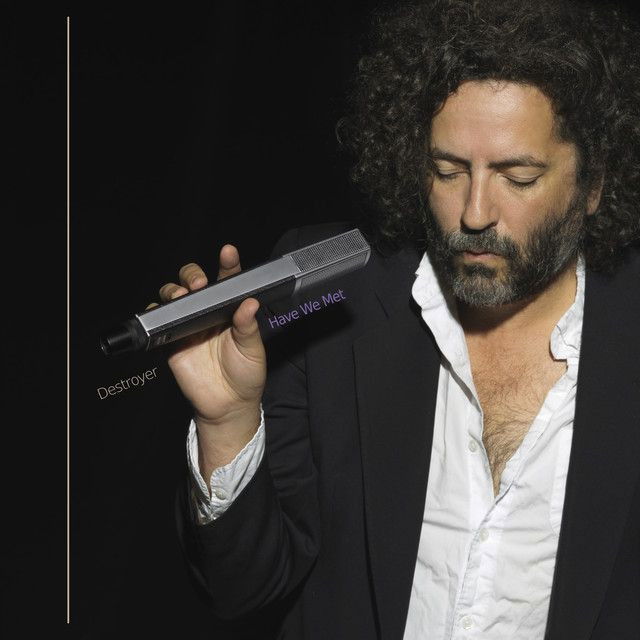
Cue Synthesizer by Destroyer
In "Cue Synthesizer," Destroyer turn the act of making a song into the song’s main subject, then use that setup to ask a darker question: what if the world being described is as hollow as the art used to frame it?
"Cue Synthesizer" - Destroyer
Provided by LyricFindDid you realize it was hollow?
Like everything that's come before, you are gone
The idiot dissonant roarLoading...Loading lyrics...
Unable to load lyrics
We're unable to display the lyrics at this time. Please try again later.
Why the meaning of Cue Synthesizer Destroyer feels slippery
The meaning of Cue Synthesizer Destroyer starts with a trick. The song sounds like it is calling instruments into place, almost like a director giving stage notes. Those commands make the track feel self-aware from the first listen.
Instead of pretending music is pure emotion, the song exposes its own machinery. Short phrases like Cue synthesizer
and Cue fake drums
are not just funny or cool. They point to arrangement, control, and artifice.
That matters because Destroyer, led by Dan Bejar, often write songs that feel mysterious on purpose. For Have We Met., Bejar worked closely with producer John Collins and guitarist Nick Bragg, building songs from computer demos and sound design-heavy ideas rather than a standard live-band setup, according to interviews with The FADER and Stereogum.

Watch the official Cue Synthesizer
music video
A song about songwriting, then a song about the world
Bejar gave a rare direct clue about the song’s design. In The FADER, he said the track is really split in two.
Factually, from Bejar’s own comments: the first half tries to describe song-making in a way that sounds corrupted or manipulative. The second half shifts into a more openly disgusted view of the world and the singer’s place inside it.
Interpretation: that split explains why the lyrics move from abstract images and production cues to blunt frustration. Early on, the song feels like a backstage look at how art gets assembled. Later, the language gets more social and moral.
One short passage shows that turn clearly:
Been to America, been to Europe
it’s all the same shit
This is not a travel diary. It sounds more like a collapse of difference. Places that should feel distinct blur into one exhausted, disappointing system.
Hollow beauty and dissonant noise
Another key to the meaning of Cue Synthesizer Destroyer is the contrast between beauty and emptiness. The opening asks if someone noticed things were hollow. It also pairs ugly sound with ceremonial language, as in idiot dissonant roar
and exquisite gong
.
That clash suggests a world where grand gestures no longer mean much. The song keeps noticing surfaces, effects, and dramatic sounds, but it does not trust them.
Interpretation: this can be read as a critique of culture itself. Music, politics, travel, even romance may all promise revelation, yet the song keeps finding staged emotion and deadened meaning.
The room full of pit ponies
The strangest image may be the strongest. Near the end, the singer looks around and sees a room of pit ponies
, then imagines them drowning forever in a sea of love
.
Pit ponies were working animals used in mines, so the image brings labor, darkness, and exploitation into the song. Set inside a room, it turns a social scene into something grim and trapped.
Interpretation: the song may be saying that the people around the speaker, including the speaker, are not glamorous creators at all. They are workers inside broken systems, overwhelmed by feelings and performances that are supposed to redeem them but do not.
That reading fits Bejar’s own remark that no one gets off cleanly. The song does not blame only “the world out there.” It includes the artist too.
How the production carries the argument
The production is essential here, not decorative. Bejar told both The FADER and Stereogum that he first imagined the song as something closer to a subdued, early-2000s Leonard Cohen mood. Instead, Collins pushed it into what Bejar described as industrial funk-pop with “dueling cyber-blues guitars.”
That gap between intention and result helps explain the song’s tension. The lyrics are suspicious of performance, and the music arrives as a highly stylized performance. The synthetic drums, digital textures, and sharp guitar edges do not hide the song’s construction; they advertise it.
So when the track says Wherever you are
, the line sounds less comforting than haunted. It floats inside an artificial space, as if connection itself has been filtered through machines and cues.
The best way to read the ending
By the final repetitions, the song feels stuck between summoning sound and searching for someone. The repeated commands keep the track moving, but they also make it feel trapped in its own loop.
Interpretation: that may be the point. Art keeps going because it has to. Even after disappointment, even after moral disgust, the artist still makes another arrangement, another cue, another attempt to turn sickness into form.
That is what makes the song more than a clever meta exercise. It is not just joking about studio language. It is asking whether making art is an honest act, a compromised act, or both at once.
Final takeaway on Cue Synthesizer
The meaning of Cue Synthesizer Destroyer lies in its double vision. It treats songwriting as staged, mechanical, and possibly manipulative, while also admitting that art may be the only available response to a world that feels empty and sick.
Destroyer make that idea powerful by refusing to separate lyric from sound. The fake drums, synthetic cues, and uneasy groove are the message, not just the backdrop.
Disclaimer: This interpretation draws on the lyrics and on Dan Bejar’s published comments, but song meaning is never fully fixed. Different listeners may hear different emphases in the same track.








