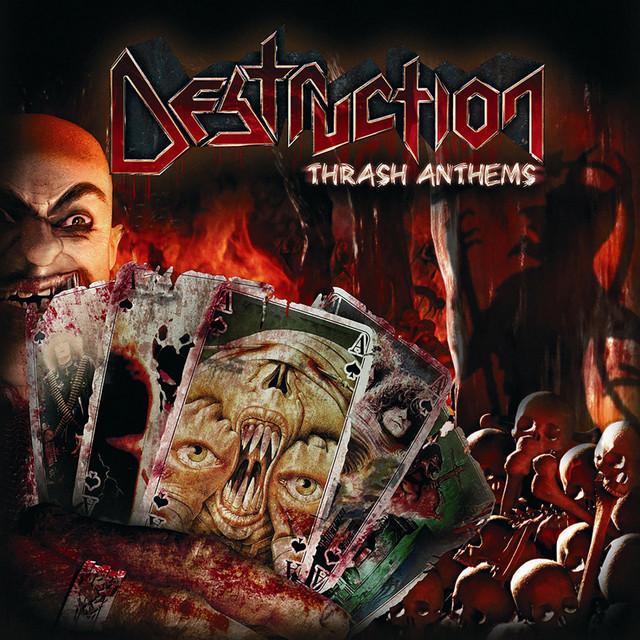
Why "Curse The Gods" by Destruction Still Hits
The meaning of Curse The Gods Destruction is blunt, angry, and hard to mistake. Destruction use the song to condemn religious fanaticism, especially the way belief can be twisted into control, division, and violence. Rather than arguing about theology, they aim at the bloodshed and hypocrisy they see in organized religion when it becomes absolute.
"Curse The Gods" - Destruction
Whatever your god may be
Forget those idols let me tell you
Loading lyrics...
Unable to load lyrics
We're unable to display the lyrics at this time. Please try again later.
That directness is part of why the song still lands. It is not subtle, but it is focused. In classic thrash fashion, Destruction turn outrage into speed, noise, and accusation.
A Thrash Song Aimed at Holy Violence
At its core, the song says that people have died because humans treated religious claims as unquestionable truth. Early lines name several faith figures and then dismiss them as products of damaged thinking. The point is not careful interfaith analysis; it is a furious rejection of the idea that any group should demand obedience in the name of heaven.
The sharpest target is fanatic certainty. When the lyric refers to fanatic faith
and then to join my religion or die
, it reduces centuries of coercion into one ugly command. Destruction present extremism as the natural danger of any system that claims total truth and punishes dissent.
Interpretation: The song is less about private belief than public power. They seem to argue that faith becomes dangerous when leaders use it to control others.

Watch the official Curse The Gods
music video
How the Verses Build the Argument
The verses move like a chain of accusations. First, they reject the authority of religious idols. Next, they challenge the idea that one group owns truth. Then they point to history, where communities have killed in the name of belief while still preaching morality.
That is the song's key contradiction. One line points to the absurdity of calling killing a sin while committing violence for sacred reasons. The lyric phrase How stupid logic can be
sums up the band's view: religion, in this song, becomes a system that breaks its own rules.
There is also a social message in the warning against preachers and false comfort. When the song pushes listeners to believe in yourself
, it offers self-trust as an answer to manipulation. This is one reason the track feels so confrontational but also oddly empowering.
The Chorus as a Public Verdict
The chorus is simple because it is meant to hit like a slogan. When Destruction repeat Curse the gods
, they are not making a careful philosophical case. They are delivering a verdict.
Too many people have died
for a lie
Those short lines carry the whole song. They turn the verses' examples into one broad conclusion: whatever comfort religion may claim to offer, the band believes its historical cost has been devastating.
Interpretation: The chorus is not only anti-religious; it is anti-sacrifice. It rejects any belief system that demands death, obedience, or suffering in exchange for promised truth.
What the Sound Adds to the Meaning
Destruction are one of Germany's key early thrash bands, part of the 1980s extreme metal wave often grouped with Kreator and Sodom in the Teutonic thrash scene. Their official band history and discography frame them as pioneers of aggressive, politically charged metal (Destruction official site, Encyclopaedia Metallum).
That context matters. Thrash metal was built to sound urgent, hostile, and awake to social rot. Fast palm-muted riffs, pounding drums, and barked vocals make this song feel like a public confrontation rather than a private reflection. The music does not ask the listener to meditate. It corners them.
Schmier and Mike Sifringer, credited here as the writers, shape the message through repetition and force. The guitars sound sharp and cutting, which matches the lyrical attack on illusion and false authority. The rhythm section keeps everything moving at a near-military charge, which gives the song an ironic edge: it sonically resembles a march while criticizing systems that mobilize followers.
Artist Context and Why It Fits Destruction
Destruction have long used thrash as a vehicle for anger at corruption, war, and human stupidity, themes visible across their catalog (AllMusic artist overview). So this song fits their larger artistic identity. They were never a band built around fantasy escape. They often favored confrontation.
That makes the song's plain language important. Instead of hiding behind symbolism, they name religions, name violence, and name hypocrisy. For some listeners, that openness feels brave. For others, it feels overly broad. Both reactions make sense, because the song leaves little room for nuance.
A Reasonable Alternate Reading
One possible reading is that the song attacks all religion equally. Another, more precise reading is that it attacks institutions and zealotry more than personal spirituality.
Interpretation: The strongest evidence for the second view is the focus on coercion, killing, and manipulation. The villain in the song is not quiet belief. It is belief armed with certainty and power.
That distinction matters for the meaning of Curse The Gods Destruction. The band's anger seems aimed at what humans do with religion, even if the lyrics phrase that anger as a curse against the gods themselves.
Why the Song Still Connects
The song still resonates because its central concern has not disappeared. Across history and in current events, people still use sacred language to justify cruelty. Destruction compress that pattern into a furious thrash anthem that feels ugly on purpose.
For listeners in the United States, where religion still shapes public life, the song can sound less like an old provocation and more like an ongoing warning. Its message is simple: whenever belief demands violence or blind obedience, they believe it has already betrayed its own moral claims.
That is why the track endures. It is not trying to be balanced. It is trying to expose a contradiction and shout it back at the world.
Disclaimer: This article offers an interpretation of the song based on its lyrics, metal context, and available artist information. Meaning can vary by listener.







