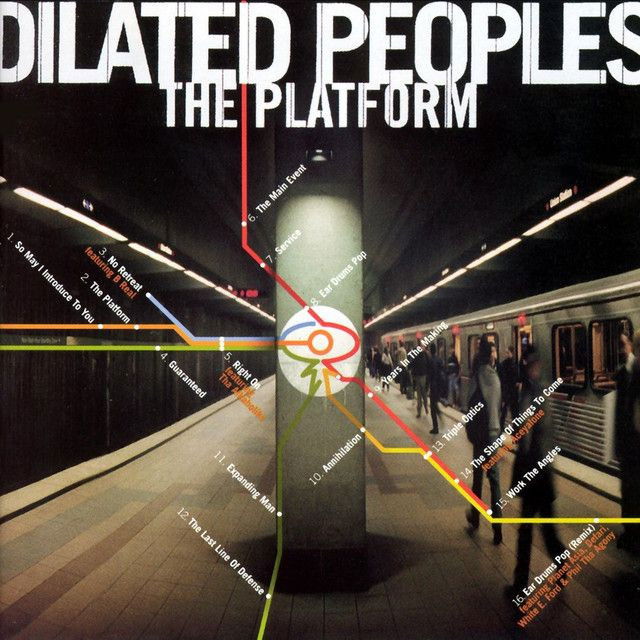
Why “The Platform” Still Hits Hard
The meaning of The Platform Dilated Peoples starts with a simple idea: hip-hop is not just entertainment to them. It is a test of character, technique, and staying power. On this song, Dilated Peoples present rap as a public stage where talent gets revealed and weak talk falls apart.
"The Platform" - Dilated Peoples
(Uh-huh, yeah, the Platform sound)
"Dilated" "Mind created minds"
Loading lyrics...
Unable to load lyrics
We're unable to display the lyrics at this time. Please try again later.
Released as the title track from their major-label debut album The Platform in 2000, the song helped introduce the Los Angeles trio—Evidence, Rakaa Iriscience, and DJ Babu—to a wider audience. According to Wikipedia, the group formed in 1992 in L.A.’s underground scene, and The Platform arrived on May 23, 2000. The single also reached No. 22 on the U.S. Rap chart, which shows how their independent-minded style crossed into a bigger market.
A Stage, a Standard, and a Battlefield
At its core, the song turns “the platform” into more than a venue. It becomes a symbol for the whole rap world: the mic, the stage, the culture, and the chance to prove value. The chorus makes that plain when they say it takes respect
to perfect the art form. In other words, they are not praising fame alone. They are praising work.
That same chorus also calls rap a battleground. This is not a literal war song. It is about lyrical competition, where emcees test one another through writing, delivery, and nerve. When the hook warns you've done nothing
, it sounds like a direct challenge to artists who talk big without earning status.
Interpretation: the title points to both opportunity and pressure. The platform gives someone a voice, but it also exposes whether they truly belong there.
Watch the official The Platform
music video
Rakaa’s Verse Turns Rap Into Physics
Rakaa opens by mixing science fiction, science, and philosophy. He moves from “stormtroopers” and the “Death Star” to lines about balance, relativity, and energy changing form. He is saying that hip-hop contains opposites at once: good and bad, art and conflict, creation and destruction.
When he says energy is transformed rather than lost, he suggests that rap works the same way. Competition, anger, talent, and experience all get converted into performance. The boast about the Big Bang
pushes that further. Dilated Peoples are presenting themselves as a force strong enough to shake the scene, not just participate in it.
Rakaa also contrasts collaboration with self-defense. He says he is ready to build, but also ready for battle. That matters because the song never treats hip-hop as purely hostile. It treats the culture as a place where creation and confrontation live side by side.
Evidence Focuses on Craft Over Hype
Evidence takes a slightly different route. His verse is less cosmic and more technical. He stresses consistency, honesty, and control. Early on, he says he will not preach what he does not practice, which draws a clear line between real craft and empty posturing.
One of the sharpest ideas in the song comes through a borrowed motto:
It ain't where you put your words,it's where you don't.
That brief quote sums up the group’s writing philosophy. Good rap is not only about saying a lot. It is about precision, timing, and restraint. Evidence argues that what an emcee leaves out can be just as powerful as what they include.
He also looks ahead in time, imagining a long career instead of a quick flash. That future-facing stance gives the song extra weight. They are not battling just to win one moment. They want durability.
Why the Hook Matters So Much
The chorus is simple, but it carries the song’s meaning. It repeats the title like a mantra, then links mastery to respect and struggle. The phrase perfect the artform
suggests that rap deserves discipline, not careless output.
That is why the hook works so well. It turns the song from a routine braggadocious track into a mission statement. Their message is not merely “they are better.” It is “the culture deserves better standards.”
Sound That Matches the Message
Production matters a lot here. Dilated Peoples built their reputation in an era when underground hip-hop often favored hard drums, scratched vocal snippets, and uncluttered loops that left space for rapping. On The Platform, that approach supports the meaning perfectly.
The beat feels stripped down and direct rather than glossy. The scratches and vocal cuts reinforce the idea of tradition, while the hard rhythm makes every line feel like a challenge. DJ Babu’s presence in the group is important context, since he came from the Beat Junkies scene noted on Wikipedia. That turntablist DNA helps make the song feel rooted in core hip-hop values.
A Snapshot of Underground Values on a Bigger Stage
Part of what makes the meaning of The Platform Dilated Peoples so lasting is timing. This was a major-label debut, but the song does not sound like a compromise. Instead, it sounds like a group carrying underground standards into a larger arena.
That tension gives the track its identity. They are reaching outward—one sample even says worldwide
—but they are still judging success by skill, integrity, and endurance. In that sense, the song is both introduction and warning: here they are, and they expect the same seriousness from everyone else.
Final Take
“The Platform” is about rap as earned space. Dilated Peoples treat the mic like a proving ground where respect, craft, and balance matter more than image. Their verses frame hip-hop as both art and contest, while the production gives that message a hard, credible shape.
Interpretation disclaimer: Song meaning is never fully fixed, and listeners may hear different emphasis in the imagery, battle language, and symbolism. This reading is based on the lyrics, the group’s career context, and the sound of the record.







