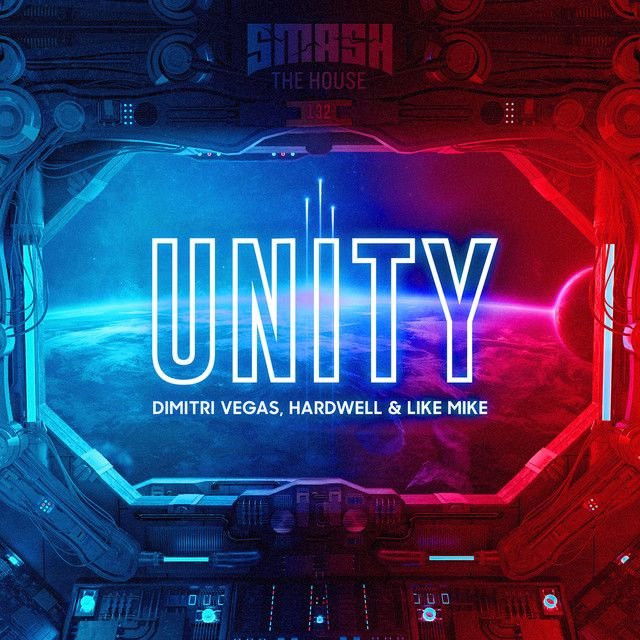
Why 'Unity' Turns One Chant Into a Festival Mission
Dimitri Vegas & Like Mike and Hardwell built “Unity” out of very few words, but that simplicity is the point. The meaning of Unity Dimitri Vegas & Like Mike, Hardwell is not hidden in a detailed story. It lives in repetition, crowd energy, and the idea of many people moving as one.
"Unity" - Dimitri Vegas & Like Mike, Hardwell
Front to the back
Front to the back
Loading lyrics...
Unable to load lyrics
We're unable to display the lyrics at this time. Please try again later.
Rather than telling listeners about love, heartbreak, or a personal memory, they make a direct command for a shared experience. The lyric loop pushes the crowd to respond physically, while the production turns that response into the song’s real message. In other words, this is a track about togetherness through motion.
The Core Message Hides in Plain Sight
At the center of the song is a call to organize a crowd into a single body. The repeated phrase Front to the back
is not poetic in the usual sense. It is spatial, physical, and communal.
Interpretation: that command suggests a dance floor where every section matters. The front and the back are both included, so no one is outside the moment. The song’s title, “Unity,” makes that reading even stronger: they are not just asking people to jump or shout, they are asking them to act together.
The other key phrase, And we make the beat go!
, shifts the focus from the DJs alone to the full room. It frames the beat as something created by a collective event, not just by equipment. Even if the producers technically control the track, the lyric makes the audience feel like co-authors of the energy.

Watch the official Unity
music video
Why So Few Words Work So Well
Many EDM anthems use very short lyrics because the voice acts like another instrument. That is exactly what happens here. The words do not develop a plot; they function as rhythmic signals.
Front to the back
And we make the beat go!
This tiny lyric structure creates a loop of instruction and release. First, the crowd is arranged. Then the beat is triggered. Then the cycle starts again.
Interpretation: that pattern mirrors the live festival experience. A DJ builds anticipation, gives the crowd a cue, and then drops the beat for a shared burst of excitement. “Unity” turns that ritual into the whole song.
Artist Context Makes the Meaning Clearer
This collaboration joins two major names from the big-room EDM era: Dimitri Vegas & Like Mike and Hardwell. Hardwell’s writing name, Robert van de Corput, is credited alongside Dimitrios Anastasios Thivaios and Michael Karl Thivaios, the brothers behind Dimitri Vegas & Like Mike. Their careers were heavily tied to massive festival stages and crowd-driven music, as seen in their profiles and career histories from Hardwell and Tomorrowland.
That background matters because “Unity” sounds designed for a live setting first. The chant is easy to remember after one listen. The repetition gives MC-style direction without needing a full verse. For artists known for commanding huge crowds, that economy is practical and meaningful.
The Sound Is the Real Storytelling
Big-room design, big-room meaning
The production carries much of the meaning of Unity Dimitri Vegas & Like Mike, Hardwell. The track relies on sharp rhythmic build-up, repetitive vocal samples, and a festival-ready drop. Those choices are common in big-room house, a style widely associated with oversized hooks and collective crowd response, as discussed by outlets like Beatportal and festival coverage from EDM.com.
The repeated chant acts like a drum pattern. It is less about describing emotion than creating it. Every recurrence of Front, front
tightens the tension, like a starter’s signal before movement.
How the beat supports the theme
When the line make the beat go
appears, it lands like a trigger phrase. The production backs that up by making the beat feel like a reward for group participation. The result is simple but effective: the crowd hears an order, follows it, and gets sonic payoff.
Interpretation: this is why the song feels larger than its lyric sheet. Its emotional meaning comes from coordination, not confession.
A Song About Space, Motion, and Inclusion
The track uses a subtle but important image: the distance between front and back. That distance can stand for the scale of a concert crowd, but it also suggests connection across differences.
Interpretation: by naming both ends of the room, the song imagines a temporary equal space. VIP barriers, personal worries, and individual stories fade for a few minutes. What matters is synchronized movement.
That is a common dream in festival culture. People arrive as strangers and, for one drop, act like one unit. “Unity” does not argue for that idea in words; it performs it.
Are There Alternate Readings?
Yes, but they stay close to the same center.
- Literal reading: it is a crowd-control anthem built for live shows.
- Symbolic reading: it is a celebration of social togetherness, with music acting as the bond.
- Meta reading: the phrase
we make the beat
hints that DJs and fans need each other, so performance itself becomes a partnership.
All three fit the song because the lyric is intentionally open. There is almost no narrative detail to limit interpretation.
Why “Unity” Still Works
What keeps the track effective is its honesty about what it wants to do. It does not pretend to be a diary entry or a complex poem. They use repetition, command, and sonic force to create a single emotional result: shared energy.
For listeners wondering about the meaning of Unity Dimitri Vegas & Like Mike, Hardwell, the clearest answer is this: it is about the power of a crowd becoming one pulse. The front and the back, the artists and the audience, the voice and the beat all merge into the same moment.
That is why the song feels less like a speech and more like a signal flare for a festival field.
Disclaimer: This interpretation is based on the song’s lyrics, title, production style, and public artist context. Like all music analysis, some meanings remain subjective.









