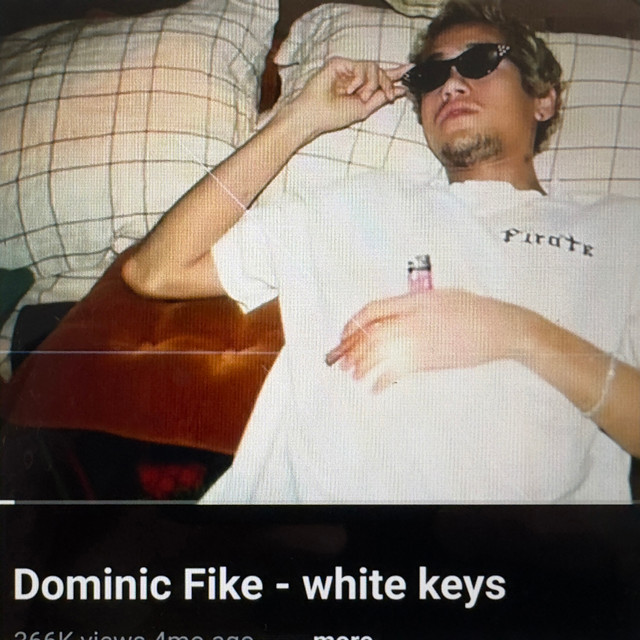
White Keys by Dominic Fike
A love song that doubles as a reckoning
The meaning of White Keys Dominic Fike comes into focus when the song is heard as both a memory piece and a late realization. It starts in youth, with old-car detail, Florida air, and the sweetness of a simpler time. Then it jumps forward into success, style, and money, only to show that none of those things fix emotional absence.
"White Keys" - Dominic Fike
I ain't have nothing but some tees and a pair of jeans
Pine trees, but it smell like weed in the front seat
Loading lyrics...
Unable to load lyrics
We're unable to display the lyrics at this time. Please try again later.
At its core, the song is about a relationship that stayed influential long after it ended. The speaker looks back and sees that this person did not just break their heart. They also helped shape ambition, identity, and the way success feels after the fact.
According to Songfacts, Fike said the track was based on a real former girlfriend and described it as a kind of letter. That context matters because the song sounds personal even when some details are stylized.
Two timelines, one emotional wound
One of the smartest things about the song is its before-and-after structure. In the early section, the narrator is seventeen, broke, and close to someone who seems headed somewhere bigger. The memory is warm and vivid, especially in lines about the car, the trees, and the sense that life was sweet before things got complicated.
Then the second verse shifts into adult life. Suddenly there are luxury brands, income, and status. But the emotional problem remains. That contrast is the point: external growth does not erase inner confusion.
Why the past still runs the present
The younger self wants to be part of this person’s rising life. Even then, there is a gap between admiration and access. The line en route to being famous
suggests someone already moving toward a future that may not include the narrator.
Later, the song shows a more successful speaker, but they still sound left behind. Interpretation: this is not just heartbreak. It is the pain of realizing someone helped define your future while never fully making room for you in theirs.
The title’s metaphor is simple but sharp
The key image is musical: white keys
and way too major
. On the surface, it is a clever phrase. White piano keys often connect with major scales, which can sound bright, open, and emotionally clear.
In the song, that brightness becomes character description. This person feels big, vivid, and maybe overwhelming. They are not minor, muted, or hidden. They take up space.
Interpretation: calling them way too major
can mean at least two things:
- they are larger than the narrator’s life at the time
- they carry a kind of brightness that the narrator cannot keep up with
- they turn love into something aspirational, not stable
That matters because the song is full of imbalance. One person seems to be expanding; the other is trying to fit into the motion.
The chorus reveals the real heartbreak
The hook is where the song opens up emotionally. The repeated idea behind I never knew
is delayed understanding. The narrator finally sees that the relationship had deeper effects than they realized in the moment.
The world is movin'
we were never meant to stay
These lines frame the whole song. Life moves. People change. Some relationships are temporary by nature. But the next thought makes it sting more: the narrator was still trying to build something lasting anyway.
That is why the chorus lands so hard. It is not only sadness over a breakup. It is grief over misplaced faith. They gave what they had and believed effort would make the bond hold.
Small details that carry big themes
Fike is good at using compact images to suggest entire stages of life. Florida, a Chevy, front-seat smoke, ice cream, and designer clothes all work as markers of time and identity.
The phrase 1995, teens in the Florida breeze
is especially important. Even if the song is not strictly documentary in every detail, it places the relationship inside a mythic memory of youth: humid, dreamy, and almost suspended in time.
Then comes the line about a tight squeeze
into everyday life. Songfacts reports that Fike explained the breakup in practical terms: she worked so much that they did not spend enough time together. That plain fact strengthens the song. It shows how life can end something without a dramatic betrayal.
How the sound deepens the meaning
“White Keys” works because the production supports the lyrics’ emotional split. The arrangement feels reflective but not tidy. There is melody and softness, but also strain in the vocal delivery.
Songfacts notes that Fike made the song with John Cunningham and later said the recording captured a rowdy, passionate state of mind. That shows up in the performance. They do not sing like someone calmly summarizing old feelings. They sound like someone still inside them.
That tension matters. The polished success of the second verse is undercut by a vocal that feels raw. In effect, the production says what the lyrics say: success is real, but closure is not.
For broader artist context, Fike’s catalog often blends pop melody, rap phrasing, indie looseness, and autobiography, as heard across his official releases. “White Keys” fits that style while leaning heavily into reflection.
Final reading: love, ambition, and late understanding
The meaning of White Keys Dominic Fike is ultimately about how a person can become part of someone’s emotional architecture. The relationship may have ended because of distance, timing, and uneven lives. But its effect kept growing.
Interpretation: the song suggests that the narrator’s adult identity was built partly in response to this early loss. That is why the money and fashion details feel hollow. They show advancement, not peace.
In the end, “White Keys” is moving because it treats memory as unfinished business. It remembers sweetness, names the mismatch, and admits that insight came too late.
Disclaimer: This article offers an interpretation based on the lyrics, available artist comments, and published sources. Song meaning can remain open to listeners’ own readings.







