
Why Donovan's 'Hurdy Gurdy Man' Feels Like a Vision
The meaning of Hurdy Gurdy Man Donovan becomes clearer when the song is heard as both a dream and a message. It opens in a hazy state of awakening, then introduces a strange musical figure who seems to arrive from outside ordinary life. Rather than telling a concrete story, Donovan builds a vision about spiritual comfort, ancient memory, and the healing power of song.
"Hurdy Gurdy Man" - Donovan
I opened my eyes to take a peep
To find that I was by the sea
Loading lyrics...
Unable to load lyrics
We're unable to display the lyrics at this time. Please try again later.
Released in 1968, the single marked a bigger, heavier sound for Donovan during the psychedelic era, while still keeping his folk-poet identity intact. Contemporary discographies and historical summaries place it among his key late-1960s recordings and note its role in expanding his sound beyond lighter acoustic pop. That context matters because the song feels designed to blur boundaries: folk and rock, dream and waking life, personal vision and universal history.
A Dream Opens the Door
The first verse drops the listener into a half-sleeping state. The narrator feels thrown like a star
, then wakes by the sea and looks out with calm attention. Paraphrased simply, they seem to move from confusion into peace.
That shift matters. Before the mysterious singer appears, the song creates a setting where revelation is possible. The sea often suggests the unconscious, and the star image hints at distance, fate, or cosmic perspective. Interpretation: Donovan may be presenting the mind at the moment when ordinary thought loosens and symbolic truth enters.
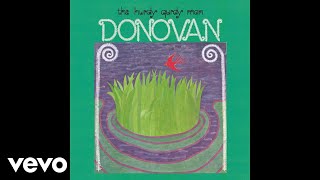
Watch the official Hurdy Gurdy Man
music video
The Visitor at the Center
Then comes the title figure, arriving singing songs of love
. On the surface, the Hurdy Gurdy Man sounds like a wandering musician. But the song gives them an almost mythic role.
They do not just entertain. They appear at a charged moment and carry a message that answers pain with love. Interpretation: the Hurdy Gurdy Man can be heard in at least three ways:
- a literal traveling singer
- a spiritual messenger or prophet
- an image of the artist as healer
That ambiguity is part of the song's charm. Donovan does not explain the figure in plain language, so the song stays open and slightly uncanny.
History, Sorrow, and a Reply
The second verse broadens the scope. Instead of staying in one private vision, the lyric suddenly looks across time: histories of ages past
, old shadows, and the crying of humanity
. In other words, the song moves from personal calm to the weight of human suffering.
This is where the meaning of Hurdy Gurdy Man Donovan deepens. The visitor's music is not just pleasant. It enters a world marked by ignorance, pain, and repetition. The phrase songs of love
then sounds less sentimental and more radical. Love becomes the answer offered to history itself.
Why the Repetition Matters
Much of the song's emotional effect comes from the repeated chant of hurdy gurdy
. Those words do not explain much literally, but they create a trance. The listener stops looking for plot and starts feeling rhythm, pulse, and incantation.
That technique fits late-1960s psychedelic songwriting, where repetition often worked like a doorway into altered perception. Here, repetition turns language into texture. Interpretation: Donovan may be suggesting that some truths are felt before they are fully understood. The message comes through sound as much as meaning.
Thrown like a star
by the sea
songs of love
Those small images summarize the song's path: cosmic arrival, calm vision, and emotional rescue.
How the Sound Carries the Message
The production is a major reason the track feels so powerful. Donovan had already built a reputation as a folk-based songwriter, but this recording pushes into denser, harder-edged territory. The droning groove, electric textures, and forceful rhythm give the song a ritual quality rather than a campfire feel.
That matters for interpretation. A lighter arrangement might have made the song feel whimsical. Instead, the heavier sound makes the Hurdy Gurdy Man seem larger than life, almost like a figure emerging from a storm cloud of sound. The music supports the lyric's scale: this is not just one person's dream, but a vision with cosmic weight.
The vocal delivery helps too. Donovan sings with calm authority rather than panic or melodrama. That steadiness makes the mystical language easier to trust. The performance says: this strange thing happened, and they are reporting it with wonder, not confusion.
Alternate Readings Worth Considering
There is more than one valid way to hear the song.
A Spiritual Awakening
In this reading, the narrator receives a revelation. The sea, the star, and the mysterious singer all point toward awakening. The Hurdy Gurdy Man becomes a guide who brings compassion into a wounded world.
A Psychedelic Experience
Another reading hears the song as a snapshot of expanded consciousness. The floating images, timeless scope, and circular refrain resemble the structure of a trip or meditation. The lyrics do not describe reality in a journalistic way; they describe perception in motion.
A Song About Art Itself
The Hurdy Gurdy Man can also stand for the artist. In that reading, music becomes the force that carries people through history's pain. The singer does not erase suffering, but they answer it with beauty and connection.
Why the Song Still Resonates
The song lasts because it refuses to be pinned down. It is simple enough to feel immediate, yet strange enough to invite return visits. Listeners can hear mysticism, psychedelia, folk storytelling, or all three at once.
For many people, that is the real meaning of Hurdy Gurdy Man Donovan: when the world feels heavy and history feels long, art can still arrive like a visitor and sing back with love.
Disclaimer: This article offers interpretation based on the lyrics, recording context, and common critical readings. As with many Donovan songs, some meanings remain intentionally open.








