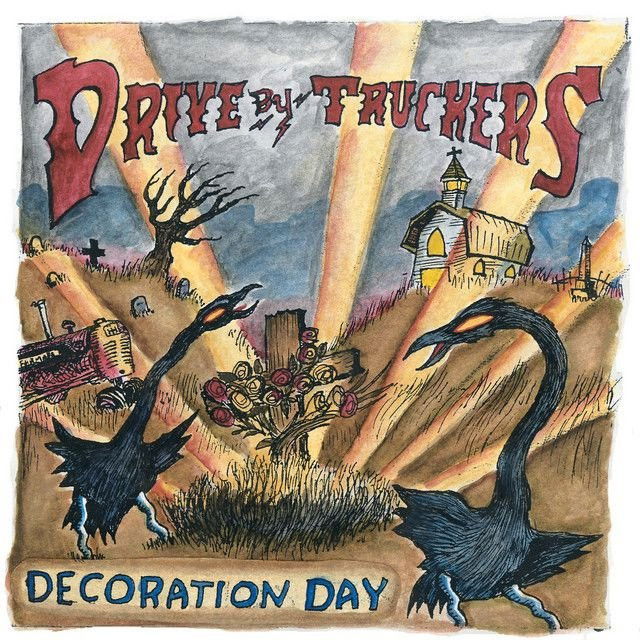
Outfit by Drive-By Truckers
Why This Song Still Hits Hard
The meaning of Outfit Drive-By Truckers starts with a simple scene: a father talks to his son and tries to pass down a code for living. The song is warm, funny, strict, and a little sad all at once. It sounds like advice from someone who has made mistakes, learned the hard way, and wants the next generation to keep its dignity.
"Outfit" - Drive-By Truckers
A trailer in my yard till you're twenty three
You want to be old after forty two years
Loading lyrics...
Unable to load lyrics
We're unable to display the lyrics at this time. Please try again later.
Written by Jason Isbell and released on the band's 2003 album Decoration Day, the song has become one of the most loved entries in the Drive-By Truckers catalog. Its power comes from how specific it is. The details are Southern, blue-collar, and personal, yet the message reaches far beyond one family.
Watch the official Outfit
music video
A Father’s Rules, Not Just a Lecture
At the most basic level, the song is about a father telling his son how to move through the world without losing himself. He talks about work, speech, family loyalty, drugs, pride, and class. The famous line Don't call what you're wearing an outfit
is not really about clothes. It is about authenticity.
The father hears certain words as signs of putting on airs. In his mind, language reveals values. When he says your car is broke
instead of more polished wording, he is defending regional speech and working-class plainness. He is not asking his son to stay uneducated. He is asking him not to become fake.
The Story Beneath the Advice
The verses build a family history that gives the chorus its weight. This father is not speaking from theory. He remembers youth, desire, marriage, jobs, and compromise. He recalls a car he once loved and how adult responsibility changed his path.
That backstory matters because it shows what he gave up. He had swagger and freedom once. Then he chose commitment, labor, and routine. The song does not frame that as defeat. Instead, it treats sacrifice as a form of love.
A life measured by work
The narrator lists jobs in industrial and maintenance settings before returning to painting houses. These details make the song feel lived in rather than symbolic. The labor is repetitive, imperfect, and physically real.
Interpretation: The song suggests that identity is shaped less by grand success than by endurance. They keep going, support the family, and carry pride even when life narrows.
Southern Identity Without Romance
One reason the song stands out is that it treats Southern identity as something complicated but worth protecting. The father says, in effect, do not be ashamed of where you come from. A phrase like losing your accent
shows this clearly. Accent here means more than speech. It stands for memory, place, and class.
At the same time, the song is not a simple celebration of the South. It includes pressure, limits, and inherited expectations. The father can sound loving, but he can also sound controlling. That tension makes the portrait believable.
Have fun, stay clear of the needle
call home on your sister's birthday
These lines show the mix of everyday care and moral urgency. One warning is about survival. The other is about family duty. Together, they create a whole worldview: stay alive, stay connected, and do not drift so far that you forget your people.
What the Chorus Really Means
The chorus works like a list of commandments, but each one points back to a larger fear. The father worries that the son will trade substance for style, roots for status, and honesty for performance. Even the sharp line bigger than Jesus
is not just a joke or a pop-culture reference. It warns against ego and self-mythology.
Then the repeated phrase don't give it away
becomes the emotional center of the song. What should not be given away? Their voice, their family history, their self-respect, their hard-earned identity. That line broadens the song from one father and son into a statement about cultural survival.
How the Sound Supports the Message
Musically, “Outfit” is steady and grounded. The arrangement leans on roots rock and country-soul textures rather than dramatic studio tricks. The tempo is relaxed, the guitars are warm, and the performance feels conversational. That matters because the song is built like front-porch wisdom, not a sermon.
The Drive-By Truckers are known for blending Southern rock with storytelling, and Jason Isbell brought a literary sharpness to the band during this period. On “Outfit,” the vocal delivery sounds direct and unforced, which keeps the advice from feeling too polished. The band lets the words breathe.
Production and emotional effect
The production does not overwhelm the lyric. Instead, it supports the father’s plainspoken authority. The gentle groove makes the song feel trustworthy, as if listeners are hearing family truth rather than a staged performance.
Alternate Readings Worth Considering
There is a straightforward reading: this is a loving father trying to protect his son. That reading is strongly supported by the care in the details and the concern behind the warnings.
Interpretation: There is also a more uneasy reading. Some listeners may hear the song as showing how families pass down not only wisdom, but also limits. The father wants the son to stay real, yet he may also be telling him how far he is allowed to change. That ambiguity is part of the song's greatness.
Why “Outfit” Endures
The meaning of Outfit Drive-By Truckers lasts because the song understands how identity gets built: through speech, work, family stories, and the rules people inherit. It respects ordinary life without pretending it is easy.
In the end, the song is less about resisting change than resisting erasure. The father knows the world will try to sand down the son's edges. His answer is simple: remember where they came from, and do not be ashamed of it.
Disclaimer: This interpretation is based on the song's lyrics, recording, and public context. As with any art, listeners may hear different meanings.







