Why 'Mighty Echoes' Feels Spiritually Huge
The meaning of Mighty Echoes Eloy comes down to one big idea: nothing people think, say, or do disappears. The song imagines every human action as a wave sent into the world, where it keeps moving and eventually returns.
"Mighty Echoes" - Eloy
What does happen?
Just have a thought, cry a word or pray a silent plea
Loading lyrics...
Unable to load lyrics
We're unable to display the lyrics at this time. Please try again later.
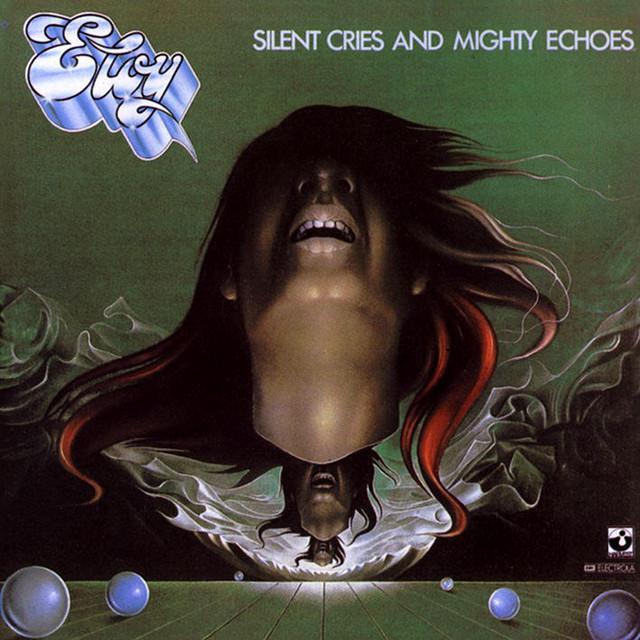
As the closing track on Eloy’s 1979 album Silent Cries and Mighty Echoes, it also works like a final statement. According to the album’s documented background, the record was released on January 10, 1979, and is widely described as a concept album about spiritual transcendence and human growth. It was recorded in Cologne and produced by the band themselves. The lineup included Frank Bornemann, Detlev Schmidtchen, Klaus-Peter Matziol, and Jürgen Rosenthal, with Rosenthal writing the album’s lyrics. Those facts come from the album’s documented credits and history in major discography summaries.[1]
A Ripple in Water, a Ripple in Life
The song opens with a simple image: throw a stone into still water and watch the reaction. That image gives the whole song its structure. Eloy uses nature to explain moral and spiritual consequence.
When the lyric asks what happens after a small act, it is really asking a bigger question about human existence. A single thought, word, or prayer can trigger effects far beyond the moment. The band then turns that natural image into a spiritual one, suggesting that people live inside a universe where energy answers energy.
This is why the phrase silent sea
matters. It is not just scenery. It suggests a world that seems quiet but is always responsive.

Watch the official Mighty Echoes
music video
The Chorus Turns Cause and Effect Into Warning
The central refrain makes the song’s message plain. It says people cannot escape the consequences they create. In paraphrase, the track argues that human life generates vibrations, and those vibrations return as truth.
That is where phrases like We can't stop the echoes
and truth of our soul
become important. They push the song away from fantasy and into ethics. Eloy is not only describing cosmic mystery; they are saying that inner life becomes outer reality.
Interpretation: the song treats conscience like physics. Just as a pebble creates waves, fear, love, violence, and compassion create social and spiritual aftershocks.
Collapse, Confusion, and the Border Line
Midway through, the lyric grows darker. It asks about collapsing walls and the breakdown of truth, law, and order. This is one reason the song feels larger than a private spiritual meditation. It links inner corruption to public collapse.
The line about being shouters at the border
is especially striking. It pictures humanity at a threshold, caught between insight and destruction. They are close to understanding, but still trapped in noise, division, and denial.
Interpretation: that “border” may be the edge between lower instincts and higher awareness. It may also suggest a civilization facing the results of its own choices.
Love Is the Song’s Real Answer
For all its warnings, “Mighty Echoes” does not end in despair. The lyric repeatedly turns back toward love, understanding, and spiritual responsibility. It argues that people are here for more than survival or control; they are here to spread healing force.
This is where the song becomes very direct. It says violence makes people sick and blind, while love lifts the mind. In other words, the “echoes” people receive are connected to what they send out first.
“When we're sowing fear, when we lock up
We will reap all the tears”
That short passage is the clearest moral statement in the song. It frames fear as something self-defeating. Close the heart, and suffering multiplies.
How Eloy’s Sound Makes the Message Feel Cosmic
The music matters as much as the words. Eloy were operating in progressive rock and space rock at this point, and Silent Cries and Mighty Echoes is often noted for its rich keyboard textures and sweeping atmosphere.[1] Detlev Schmidtchen’s setup included Hammond organ, Minimoog, ARP synthesizers, Mellotron, and string ensemble sounds, while Jürgen Rosenthal added dramatic percussion colors like timpani, tubular bells, and temple blocks.[1]
That instrumentation helps explain why the song feels so vast. The layers create the sense of standing inside a universe where every signal travels outward. One review summary has described the album as building tension through “layered” cosmic landscapes before resolving into the calmer final tracks.[1]
Interpretation: on “Mighty Echoes,” that softer, expansive sound mirrors the lyric’s idea that truth is not shouted by force. It arrives like resonance.
Why the Ending Feels Like a Conclusion
Because this is the album’s last track, it carries extra weight. The larger concept record moves through suffering, revelation, and spiritual searching, and “Mighty Echoes” gathers those themes into one final lesson: people are connected, accountable, and capable of rising.
That placement matters. The album reached No. 17 in Germany and also charted in Norway, showing that this phase of Eloy’s work connected with listeners even if some critics were cooler at the time.[1] The song’s lasting appeal likely comes from that blend of philosophy and emotion. It asks difficult questions, but it still leaves room for hope.
The Core Meaning in One Line
The meaning of Mighty Echoes Eloy is that human life is made of consequences. Thoughts become actions, actions become waves, and those waves return.
Eloy turns that idea into a spiritual rock statement: if people choose fear, they will live inside its echo. If they choose love, they can help remake the world.
Disclaimer: This interpretation is based on the lyrics, album context, and documented band history. As with most progressive rock songs, listeners may hear different layers of meaning.







