Why 'If I Can Dream' Still Hits So Hard
The meaning of If I Can Dream Elvis Presley starts with a simple idea: they are singing about hope when hope feels hard to hold. The song does not ignore pain. It looks straight at fear, violence, and division, then insists that a better future is still worth believing in.
"If I Can Dream" - Elvis Presley
Got to be birds flying higher in a sky more blue
If I can dream of a better land
Loading lyrics...
Unable to load lyrics
We're unable to display the lyrics at this time. Please try again later.
That is why the track remains one of Elvis Presley's most powerful performances. It is not just inspirational. It is urgent.
A Dream Born From National Grief
Factually, the song was written by Walter Earl Brown and became the finale of Elvis's 1968 TV special, later known as the '68 Comeback Special. It was recorded in June 1968, only weeks after the assassinations of Martin Luther King Jr. and Robert F. Kennedy, and it is widely linked to that painful moment in American life. Research on the song's history also notes its clear kinship with King's "I Have a Dream" language and ideals.
That context matters because the lyric is not abstract. When the song reaches for a world where people move hand in hand
, it is speaking to a country torn by violence and distrust.
Interpretation: Rather than making a direct political speech, the song turns public tragedy into a moral prayer. It asks why peace and justice still seem delayed, while refusing to give up on them.
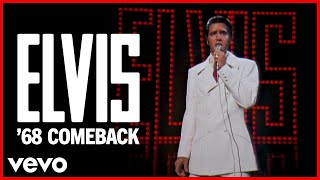
Watch the official If I Can Dream
music video
What the Song Is Really Saying
At a story level, the lyric moves through three emotional stages:
- They imagine a brighter world.
- They admit the present world is wounded.
- They insist dreaming is still an act of strength.
Early images like lights burning brighter
and a sky "more blue" present the future as something visible, almost within reach. The singer is not dreaming of luxury or fame. They are dreaming of basic human decency.
Then the mood darkens. The song says people are lost in a cloud
and living with pain. This shift is important. Hope means more because it rises out of honest despair, not denial.
The Chorus as a Plea, Not a Fantasy
The repeated title line can sound soft on paper, but Elvis delivers it as a demand. When they sing If I can dream
, the phrase does not mean escape. It means moral survival.
The key emotional question in the chorus is why the dream has not arrived yet. That frustration keeps the song from becoming sentimental. It believes in change, but it also recognizes how slow change can be.
While I can think, while I can talk
While I can stand, while I can walk
This brief closing passage turns hope into action. The singer ties dreaming to living, speaking, standing, and moving. In other words, the dream is not passive. It is something a person carries into the world right now.
Symbols of Light, Weather, and Movement
The song's imagery is simple, but it does a lot of work.
Light means moral clarity
The lyric returns again and again to brightness: lights, a warmer sun, and a candle in the dark. These are not random pretty images. They suggest truth, guidance, and the possibility of renewal.
Storms represent fear and confusion
Clouds, rain, and dark spaces stand for a society weighed down by doubt. The song imagines that pressure as weather, something surrounding everyone.
Movement suggests freedom
Birds flying higher, people walking, and souls that can rise all point toward release. The dream is not static. It moves upward and outward.
Interpretation: These symbols make the song feel universal. Even listeners who do not know the 1968 background can understand light versus darkness, or standing tall versus being trapped.
Why Elvis's Performance Matters So Much
Part of the meaning of If I Can Dream Elvis Presley comes from the way it sounds. Historically, the record blended soul and gospel with orchestral pop, a stronger and more contemporary direction than many of the movie soundtrack songs that had defined much of Elvis's mid-1960s output.
That shift was crucial. The arrangement begins with restraint, then builds in waves. The orchestra widens the emotional space, while the backing vocals give the song a church-like lift. By the end, Elvis is not merely singing the lyric; they are pushing it to the edge of a cry.
Reports from the sessions describe how deeply invested he was in the material, and the song is often cited as a turning point in his artistic reinvention during 1968. That helps explain why the performance still feels different from standard pop inspiration. It sounds lived in.
Why the Song Endured
The single reached No. 12 on the Billboard Hot 100 and became one of the lasting symbols of Elvis's comeback era. Its legacy is bigger than chart numbers, though. The song keeps returning in public life because its message is unfinished.
A dream of peace, dignity, and shared humanity does not belong to one decade. That is why the song still resonates across generations and has been covered by later artists.
Final Thought
In the end, the song is about refusing to let despair have the last word. It faces a broken world, but it treats hope as courage, not weakness. That is the lasting power behind the meaning of If I Can Dream Elvis Presley.
Disclaimer: This article mixes verified historical context with clearly labeled interpretation. Song meaning can remain open to different listeners.








