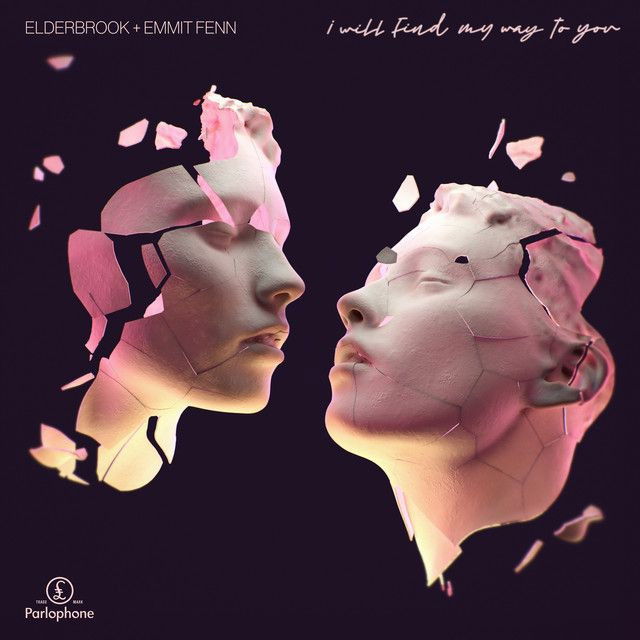
I’ll Find My Way to You by Elderbrook, Emmit Fenn
A Small Song With a Big Promise
The meaning of I’ll Find My Way to You Elderbrook, Emmit Fenn centers on devotion during distance, uncertainty, and emotional darkness. The song is brief in language but large in feeling. Instead of telling a detailed story, it circles one promise again and again: the speaker will keep moving toward another person, no matter how hard that journey feels.
"I’ll Find My Way to You" - Elderbrook, Emmit Fenn
I'll run and I'll run
One day, trust
Loading lyrics...
Unable to load lyrics
We're unable to display the lyrics at this time. Please try again later.
That simple idea gives the track its power. Elderbrook and Emmit Fenn both work in electronic music that often blends intimacy with spacious sound. Elderbrook, the project of Alexander Kotz, is known for emotional dance songs, including material from Elderbrook, while Emmit Fenn often builds atmospheric, cinematic textures through electronic pop and ambient production. Their styles meet here in a song that feels comforting and restless at the same time.
What the Lyrics Seem to Mean
At the lyric level, the song speaks like a vow. The opening words, Hey child
, sound gentle and protective. They suggest care, but they also create a little mystery. The speaker could be addressing a lover, a younger self, a friend in pain, or even someone emotionally fragile.
The next promise, I'll run and I'll run
, turns love into action. This is not passive waiting. They are saying they will keep trying, keep searching, and keep crossing whatever distance stands in the way.
A second image deepens that promise. When the speaker says I'll be the sun
, they offer warmth, guidance, and relief. The song does not describe the other person in detail, but it does describe what they need: light.
I will find
my way
to you
That short refrain is the emotional core. It repeats so often that it stops sounding like a normal sentence and starts sounding like a belief. In plain terms, they are not just hoping to reconnect. They are insisting that connection is possible.
The Emotional Push and Pull
One of the most telling lines is it's blue
. The phrase is simple, but it opens a wider emotional space. Blue can mean sadness, loneliness, coldness, or a mood that settles over everything. The line suggests that the other person brings complicated feelings, or that their absence leaves the world dim and heavy.
That is why the song feels split between comfort and ache. On one side, there is certainty: they will find the way back. On the other, there is pain in the present moment. The repeated Oh no
hints that this search is not easy or clean. Love is steady here, but peace is not.
Interpretation: The song may be about long-distance love or reunion after separation. The words fit that reading because they focus on travel, waiting, and emotional weather.
Interpretation: It can also be read as a song about support during depression or grief. In that version, “finding a way” means reaching someone who feels lost, while “being the sun” means trying to bring them hope.
How Repetition Becomes the Message
The lyrics are sparse, but the repetition matters. They do not develop through new images or plot twists. Instead, the track builds feeling by returning to the same vow until it feels almost meditative.
This is common in electronic music, where a repeated vocal can work like a mantra over changing production. As the phrase returns, listeners stop hearing it as information and start hearing it as emotional truth. The song is not trying to explain every detail of the relationship. It is trying to capture the state of mind of someone who refuses to give up.
That is a key part of the meaning of I’ll Find My Way to You Elderbrook, Emmit Fenn. The song narrows its language on purpose so the feeling can widen.
Why the Sound Matters So Much
Production is essential here. Elderbrook and Emmit Fenn build the song around airy space, soft percussion, and a looping vocal structure. The beat gives motion, but it is not aggressive. It feels like forward movement through fog.
The track’s synths and ambient layers create a floating quality, which matches the emotional uncertainty in the lyrics. At the same time, the steady pulse underneath keeps the song grounded. That contrast mirrors the message: the heart may be unsettled, but the intention is firm.
Listeners who know Fenn’s atmospheric style from Emmit Fenn will hear that cinematic openness in the background. Elderbrook brings the human touch through vulnerable vocal phrasing. Together, they make the song feel intimate enough for headphones and big enough for a late-night drive.
A Song About Finding Direction
The phrase “find my way” is important because it admits confusion before it claims certainty. They do not say the road is clear now. They say they will discover it. That makes the song more believable. It is not fantasy about perfect love. It is commitment in the middle of not knowing.
This also explains why the song connects with many listeners. Most people understand the feeling of wanting to reach someone when life, distance, timing, or mood makes that hard. The song gives that feeling a clean shape: keep going, keep searching, keep believing that closeness can return.
Final Take
In the end, the song is about love as direction. Its speaker is tired, maybe worried, and surrounded by sadness, but still moving toward another person. The words are minimal, yet the emotional message is strong: devotion is not just a feeling; it is a choice made again and again.
That is the lasting power of the track. It turns a few simple lines into a tender promise carried by electronic atmosphere and repetition.
Disclaimer: This interpretation is based on the lyrics, performance, and available artist context. Like many minimal songs, it leaves room for more than one valid reading.







