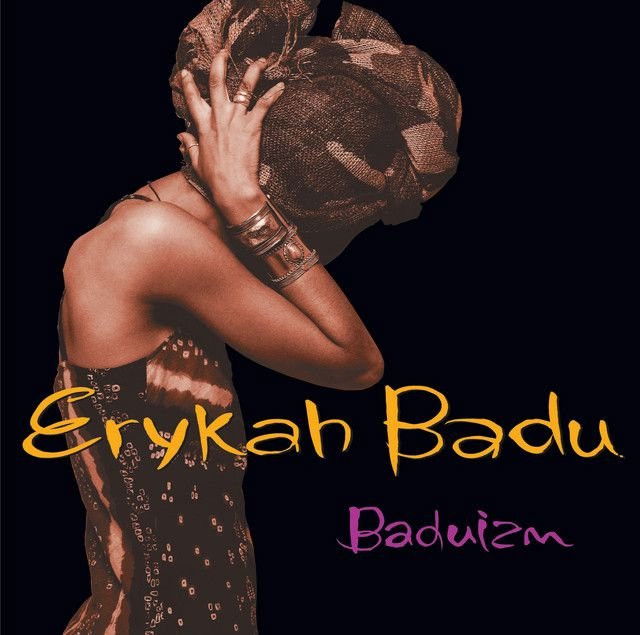
Why 'On & On' Never Stops Turning
The meaning of On & On Erykah Badu starts with a simple tension: everyday struggle meets spiritual calm. Their voice sounds unbothered, but the lyrics are full of pressure—money problems, isolation, hunger, doubt, and a world that will not slow down.
"On & On" - Erykah Badu
I'm feeling high
My money's gone
Loading lyrics...
Unable to load lyrics
We're unable to display the lyrics at this time. Please try again later.
Released as Badu's debut single in December 1996 and later leading Baduizm, the song became a breakthrough hit, reaching No. 1 on Billboard's Hot R&B Singles chart and No. 12 on the Hot 100, while also winning the 1998 Grammy for Best Female R&B Vocal Performance. Those facts helped make it a defining early neo-soul statement, but the song's power comes from how private thoughts open into bigger ideas about faith, identity, and survival.
A Small Personal Scene, A Much Bigger World
At first, the song sounds almost casual. They describe feeling lifted up, then suddenly broke and alone. That shift matters. Badu sets up a world where mood, money, and meaning can change in a moment, yet the larger motion of life continues.
When they repeat the world keeps turnin'
, the phrase is not just background detail. It suggests that personal pain does not stop history, nature, or time. The song's first lesson is humility: one person suffers, but the planet keeps moving.
That is why the opening feels both intimate and philosophical. They are not only telling a story about one hard day. They are showing how a hard day can become a doorway into reflection.

Watch the official On & On
music video
The Chorus Turns Struggle Into Motion
The hook is the song's key. Instead of resolving conflict, it accepts movement. The repeated on and on
becomes a mantra, almost like breathing through confusion.
Badu later explained the idea of the "cypher" as a circle connected to the Earth and the body's own motion, describing a 360-degree cycle and a living bond between self and planet. That explanation, preserved in fan documentation and widely cited in discussion of the song, helps decode the line my cypher keeps moving
. Interpretation: in the chorus, they are saying that the self survives by staying in rhythm with a larger pattern, not by escaping it.
Peace and blessings manifestwith every lesson learned
This brief moment states the song's philosophy most clearly. Growth does not come before pain. It comes through it.
Knowledge, Faith, and Naming
One reason the song still feels rich is that it layers street wisdom, spiritual language, and social critique without over-explaining any of them. Sources on the song's background note that the lyrics incorporate teachings associated with the Five-Percent Nation. That context helps explain why ideas about knowledge, God, and identity sit so close together.
The line call us by our names
is especially important. In plain terms, they are demanding dignity. If people are made in God's image, then they should not be erased, generalized, or treated as less than human.
The song also questions intellectual pride. Its message is not anti-thinking. It is anti-arrogance. Interpretation: Badu contrasts true wisdom with empty cleverness, suggesting that spiritual blindness can hide inside educated language.
The Puzzles Are the Point
Some of the song's most famous lines sound cryptic on purpose. The image about being born underwater with a little money is less about literal biography than coded self-definition. It invites the listener to think in symbols, numbers, and layered meanings.
That method fits the whole song. Instead of handing over a neat lesson, Badu builds a world where insight arrives in fragments. Hunger, tea, burning, vultures, and the mothership all pass through the verses like signs in a dream.
Interpretation: these images point to temporary highs and the crash after them, false comfort, and the danger of looking for rescue outside the self. The song keeps asking what really lasts.
How the Sound Carries the Message
"On & On" works because the production never crowds the writing. Research on the single credits Erykah Badu and Madukwu Chinwah as producers, and critics at the time highlighted its booming bass, jazzy keyboards, and percussion. That stripped-back arrangement gives the track its floating but grounded feel.
The bass line is especially important. It loops with calm certainty, giving the song a circular shape before the lyrics even explain one. Their vocal delivery does the rest: conversational, smoky, and lightly detached, as if they are observing chaos from a place of inner balance.
That balance helped define neo-soul in the late 1990s. Reviews from Billboard, Music Week, and later lists from Slant and Pitchfork all pointed to the record's unusual mix of jazz, hip-hop, and spiritual cool. The sound is not decoration. It is the meaning made audible.
Why the Song Still Lands
The lasting appeal of the meaning of On & On Erykah Badu is that it refuses a simple choice between realism and hope. Life is hard. Systems are cold. People chase empty answers. Still, the song does not collapse into despair.
Instead, it offers a discipline: learn, keep moving, protect the self, and stay connected to something larger than the crisis of the moment. That is why the chorus feels so steady. It is not denial. It is endurance.
The Last Turn
More than a hit single, "On & On" introduced Badu as an artist who could turn everyday stress into philosophy without losing groove. Their message is not that suffering is beautiful. It is that wisdom can be made from it, and that identity becomes stronger when it moves through the cycle instead of pretending the cycle is not there.
This reading is an interpretation based on the lyrics, credited background information, and the song's cultural context; listeners may reasonably hear different meanings in its imagery and spiritual language.







