Why Failure's 'Stuck on You' Still Lingers
The meaning of Stuck on You Failure comes down to obsession that feels almost physical. The song does not describe a healthy romance or a sweet crush. Instead, it turns attachment into an invasion: a voice gets into the speaker's head, follows them into sleep, and takes over their private space.
"Stuck on You" - Failure
Then in a frozen bar
I claimed I didn't care for you.
Loading lyrics...
Unable to load lyrics
We're unable to display the lyrics at this time. Please try again later.
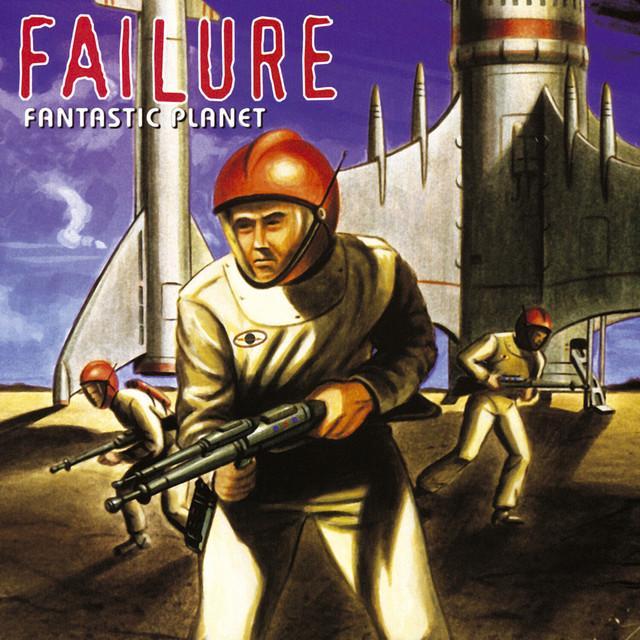
Released in 1996 as the lead single from Failure's Fantastic Planet, the track became the band's only Billboard-charting song, reaching No. 23 on U.S. Modern Rock and No. 31 on Mainstream Rock, according to Billboard chart history. That success makes sense. It is catchy, but it also sounds uneasy, which fits its central idea.
The Hook Is About Mental Captivity
At its core, the song is about being unable to shake someone—or something—from the mind. The chorus says it plainly with Stuck on you
and then pushes the feeling further with You've got me paralyzed
. Before and after those lines, the verses make clear that this fixation is unwanted.
This is why the song feels darker than its title suggests. "Stuck on you" can sound affectionate in pop music, but Failure twist it into surrender. The speaker is not celebrating devotion. They are admitting defeat.
Interpretation: the "you" may be a person, but the lyrics also allow a broader reading. The target of obsession could be a song on the radio, a media presence, or any repeated signal that bores into the brain.

Watch the official Stuck on You
music video
A Story of Intrusion, Not Romance
The verses build that idea step by step. First, the speaker hears the presence in ordinary places, like a car and a bar. Then they deny caring, but the denial does not hold. A line about a verse trapped in the head suggests an earworm: once heard, it repeats without permission.
From there, the imagery becomes bodily and uncomfortable. The comparison to a summer parasite turns attraction into irritation. When the speaker says it will invade my sleep
, they show that this is no longer just a daytime thought. It has crossed into dreams, rest, and the body.
That pattern continues in the next verse. On the phone and alone in a room, they still hear the other presence. Phrases like inside my room
and inside of me
make the boundary collapse. The obsession is now environmental and internal at once.
Why the Song Sounds the Way It Feels
Failure were known for dense alternative rock that could feel both heavy and floating, and that balance is crucial here. The recorded version on Fantastic Planet was written by Ken Andrews and Greg Edwards and credited as produced by Failure, as noted in the song overview. Those facts matter because the arrangement itself helps explain the song's meaning.
The guitars have weight, but they do not just attack. They also hang in the air. The bass and drums keep the track moving in a steady, almost inescapable cycle, while the vocal delivery stays calm enough to sound resigned rather than explosive.
That restraint is important. If the singer sounded wild, the song might read as simple panic. Instead, the controlled tone suggests exhaustion. The chorus line about being too tired to fight captures the same mood: the speaker has been worn down by repetition.
Small Images, Big Themes
Several images do a lot of work in this song:
- Cars and bars: everyday places become haunted by memory.
- Sleep and dreams: obsession follows the speaker into unconscious life.
- Telephone and broadcast imagery: the song treats the voice like a transmission.
- The body: itching, paralysis, and mental pressure make emotion feel physical.
The last section sharpens the media angle. The speaker complains about an insipid rhyme
that gets beamed outward and shot deep into the mind. That language sounds less like a lover in a room and more like a signal coming from speakers, radio waves, or mass culture.
No I can't escape
Your insipid rhyme
Straight into my mind
In that short burst, the song almost explains itself. The problem is not just love. It is forced repetition.
Two Strong Readings of the Lyrics
Reading One: A toxic attachment
The most direct reading is emotional dependence. The speaker tries to dismiss someone, fails, and ends up consumed by their presence. In this version, the song captures how desire can become claustrophobic.
Reading Two: A satire of the earworm
Interpretation: the lyrics may also poke at bad or shallow pop songs that people cannot stop hearing. References to a trapped verse, rhyme, drone, and broadcast all support that idea. Even the phrase about a "midrange moan" sounds like a jab at recorded sound, not just a human voice.
That second reading helps explain why the song is funny in a dry way. It takes the language of love songs and turns it into a complaint about being mentally colonized by sound.
Why It Endures in Alternative Rock
Part of the song's staying power comes from that double meaning. It works as a straight emotional confession, but it also works as a smart comment on repetition, media, and annoyance. Many listeners can recognize both feelings: being unable to get over someone, and being unable to get a tune out of their head.
Its afterlife supports that durability. The song remained one of Failure's best-known tracks, and its cultural reach is clear in small details, like Paramore naming The Summer Tic EP after a lyric-inspired phrase. The title image lasted because it is vivid, gross, and memorable all at once.
The Bottom Line on the Meaning
So, what is the meaning of Stuck on You Failure? Most likely, it is a song about obsession as invasion. Whether the source is a person, a memory, or a piece of music, the effect is the same: the speaker loses control over their own inner space.
That is why the track still lands. It is melodic enough to pull listeners in, but unsettling enough to show how attachment can become a trap.
Interpretation disclaimer: song meanings are rarely fixed, and this reading is based on the lyrics, recording context, and widely known facts about the release.







