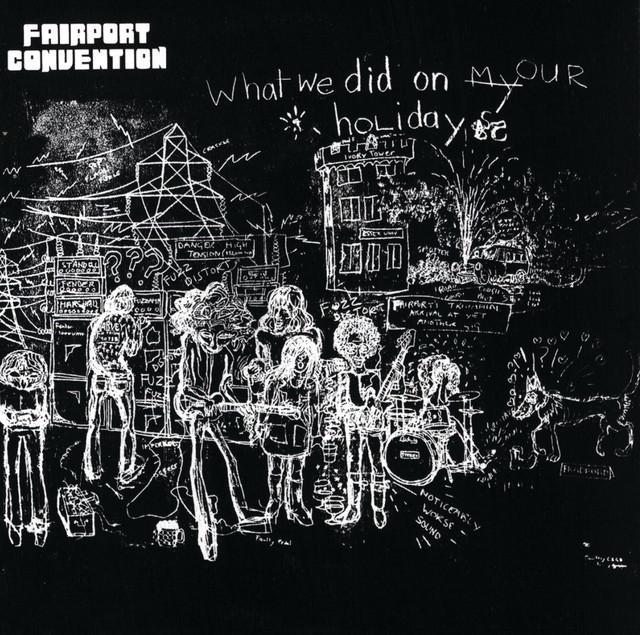
Fotheringay by Fairport Convention
The meaning of Fotheringay Fairport Convention starts with a woman looking out from captivity and ends with the knowledge that her life is almost over. Written by Sandy Denny for Fairport Convention, the song turns a historical setting into something intimate and human. Rather than telling a long story, they focus on one emotional moment: a prisoner measuring the last hours of freedom she no longer has.
"Fotheringay" - Fairport Convention
And watched the daylight passing within her captive wall,
With no-one to heed her call.
Loading lyrics...
Unable to load lyrics
We're unable to display the lyrics at this time. Please try again later.
Most listeners read the song as an imagined portrait of Mary, Queen of Scots, who was held at Fotheringhay Castle before her execution. That reading fits the title, the castle imagery, and the final sense of departure. Even without naming her directly, the song gives the scene a quiet, tragic clarity.
A captive queen at the window
The song opens with a simple but painful image: a woman watching life continue outside while she remains trapped inside. The phrase castle windows
immediately places the listener in a royal setting, but the emotional point is not power. It is helplessness.
She sees daylight passing, yet she cannot join it. When the lyric mentions within her captive wall
, it compresses her whole life into one barrier. She is physically confined, but the song also suggests emotional isolation. No one answers her, and no one can reverse what is coming.
This is why the song feels bigger than a history lesson. They present captivity as time itself becoming a prison.

Watch the official Fotheringay
music video
Time, sunset, and the approach of death
One of the song’s strongest ideas is that evening is not just evening. It marks the shrinking of life. The image of the dwindling sun
makes the coming end feel natural and unavoidable, like daylight fading no matter what anyone wants.
The birds matter too. When Denny refers to the young birds flown
, she contrasts freedom and movement with the stillness of the prisoner. The birds can leave. She cannot. That small image carries a lot of grief without becoming melodramatic.
Interpretation: the song may be using nature to show what has been stolen from her. Light, flight, distance, and open air all belong to the outside world. She can only witness them secondhand.
The heart of the song: freedom already lost
In the middle verse, the lyric turns from the present moment to the years behind it. Her freedom was not lost only today. It was taken long ago, and the real tragedy is how many empty years followed. The phrase fruitless years
suggests wasted time, but also a life that could no longer grow.
That makes the song more than a final-hour lament. It becomes a reflection on long defeat. She is not only facing death; she is looking back at the slow erosion of agency, hope, and public identity.
There is also a subtle shift here. The song stops sounding like a person simply trapped in a room and starts sounding like someone whose fate was decided by forces larger than herself: monarchy, politics, religion, and power.
Why the ending feels calm instead of loud
The last verse is devastating because it is so restrained. Tomorrow she will be gone, far away
, beyond the islands and beyond Fotheringay itself. The wording avoids graphic detail. It does not say execution outright. Instead, departure becomes a softened way of speaking about death.
That choice gives the ending dignity. Rather than panic or rage, the song offers acceptance tinged with sorrow. The emotional force comes from understatement.
Tomorrow at this hour
she will be far away
Those lines summarize the song’s entire motion: from confinement in place to release through death. It is a bleak release, but still a release.
How Sandy Denny’s writing shapes the meaning
Sandy Denny wrote the song, and her writing style is central to why it lasts. She often blended folk storytelling with emotional precision, and Fairport Convention’s late-1960s work helped define British folk rock. The band’s early history and Denny’s role in it are widely documented by sources such as Encyclopaedia Britannica and the band’s own archival material at fairportconvention.com.
What stands out here is economy. She uses very few details, yet each one matters: window, wall, sun, birds, door, distance. The song feels historical, but it is written with the focus of a modern character sketch.
How the music deepens the story
The arrangement supports the lyric’s stillness. Although Fairport Convention came from a rock setting, this song leans into folk ballad mood more than attack. The performance is gentle, with space around the vocal, allowing the listener to feel the silence of confinement.
Denny’s singing is especially important. She does not overplay the sadness. Her voice sounds poised, almost ceremonial, which fits a character of royal status while making the grief more believable. If she sounded hysterical, the song might feel smaller. Because she sounds controlled, the loss feels immense.
Interpretation: the tension between folk intimacy and rock-era atmosphere mirrors the song’s central conflict: private feeling trapped inside public fate.
Why the song still resonates
The meaning of Fotheringay Fairport Convention endures because it speaks to more than one kind of prison. On the surface, it is about a historical captive awaiting death. On a deeper level, it is about what happens when a person is cut off from freedom, voice, and future.
That is why the song still reaches modern listeners. They do not need to know every detail of Mary Stuart’s life to understand the ache of watching life move on without them. The setting is old, but the feeling is not.
In the end, “Fotheringay” is a quiet tragedy about powerlessness, memory, and the strange peace that can arrive when fate can no longer be postponed.
Disclaimer: This interpretation combines widely accepted historical context with close reading of the lyrics and performance. As with any song, some meanings remain open to listener interpretation.








