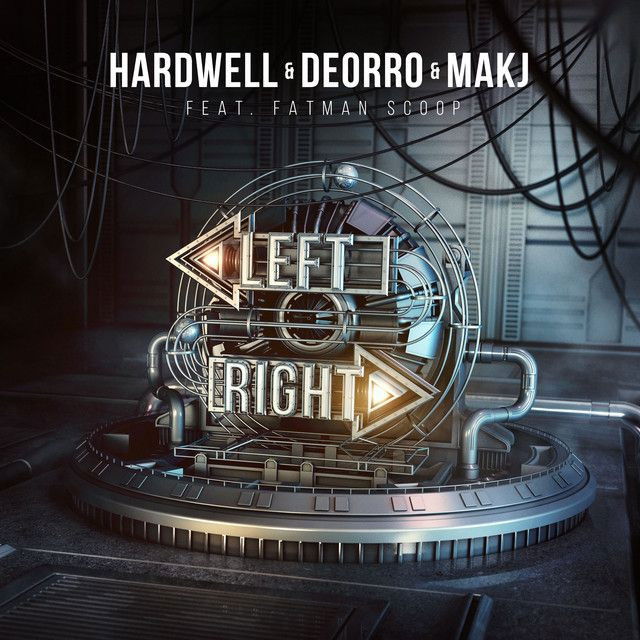
Why 'Left Right' Is Pure Festival Command
The meaning of Left Right Hardwell, Deorro, MAKJ, Fatman Scoop is not hidden in a deep story. Instead, it lives in motion, crowd control, and shared energy. This is a track built to make a room move as one.
"Left Right" - Hardwell, Deorro, MAKJ, Fatman Scoop
Follow me, let's go
Left, right
Loading lyrics...
Unable to load lyrics
We're unable to display the lyrics at this time. Please try again later.
With very few words, the song turns simple directions into a party ritual. The repeated calls are less about storytelling and more about creating a live experience. They invite listeners to follow the beat, trust the DJ, and join a group moment that feels bigger than any one person.
More Than Lyrics, It Is a Live Event
At the most basic level, the song is about physical movement. Commands like Left, right
and Follow me, let's go
push listeners into action. The words are simple on purpose, so anyone in a club or at a festival can understand them instantly.
That simplicity is the point. This is not a confessional song or a narrative ballad. It works like a chant. The hook gives the crowd an easy pattern to copy, while the beat turns that pattern into a communal release.
Interpretation: the song suggests that dance music can create meaning without detailed lyrics. Here, meaning comes from participation. If people move together, clap together, and answer the vocal cues together, the song has done its job.
Watch the official Left Right
music video
The Voice Acts Like a Hype Leader
Fatman Scoop's presence matters because his style has long been tied to call-and-response party records. His voice does not sound reflective or distant. It sounds commanding, excited, and public.
When they hear One, two, three, let's go
or Everybody clap
, listeners are being treated less like private listeners and more like a crowd in front of a stage. That changes the meaning. The song becomes an event happening in real time, not just a piece of audio.
Follow me, let's go
Everybody clap
Those lines show how the track works: it gives instructions, the audience answers, and the whole room becomes part of the performance.
How the Track's Structure Builds Its Message
The song's structure is extremely lean. It cycles through vocal commands, rhythmic repetition, and a labeled Breakdown
moment. That design is common in big-room and festival EDM because it creates anticipation before impact.
Here is the basic emotional arc:
- The voice gathers attention.
- The repeated hook locks bodies into a left-right motion.
- The breakdown creates a pause and reset.
- The next drop brings the crowd back in with even more force.
Because the writing is so stripped down, every section has a clear job. Nothing distracts from the central idea: move now, together.
Why Hardwell, Deorro, and MAKJ Fit This Song
This collaboration makes sense in context. Hardwell became known for explosive festival EDM and high-energy big-room production. Deorro built a reputation on hard-hitting dance tracks with strong Latin-club and electro-house instincts. MAKJ has also worked in loud, direct festival territory. Put together, they naturally lean toward a track that values impact over nuance.
Factual credits in the prompt name Robbert van de Corput and Mackenzie Johnson as writers, which aligns with Hardwell's legal name and MAKJ's legal name. The production style also fits the lane these artists are known for: sharp build-ups, blunt rhythmic cues, and drops designed for mass response rather than introspection.
Interpretation: the song almost functions as a mission statement for festival-era EDM. It says that directness is not a weakness. In the right setting, directness is the art.
Sound First, Meaning Second
The production carries as much meaning as the words do. The beat is rigid and punchy, making the side-to-side movement feel natural. The repetition of the main phrase works like a metronome for the body. Even without knowing English well, a listener could still understand what to do.
The breakdown is also important. In EDM, a breakdown is where tension rises, drums may thin out, and the crowd prepares for the drop. Here, that pause gives the commands more power. The track briefly holds back so the next impact feels earned.
This is why the song feels bigger than its lyric sheet. On paper, it is minimal. In performance, it becomes physical theater.
The Deeper Theme Hidden in the Simplicity
Although the song is straightforward, there is still a broader theme: collective release. The repeated directions erase self-consciousness. Nobody has to wonder what the song means in the moment. They just join in.
That matters in dance culture. Club and festival songs often offer a break from overthinking. Instead of asking listeners to decode a personal diary, this track asks them to surrender to rhythm and to the crowd around them.
Interpretation: that is the real emotional core of the song. It is about permission. Permission to stop analyzing, stop standing still, and become part of something loud and shared.
A Simple Hook With a Clear Purpose
The meaning of Left Right Hardwell, Deorro, MAKJ, Fatman Scoop comes down to this: it is a command song designed to turn a beat into group action. Its repeated phrases are not there to tell a complex story. They are there to make the audience part of the record.
That is why the song endures for dance fans. It understands its purpose completely. It does not pretend to be subtle, and it does not need to be.
They built a track where movement is the message. In a festival setting, that can be more powerful than a long verse ever could.
Disclaimer: This interpretation focuses on themes, performance context, and production choices. As with any song, some meaning remains subjective unless the artists define it directly.









