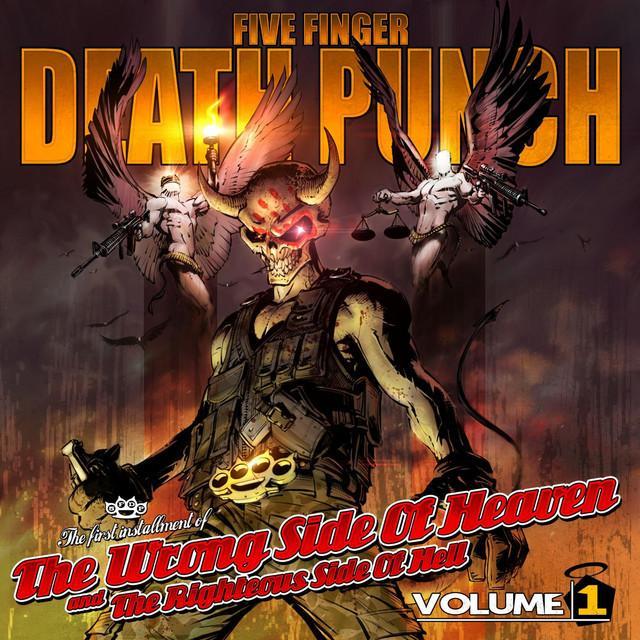
Wrong Side of Heaven by Five Finger Death Punch
A heavy rock song about guilt, duty, and the terrible feeling of living in a moral gray zone.
"Wrong Side of Heaven" - Five Finger Death Punch
Provided by LyricFindI spoke to God today and She said that She's ashamed
What have I become? What have I done?
I spoke to the devil today and he swears he's not to blameLoading...Loading lyrics...
Unable to load lyrics
We're unable to display the lyrics at this time. Please try again later.
Why This Song Hits So Hard
The meaning of Wrong Side of Heaven Five Finger Death Punch starts with a simple but painful idea: they are singing about a person who no longer trusts their own moral compass. The narrator feels caught between innocence and blame, faith and despair, duty and damage. They are not asking for easy forgiveness. They are admitting they can barely tell what is right anymore.
Factually, the song comes from The Wrong Side of Heaven and the Righteous Side of Hell, Volume 1, and it was later released as a single. It was written by Ivan Moody, Jeremy Spencer, Kevin Churko, Jason Hook, and Zoltan Bathory, with Churko producing. Sources like Songfacts and Wikipedia also note how strongly the song became tied to veterans and PTSD through its video.

Watch the official Wrong Side of Heaven
music video
A Chorus About Moral Limbo
The key line is the title itself: wrong side of Heaven
and righteous side of hell
. Paraphrased, the narrator feels stuck in a space where they cannot claim goodness, but they also do not fit the role of a monster. It is a state of moral limbo.
That idea matches Ivan Moody's own description. As reported by Songfacts, he said the title reflected feeling stuck in "purgatory" and that "it's all gray." That comment matters because it shows the song is not built around clear heroes and villains. It is built around confusion.
The Hook Is a Confession, Not a Slogan
When the chorus adds I stand alone
and not made of stone
, the song becomes more human. They are not presenting toughness as strength. They are admitting emotional damage. The speaker feels exposed, isolated, and overwhelmed by memory.
God, the Devil, and the Mirror
One of the smartest parts of the lyric is how God and the devil both start to sound personal. Early on, the narrator says She's ashamed
, then later hears God sounding like them and sees the devil looking like them. Paraphrased, the song turns religion into self-examination. The voice of judgment and the voice of blame both come from inside.
Interpretation: This suggests the real battle is conscience. The narrator is not trapped by supernatural forces as much as by their own reflection. They hear accusation, excuse, regret, and fear all mixed together.
That is why the song feels heavier than a standard battle between good and evil. It argues that people can carry both at once. They can try to do the right thing and still be haunted by what they did.
Right or wrong
I can hardly tell
Those two short lines capture the song's center. It is about the collapse of certainty.
The Veterans Reading Matters
The song's broad meaning can apply to many kinds of guilt, but the public framing around veterans is important. According to Songfacts, Zoltan Bathory said war puts people into impossible moral situations, where they may be acting from duty while still questioning the truth behind that duty. The official video, directed by Nick Peterson, focuses on returning soldiers, PTSD, and homelessness among veterans, as noted by Wikipedia.
That context changes how many listeners hear the song. It becomes less about abstract sin and more about the psychological cost of survival. A soldier may follow orders, believe in service, and still come home asking what those choices did to their soul.
Not Just War, but Aftermath
The song is not only about action in the field. It is also about what follows. The repeated sense of falling, drifting, and nearing an end suggests someone mentally and emotionally unraveling. They are not defending themself. They are sinking.
How the Sound Carries the Weight
Musically, the track blends alternative metal heaviness with a slower, anthem-like chorus. The guitars are thick and dramatic, but the vocal melody is more open than aggressive. That contrast matters.
The verses feel tense and inward, like private thoughts. Then the chorus widens out, almost as if the confession gets too big to keep inside. Instead of pure rage, the band leans into wounded scale. The result sounds less like victory and more like a public breakdown.
Produced by Kevin Churko, the song has a polished, radio-ready mix, but it still leaves room for rawness in Moody's delivery. They sound strained rather than triumphant, which supports the song's themes of guilt and emotional exhaustion.
Why the Song Endures
Part of the reason this track lasted is that it gives listeners a strong image for a common feeling: being morally lost. Songfacts reports that it became the band's most-streamed song and most-watched video, even if its early chart run was modest. That staying power makes sense.
Many heavy songs offer anger. This one offers uncertainty. That is often more relatable. People do not always feel clearly innocent or clearly guilty. Sometimes they just feel damaged and unsure how to name it.
Final Take on the Meaning
The meaning of Wrong Side of Heaven Five Finger Death Punch is about living in the gray area between duty and regret, faith and self-condemnation. Interpretation: whether listeners hear it as a soldier's crisis, a trauma survivor's confession, or a broader portrait of shame, the song's power comes from refusing easy answers.
It does not promise redemption. It simply tells the truth about what it feels like when a person no longer knows which side they are on.
Interpretation disclaimer: song meaning can be subjective. This reading combines the lyrics with documented band comments, video context, and production details, but other listeners may hear the song differently.








