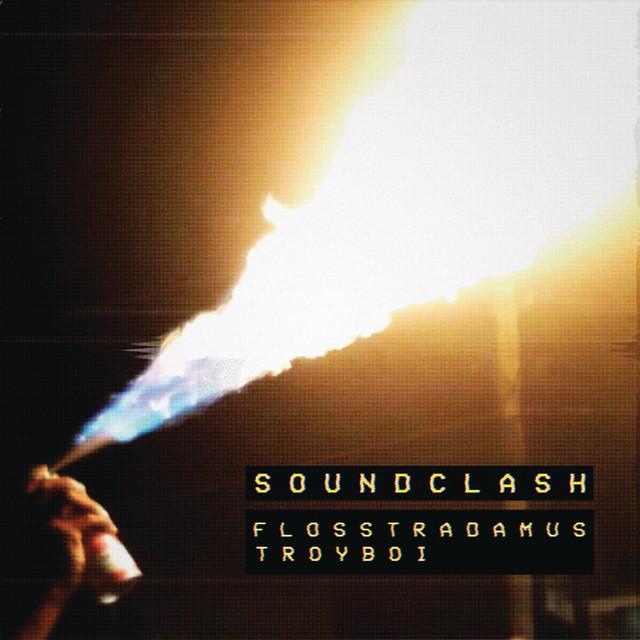
Soundclash by Flosstradamus, TroyBoi
Why This Track Says More Than Its Few Words
The meaning of Soundclash Flosstradamus, TroyBoi is less about a detailed story and more about a feeling: impact, competition, and physical energy on the dance floor. This is a track built from repetition, short commands, and a huge beat. Instead of telling listeners a long narrative, they create a scene where sound itself becomes the event.
"Soundclash" - Flosstradamus, TroyBoi
Work (one, two, three, four)
Work work work (one, two, three, four)
Loading lyrics...
Unable to load lyrics
We're unable to display the lyrics at this time. Please try again later.
Flosstradamus built their name in trap-heavy festival music, while TroyBoi became known for sleek, rhythm-first bass production. Their styles make this collaboration feel natural. Basic release and artist information can be found on major music platforms like Spotify and Apple Music, and songwriter credits listed in the prompt name Curt Cameruci, Joshua Adam Young, and Troy Henry.
Watch the official Soundclash
music video
The Core Meaning: A Battle of Volume, Presence, and Hype
At the center of the song is the phrase I saw 'em clashing
. Paraphrased, the speaker is describing a collision—of sounds, people, or rival energies. The word “soundclash” has roots in dancehall culture, where competing sound systems or crews face off to win the crowd. In this track, that idea becomes a modern trap anthem.
The follow-up line I can't hear ya
is important. It can sound dismissive, but in context it works more like a challenge. The song turns the crowd into part of the action: if they are too quiet, they need to get louder; if one side is weaker, it needs to answer back.
Interpretation: the song is about dominance in a shared space. That space could be a club, a festival stage, or even the music scene itself. They are not interested in subtle emotion here. They are interested in pressure, volume, and response.
How the Minimal Lyrics Build the Theme
The lyrics are extremely spare, but each repeated element has a job. The count-off one, two, three, four
feels like a DJ cue, a rehearsal command, and a crowd instruction all at once. It creates order right before chaos drops in.
Then there is Work work work
, which pushes the body into motion. In dance music, “work” usually means move harder, dance harder, give more energy. The track does not explain that idea with long verses because it does not need to. The command is the message.
Four, three, two, one
Do it!
That short countdown turns anticipation into release. The words are simple, but they mimic what happens in a live set: tension rises, then the bass lands. The lyric structure is almost mechanical, which fits the song's purpose. It is designed to trigger a reaction fast.
Sound First, Story Second
How Production Carries the Meaning
A song like this lives or dies by production, and that is where the collaboration really speaks. Flosstradamus are associated with hard trap drums, crowd-hyping drops, and festival aggression. TroyBoi often brings a more elastic, syncopated groove. Together, they make the track feel both blunt and nimble.
The beat does much of the storytelling. Heavy low-end suggests force. Sharp drum hits make every command sound more urgent. Repeated vocal samples act like percussion rather than conversation. Even the spaces between phrases matter, because they let the drop hit harder.
Interpretation: the production turns the idea of a “clash” into something physical. Listeners do not just hear a contest; they feel it in the stop-start rhythm and the pressure of the bass.
The Voice as an Instrument
The vocal delivery is not intimate or confessional. It sounds projected, almost like a hype person cutting through a loud room. That matters because the speaker is less a character than a ringmaster. They are directing bodies, not sharing secrets.
When the line repeats again and again, it starts to lose literal meaning and gain ritual power. That is common in EDM and trap-adjacent festival music: repetition is not laziness, but design. It helps the crowd remember, shout back, and move in sync.
What “Clashing” Can Mean
There are a few useful ways to read the song.
- Club reading: it captures the noise and competition of a packed dance floor.
- Performance reading: it reflects DJs battling for crowd reaction.
- Scene reading: it hints at artists proving whose sound hits hardest.
All three fit the lyric language. The title suggests competition. The repeated commands suggest a live environment. And the lack of personal detail keeps the song open enough for any high-energy setting.
Why the Repetition Works Instead of Feeling Empty
Some listeners may hear the lyrics and think there is not much to analyze. But that misses how function shapes meaning in dance music. This track is not trying to be a diary entry. It is trying to create a ritual of buildup and release.
That is why the repeated phrase clashing, clashing
matters. Paraphrased, it keeps the central image in motion. The song does not move forward through plot; it moves forward through intensification. Each loop adds pressure, like a crowd getting louder with every round.
Final Take on the Meaning of Soundclash Flosstradamus, TroyBoi
The meaning of Soundclash Flosstradamus, TroyBoi comes down to controlled chaos. They use a tiny set of words to create a big idea: sound as battle, dance as response, and the crowd as the final judge. The track is not about emotional detail. It is about what happens when rhythm becomes confrontation and confrontation becomes fun.
In that sense, the song succeeds by being direct. Every count, command, and repeated hook serves the same purpose: to make listeners feel pulled into a live, loud, competitive moment.
Disclaimer: This article offers interpretation based on the lyrics, title, and production style. Without a detailed artist statement, some meanings remain open to the listener.







