Why Zappa's Saddest Solo Still Hits
When people search for the meaning of Watermelon In Easter Hay Frank Zappa, they usually find something unusual: a song with almost no lyrics that still feels deeply human. That is the key to its power.
"Watermelon In Easter Hay" - Frank Zappa
Joe has just worked himself into
an imaginary frenzy during the fade-out of his imaginary song
Loading lyrics...
Unable to load lyrics
We're unable to display the lyrics at this time. Please try again later.
On the surface, Watermelon in Easter Hay
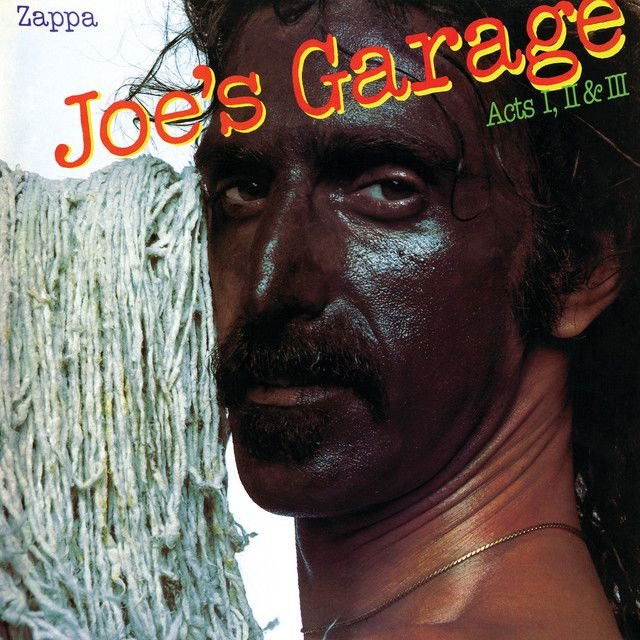
is a long instrumental from Joe's Garage Acts II & III, released in 1979. In the album's story, though, it arrives at a breaking point. Joe has retreated into imagined music, and the opening narration says he begins to feel depressed now
and knows the end is close. The guitar solo then takes over and says the rest without needing many words.
The Heart of the Song Lives in the Story
Factually, the track is the penultimate song on Joe's Garage Acts II & III, written and produced by Frank Zappa and released on November 19, 1979. It was recorded at Village Recorders in Los Angeles in spring 1979, and it runs just over nine minutes. It is also widely noted as the only guitar solo on the album recorded specifically for that project, rather than built from Zappa's xenochrony method of lifting solos from other performances.
That detail matters. Inside the album's narrative, Joe has learned that imaginary guitar notes
exist only in the mind. The song becomes his last private refuge. Instead of delivering a neat plot resolution, Zappa lets the guitar act as Joe's final emotional language.
Interpretation: the track works like a goodbye to art itself. Joe cannot fix his world, but he can still imagine beauty for a few more minutes.

Watch the official Watermelon In Easter Hay
music video
Why the Title Sounds So Strange
The song's full title is often given as Playing a Guitar Solo
with this band being like trying to grow a watermelon in Easter hay. Even without taking the phrase literally, the image is easy to feel. A watermelon suggests life, sweetness, and growth. Easter hay suggests a dry, decorative place where real growth does not belong.
Interpretation: the title points to beauty struggling in the wrong environment. That fits both Joe's situation and Zappa's broader view of music under pressure, where creativity survives, but only with difficulty.
A Solo That Replaces the Lyrics
Most song-meaning articles focus on verses and choruses. Here, the guitar is the text. The Central Scrutinizer frames the scene, says Joe goes back to his room, and dreams his last imaginary guitar solo
. After that, words largely stop helping.
The solo feels patient rather than flashy. Zappa stretches phrases, lets notes hang, and builds emotion through tone and timing. Because the backing is simple, every bend and pause sounds exposed. That makes the performance feel intimate, as if the listener is hearing thought become sound.
He knows the end is nearand returns to a private dream, where one last solo says what speech cannot.
That short setup is enough to explain the whole emotional arc. The guitar is not showing off. It is grieving.
How the Music Carries the Meaning
Part of the meaning of Watermelon In Easter Hay Frank Zappa comes from its musical design. The track moves over a very limited harmonic pattern, often described as an A-centered sonority shifting toward a B over E, with a linking G-sharp. Writers have also noted the tension created by Zappa's emphasis on D-sharp against the bass, which gives the music an unresolved color.
Listeners do not need theory to feel that. They hear a piece that never fully settles. The time signature, often described as 9/4, also keeps the flow slightly off-balance. It does not stumble, but it never becomes too comfortable either.
That mix of steadiness and unease mirrors Joe's state of mind. He is calm on the surface, yet inwardly broken. The band supports rather than distracts: keyboards, rhythm guitar, bass, percussion, and drums create a spacious bed for the lead guitar to speak.
Why It Often Feels Like Zappa's Most Emotional Track
Frank Zappa is often remembered for satire, complexity, and humor. This song shows another side. Many later critics and musicians have treated it as a high point in his catalog, and after his death it became one of his signature pieces.
That reputation makes sense because the song strips away irony. Even the crude narration before it, with its shrugging question about who cares anyway, sharpens the sadness. It sounds like a defense against despair. Then the guitar answers by caring deeply.
Interpretation: one reason the track hits so hard is that it places sincerity inside a cynical world. The contrast makes the feeling stronger.
Final Take: A Farewell Hidden in a Guitar Line
So what is the song really saying? In plain terms, it presents a person at the edge of emotional collapse who can still imagine one last moment of grace. The title suggests impossible growth. The story gives that struggle a face. And the solo turns that idea into pure feeling.
For many listeners, that is why the meaning of Watermelon In Easter Hay Frank Zappa stays powerful. It is not just a great guitar performance. It is a portrait of inner life when words have failed.
Disclaimer: This interpretation blends documented album context with critical reading of the music. As with many instrumental pieces, listeners may reasonably hear different meanings in it.







